Articles & Resources
Explore articles and resources designed to bring encouragement, insight, and hope for every step of the recovery journey.
Is Your Self-Talk Driving Your Day?


Is Your Self-Talk Driving Your Day?
Did you know the average person has 60,000 thoughts a day, and nearly 75% of them can be negative? These thoughts form the basis of our self-talk. Is your inner dialogue lifting you up or holding you back?
A pattern of negative self-talk traps us in fear, increasing our stress and anxiety levels. You may experience more health issues, including higher blood pressure, stomach issues, and more muscle tension. What negative thoughts are hindering your life today?
On the other hand, when we live in a positive self-talk pattern, it boosts our motivation, optimism, and confidence. It’s a powerful internal shift that can reduce health issues. Positive self-talk floods your brain with endorphins, helping you relax and remain alert and centered.
How can we begin to shift from negative to positive self-talk?
One powerful tool is creating a personal declaration — a statement you say aloud each day that firmly defines who you are. This declaration should be rooted in God's view of you and His promises in Scripture. Who are you in God’s eyes, and what does scripture say? What truth has God empowered you to live out today?
These declarations often start with an affirmation statement you can repeat anytime you notice negative self-talk or anxiety creeping in. For example: “I am fearfully and wonderfully made, full of hope, peace, and joy.”
As we continue this new year, let's commit to shifting our self-talk from negative to positive. Write and read your personal declaration each morning, and hold your affirmation statement throughout the day.
I love what Craig Groeshel says: “If we’re going to do everything God has called us to do in our families, churches, and communities, we must replace negative thoughts with God’s truth.
What truth are you choosing today?
“Finally, brothers, whatever is true, whatever is honorable, whatever is just, whatever is pure, whatever is lovely, whatever is commendable, if there is any excellence, if there is anything worthy of praise, think about these things.” Philippians 4:8 ESV
For more information, visit:
Putnam City Baptist Church Helps Families Find Hope
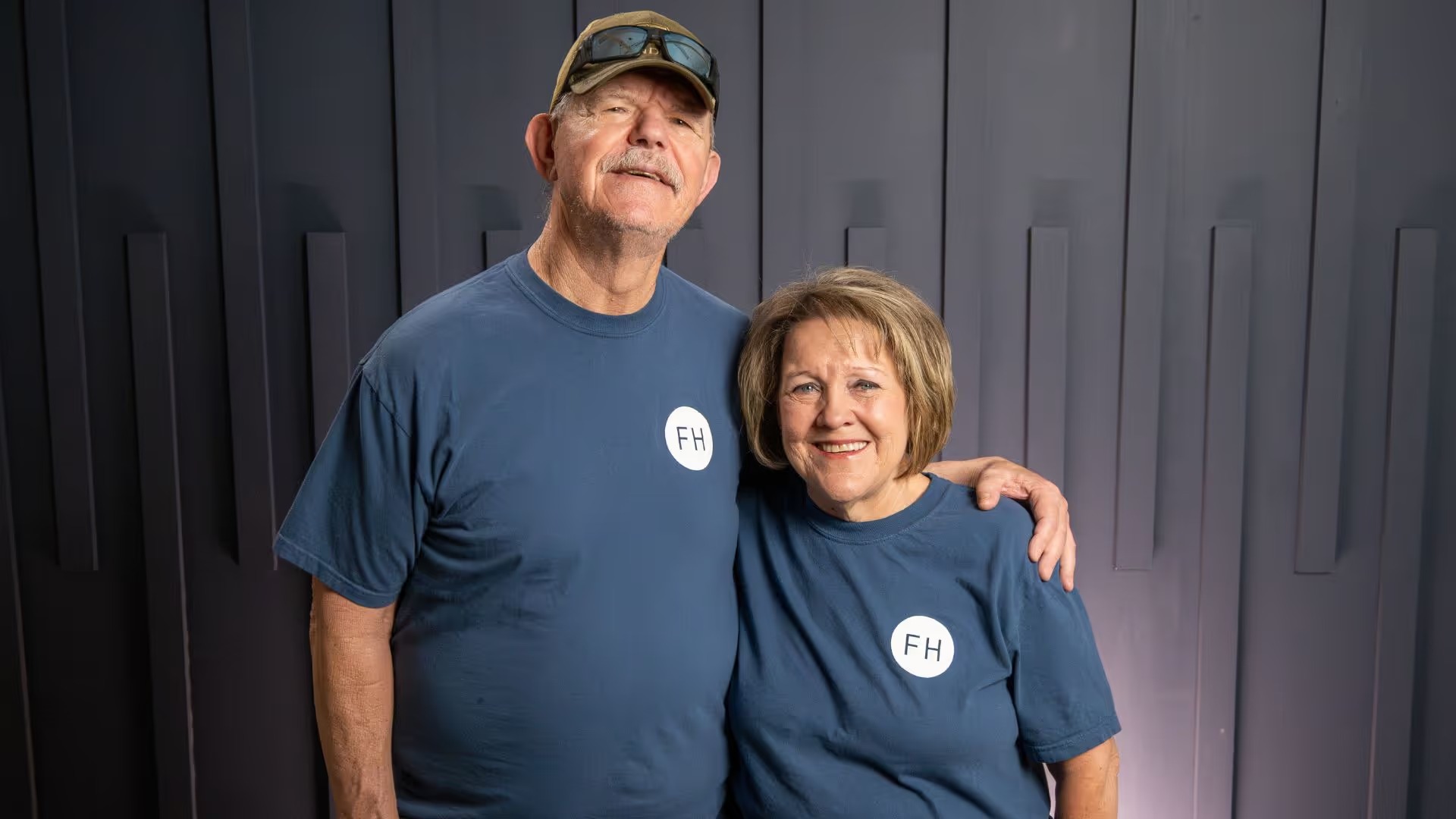
Putnam City Baptist Church Helps Families Find Hope
When their son, Michael, died from his addiction, Mike and Tanya Dorris thought their lives would no longer be intertwined with substance abuse.
“I thought, ‘We’re done with this now. We’re ready to move on in our lives and do something else,’” Tanya remembered.
But God wasn’t finished using the Dorris family to change lives. Two months after Michael’s death,Tanya attended an event featuring Lance Lang, HIA Founder and CEO, as a speaker.
“God drew us into his ministry,” Tanya said. “We fell in love with Lance and what he was doing. God was really working on our hearts, and we didn’t even know it.”
Mike and Tanya started volunteering with Hope is Alive, but they still felt they could do something more. About a year and a half after their first encounter with Lance, they landed on their new God-given mission: helping other families who loved addicts and alcoholics.
“For 10 years we struggled withwhat to do with Michael,” Mike said. “Everything we tried didn’t work. It was very hard on our marriage, our youngest son, and his new wife. Addiction affects the entire family.”
“So, we wanted to develop a support group where people could learn together about addiction, as well as find hope and healing,” Tanya said.
As members of Putnam City Baptist Church, Mike and Tanya brought it before their pastor, Bill Hulse, to see how the church could participate.
“From the very beginning, it was a great need for so many families that were dealing with addiction and the hurt,” Hulse said. “So, it was a no-brainer.”
“The church supported us 100 percent,” Tanya said.
The church prayed over the ministry, provided a room, and members showed up in support. The first Finding Hope group met on February 9, 2015, with more than 30 people.
“There wasn’t a dry eye in the room,” Mike remembered.
For the past 10 years, Mike and Tanya have led the group with support from HIA and their church. Dozens of parents, spouses, and grandparents have come and gone — many finding hope and healing, whether their loved one did or not. Today, the group typically meets with 10–18 people on the first and third Monday of every month.
And the partnership with Finding Hope goes both ways. Not only does Putnam City Baptist Church provide a safe space for men and women to meet, but the support group has also created new opportunities and perspectives for the church over the past decade.
“Addiction is not only a physiological issue, but also a spiritual issue,” Hulse said. “I think the church should always be at the forefront of helping people in times of hurt and struggles.”
“I think it’s opened up the eyes of the congregation about addiction, and people can talk about it more freely,” Tanya said. “Before, it was ‘keep it all inside and don’t say anything.’ Now, people know there’s somebody they can go talk to and try to find help.”
Pastor Hulse encourages other churches and couples considering hosting a Finding Hope group to take the leap.
“This is a ministry that every church needs,” Hulse said. “Every congregation has people who are dealing with this struggle in the culture we live in today, and we need to equip the saints to do the ministry God calls us to do, within our own families, but also within the church family and our community.”
Mike and Tanya couldn’t agree more.
“You can’t go wrong, you just need to open your arms and doors to people — non-Christians or Christians,” Mike said. “They all have the same issue.”
“And don’t be discouraged if you do that, whether you have one person or 10 people,” Tanya said. “If only one shows up, there’s a reason only one shows up.”
Since they started the first group in 2015, one group has grown to more than 60 across the country, serving more than 10,000 men and women over the years. Mike and Tanya both wish they’d had a Finding Hope group to attend when their son was battling addiction.
“But then again,” Tanya said, “if Michael were here, we might not have had this class either, right? God knew what was going to happen.”
“We’re truly blessed,” Mike said. “We always told our son that if he got through this, he was going to have a wonderful testimony. Little did we know the testimony would be ours.”
For more information, visit:
Joy for the Journey | Bible Reading Plan
Joy for the Journey
We may not always see or feel it, but God is always with us... even when we're going through hard things. In this plan, Finding Hope Coordinator Amy LaRue writes from the heart about her own family's struggle with addiction and how God's joy broke through in their darkest times.
Start the plan here: Joy for the Journey
School Support Kicks Off 2026 with a Bang
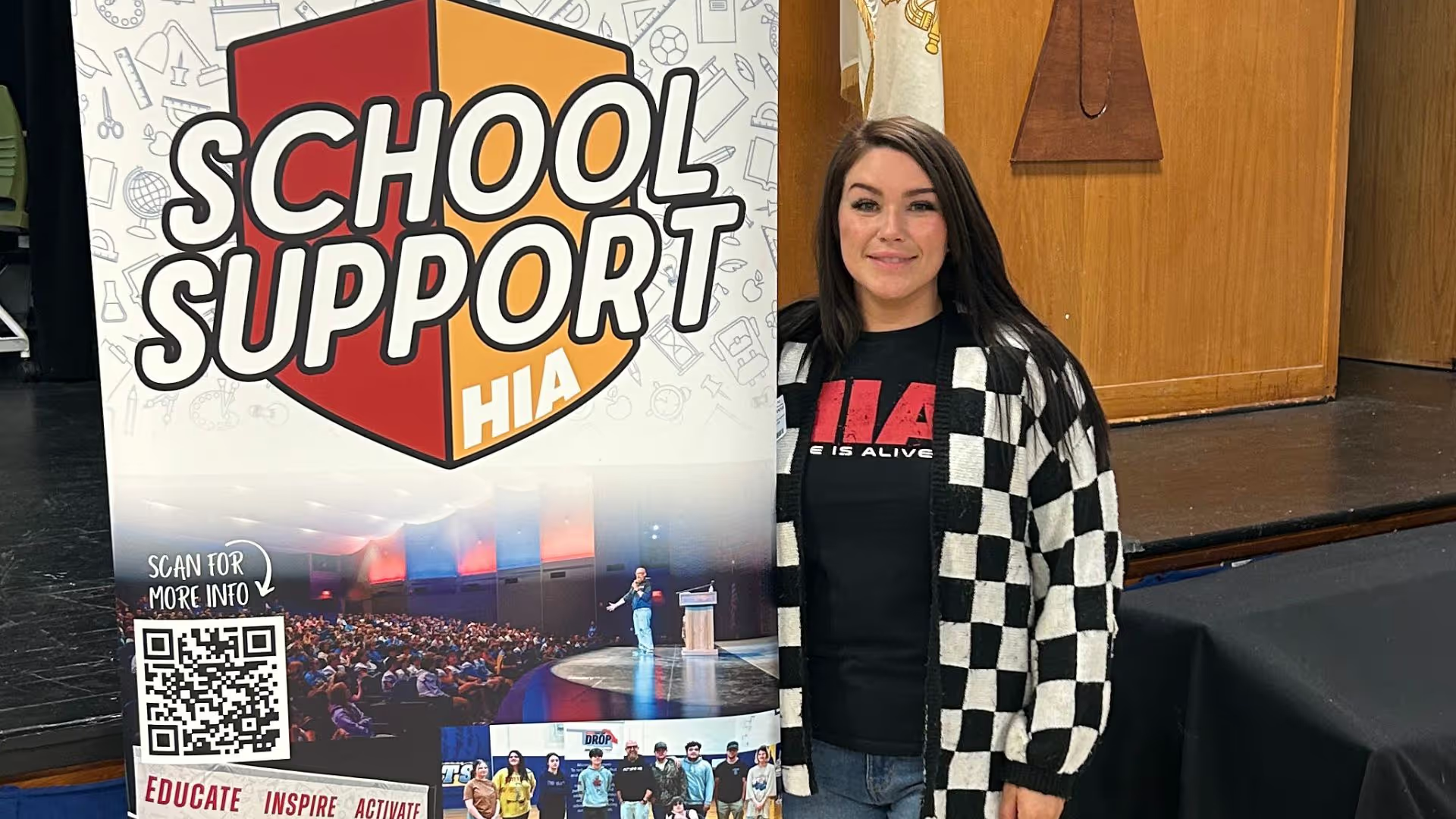
School Support Kicks Off 2026 with a Bang
Our School Support Program is off to an amazing start in 2026, and the momentum just keeps building.
Our team kicked things off at Christian Heritage Academy (CHA) on January 19th with a teacher training focused on “See Something, Say Something.” This conversation centered on the shared responsibility we all have — students and staff alike — to notice warning signs, respond with care, and speak up when something doesn’t seem right. Using trauma-informed, faith-centered practices, teachers were encouraged to create spaces where students feel safe, heard, and supported, knowing that early action can truly make a difference in the outcome of any given situation.
The very next day, Ann Sandager, Hope is Alive’s Senior Development Manager, brought that same message directly to the students at CHA. “See Something, Say Something” helped students understand that speaking up isn’t tattling.
“When we look out for one another and take action when something feels off, we help protect our friends, classmates, teachers, and our entire community,” Ann explained.
Rooted in faith, this message reminds students that loving others sometimes means having the bravery to speak up.
On January 22nd, our team had the chance to take the conversation even deeper during a lunch hangout. Malachi Durham, our School Support Team’s newest Coordinator, and our School Support Specialist, Courtney Davis, sat down with junior high and high school students for an open, honest discussion about speaking up.
“The conversation was great,” Courtney shared. “Students asked great questions, shared real-life scenarios, and explored practical ways to handle situations they might face.”
Overall, it was a powerful conversation that not only encouraged the students but also brought them closer together as they all learned something new.
School Support Events on the Horizon
Coming up on January 30th, our School Support Team will be at Oklahoma Christian Academy, where Malachi will be talking about peer pressure and influence. Our team is also excited for guest speaker Bri Enterline to share how peer pressure has shaped her journey.
Our School Support Team also has upcoming visits to Trinity Edgemere and Mount St. Mary’s, where they’ll be hosting assemblies and lunch hangouts. These will include interactive activities, Prevention Bingo, and real conversations about navigating peer pressure in healthy, confident ways.
A Growing Program
Our School Support Program did incredible things in 2025 and is hitting the ground running in 2026. One highlight for the new year is having officially added Walters High School to our list of partner schools! Our team is currently working on scheduling their first assembly with Walters High School in February.
With this addition, School Support is now partnering with 17 schools, and couldn’t be more excited about the doors that continue to open for addiction prevention.
The Front Line of Hope: HIA’s HopeLine

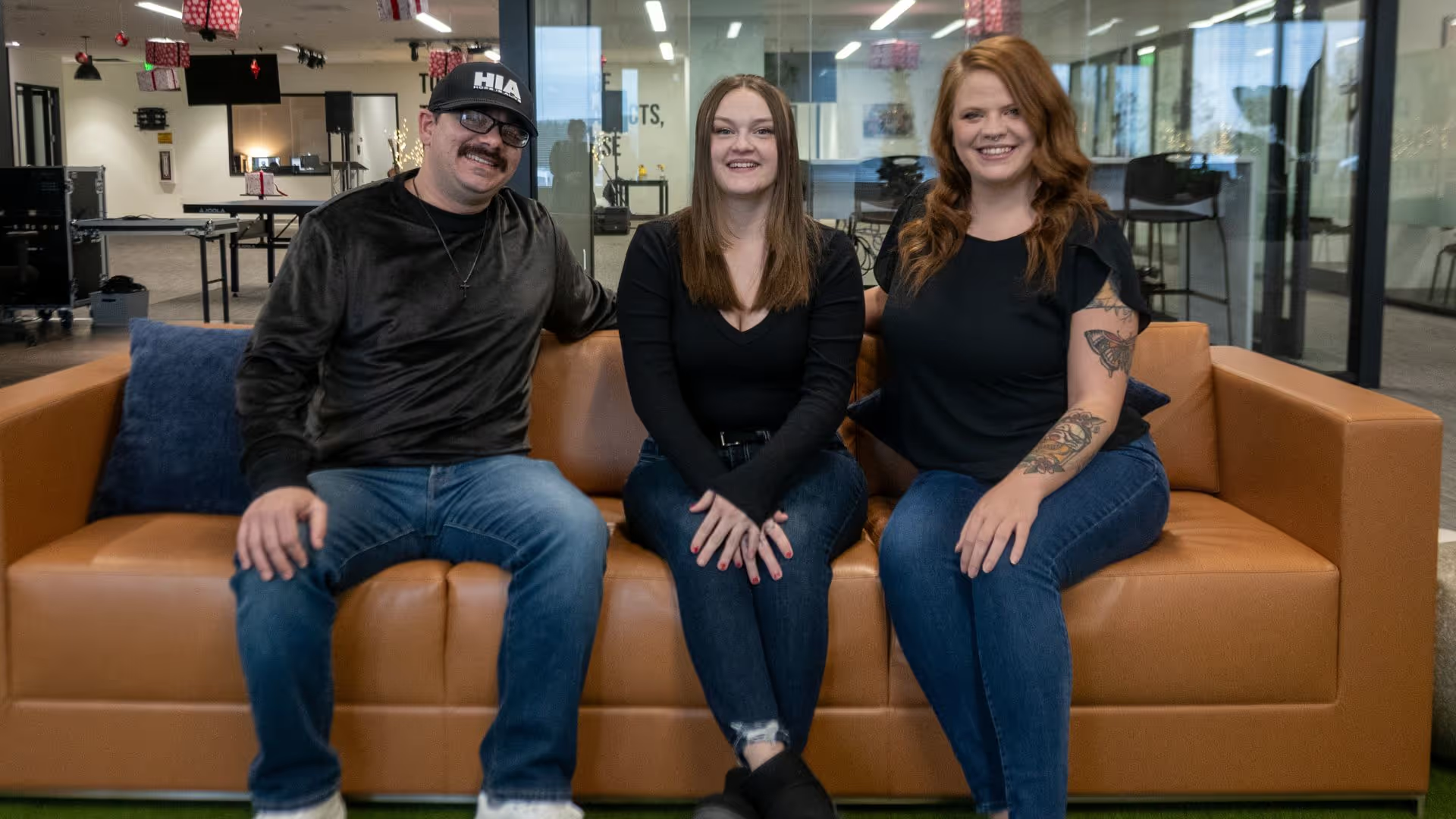
The Front Line of Hope: HIA’s HopeLine
When someone reaches out to Hope is Alive, the HopeLine is often the very first voice they hear.
Whether it’s an individual battling addiction, a family member who doesn’t know where else to turn, or someone simply overwhelmed and looking for guidance, our HopeLine serves as the front door to hope.
What is the HopeLine?
The HopeLine functions as the primary point of contact for anyone seeking help through Hope is Alive. Every day, calls come in from individuals and families navigating addiction. The HopeLine team listens first, and then works to guide each caller toward the best possible outcome.
You can think of the HopeLine as the beginning of the funnel. People start here, and from this first conversation, they are directed to the care, resources, and support that best fit their unique situation.
Hope for Addicts & Alcoholics
When someone contacts the HopeLine, our team directs them to the Hope is Alive website to place an application. Based on their application, our team determines eligibility for the Hope is Alive program. For those who qualify, the HopeLine coordinates next steps.
However, not every caller is the right fit for our program.
Hope is Alive is designed to support individuals who meet specific program criteria and can thrive within the level of care we provide. In some situations, callers need a higher or different level of care than our program is equipped to offer. This can include individuals who require medical detox, intensive clinical support, or specialized mental health services beyond our scope.
Because not every caller is the right fit for our program, our HopeLine Coordinators are also equipped to act as a resource and referral hub, connecting callers to:
- Inpatient or outpatient treatment
- Other sober living options
- Insurance-based or state-funded programs
- Outreach services
- Community resources beyond addiction recovery
Our goal is to make sure no one is left without direction, even if Hope is Alive isn’t the final destination.
Hope for Families
Beyond helping recovering drug addicts and alcoholics, the HopeLine is also a great resource for loved ones impacted by addiction.
Family members often reach out in moments of fear, exhaustion, panic, or crisis. They may be navigating a loved one who is in denial, incarcerated, actively using, or recently deceased. In many cases, they simply need someone to listen and help them understand what their options are.
Our coordinators take time to listen to each family’s story, validate their concerns, and help them understand the realities of addiction and recovery.
When appropriate, the HopeLine connects families with:
- Outreach leaders
- Family support groups
- Intervention-trained team members
- Relevant resources and next steps
The HopeLine exists to ensure that families are not left to carry the weight of addiction alone.
The Lasting Impact
Our HopeLine team doesn’t always know how a story will end. But they often get a glimpse into the impact of those first conversations later down the road.
Whether it’s a resident who remembers their name or a family member who expresses gratitude for being met with compassion during one of the hardest seasons of their life, our HopeLine Coordinators are frequently reminded of why the HopeLine matters.
For HopeLine Coordinator Jade Jolly, one call that began as a mother searching for help became a story she continues to follow today. It reminds her why answering the phone matters more than we may ever know. Click here to read her story.
Q&A with Finding Hope Coordinator Darcie Stephens

Q&A with Finding Hope Coordinator Darcie Stephens
What’s the most important thing to know when helping a loved one with addiction?
The motto of Finding Hope is simple but powerful: You're not alone, it's not your fault, and there is hope. When people come to our meetings, we throw a lot of information at them and we don’t expect them to hear or remember everything. But if they can at least hear and remember the motto, they have a great start.
When a loved one is an addict, how do you help them without hurting them?
Boundaries.
How do you draw the line between helping an addict and enabling them?
Enabling is doing something for the addict that they can do for themselves. This includes setting appointments, running errands, and so much more. It isn’t easy to draw the line between helping and enabling, but if it is something they can do themselves, stop doing it. We like to think that we're helping them by saying yes to everything, but saying no is okay too. “No” can be a complete sentence, and it is all you have to say.
When is the right time to involve outside help such as a counselor, church leader, or even law enforcement?
You should wait to involve a counselor or church leader until the addict is ready. Forcing it upon them can cause them to shut down.
As for law enforcement, they should be involved anytime the addict imposes danger. It doesn’t matter if they are endangering themselves, their family, or strangers — if danger is present, law enforcement should be involved.
It is also important to reach out for help and prompt the addict to seek help with detox. It’s important if they decide to detox on their own for them to know that they need help because it can be very dangerous.
What are healthy ways to approach the topic of addiction with a loved one — especially when it’s time to involve outside help?
One of the healthiest ways to approach a loved one’s addiction is through the use of “I feel” statements. When you only share how you are feeling, it can open their eyes to see that there is a problem. But, when you come at them with statements that start with “You” or “Your addiction,” they automatically shut down.
As for talking with them about getting help, you have to wait until they are ready. You can’t make them want their recovery more than you want it. That being said, you should have resources readily available to them for when they decide they are ready.
How do you navigate being open about your loved one’s addiction while still respecting their privacy and dignity?
First and foremost, when you are ready to share your story, focus on sharing your perspective and your side only, rather than speaking negatively about your loved one.
Second, Finding Hope meetings create a safe space. This means that if/when your loved one questions you about what you said in the meeting, you can say that what happens at Finding Hope stays at Finding Hope. Period.
Third, social media can be a grey area. If your loved one is in active addiction and denying their addiction, posting on social media can cause a sticky situation. However, if you can share your story in a healthy way, you can reach people that have no outlet so they can know that they're not alone. A lot of people look to their phone for help, making social media a powerful tool.
For more information, visit:
Oklahoma’s Sober Sanctuary

Oklahoma’s Sober Sanctuary
When Hope is Alive began looking for properties to build an addiction retreat center, a few boxes needed to be checked off a demanding list. First, it had to be within half an hour of Oklahoma City (OKC), but it needed to feel like it was far away from urban life. It needed to be accessible for all people. And, it needed to be large enough to accommodate HIA’s ambitious build plans.
God has provided! Just 15 minutes outside OKC lies a recovery safe haven in the making. This faith-based facility will help individuals overcome addiction and substance abuse from the very start.
The property spans 75 acres of beautiful Oklahoma countryside as the place for individuals to find their footing on their path to restoration. This is The Healing Center. Every aspect of the grounds at The Healing Center has been carefully considered. As new residents enter the property, they are crossing into a period of renewal. The natural setting provides a stark contrast to the stress and anxiety often associated with addiction, helping individuals reconnect with themselves and their faith. Residents are meant to be physically, mentally, and emotionally present at every juncture in the recovery process.
A beautiful tabernacle will act as the centerpiece on the grounds, a symbol of promise and new life, which will be visible from anywhere on the property. It will serve as a place where residents and staff can come together in worship and reflection.
Two key features of The Healing Center will be the conservatory and community garden, where residents can care for plants, flowers, and even their own fruits and vegetables. These kinds of hands-on activities teach valuable life skills to continue using after graduation.
Residents will also enjoy other facilities such as outdoor recreational areas, communal spaces for group therapy and activities, and private offices for individual counseling. The architecture of each building will blend with the beauty of the grounds, featuring wrap-around porches and large windows to provide plenty of natural light.
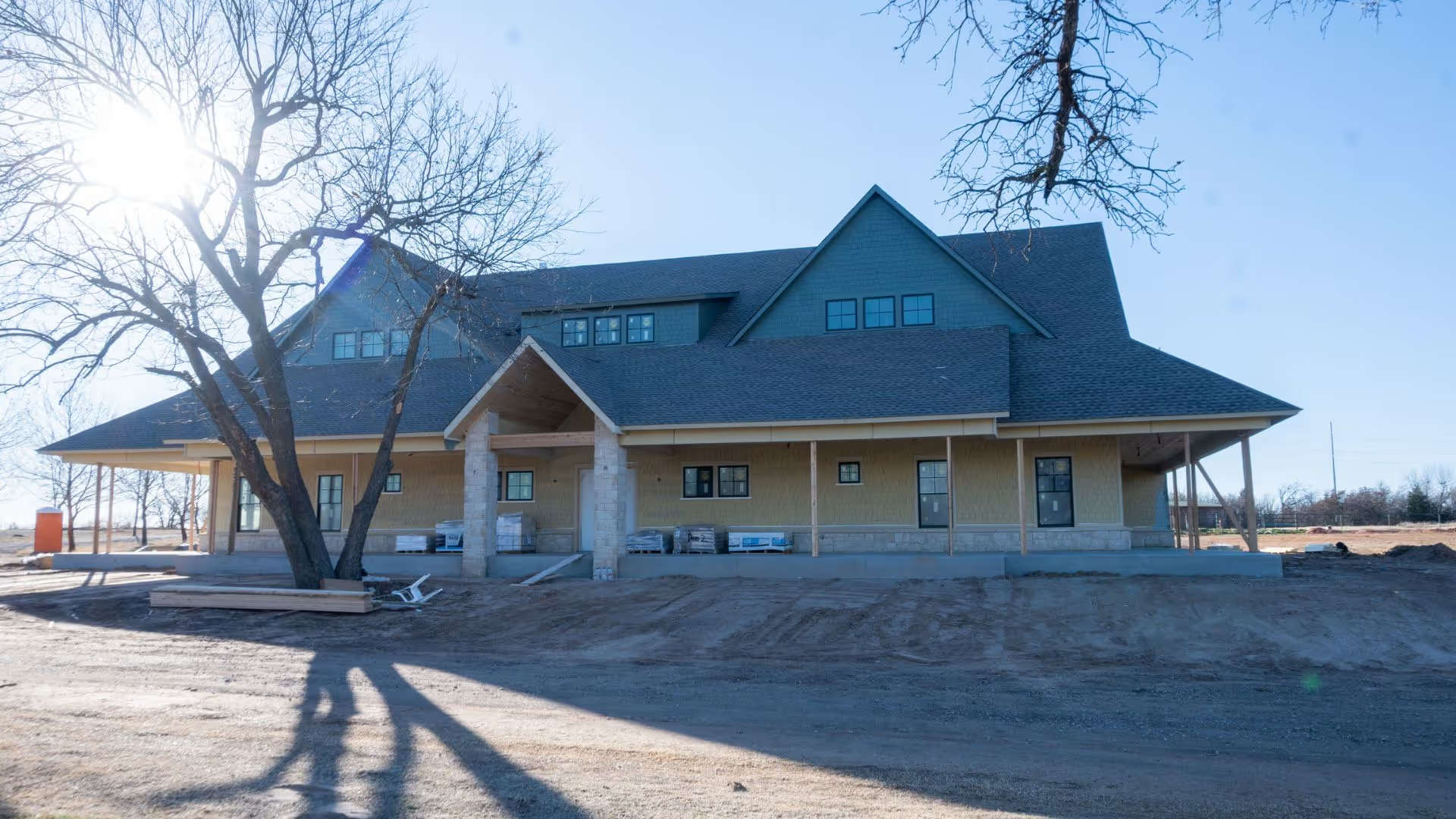
Because HIA recognizes the importance of community in the recovery process, The Healing Center will offer a variety of group activities, from sports and art therapy to group prayer and Bible studies. A dedicated team of licensed counselors, therapists, support staff, and volunteers who understand the complexities of addiction and substance abuse will guide residents in these activities. With this kind of support, residents will build meaningful relationships with others who have struggled with substance abuse as well as staff members who care about each individual.
This is one of the most transformative endeavors HIA has ever undertaken. This facility will be a place of true restoration sustained by the support of a called and compassionate staff. God is preparing a place for those in need, and they will leave renewed and prepared for whatever He has for them next.
The HopeLine: Flipping the Switch on Addiction Recovery
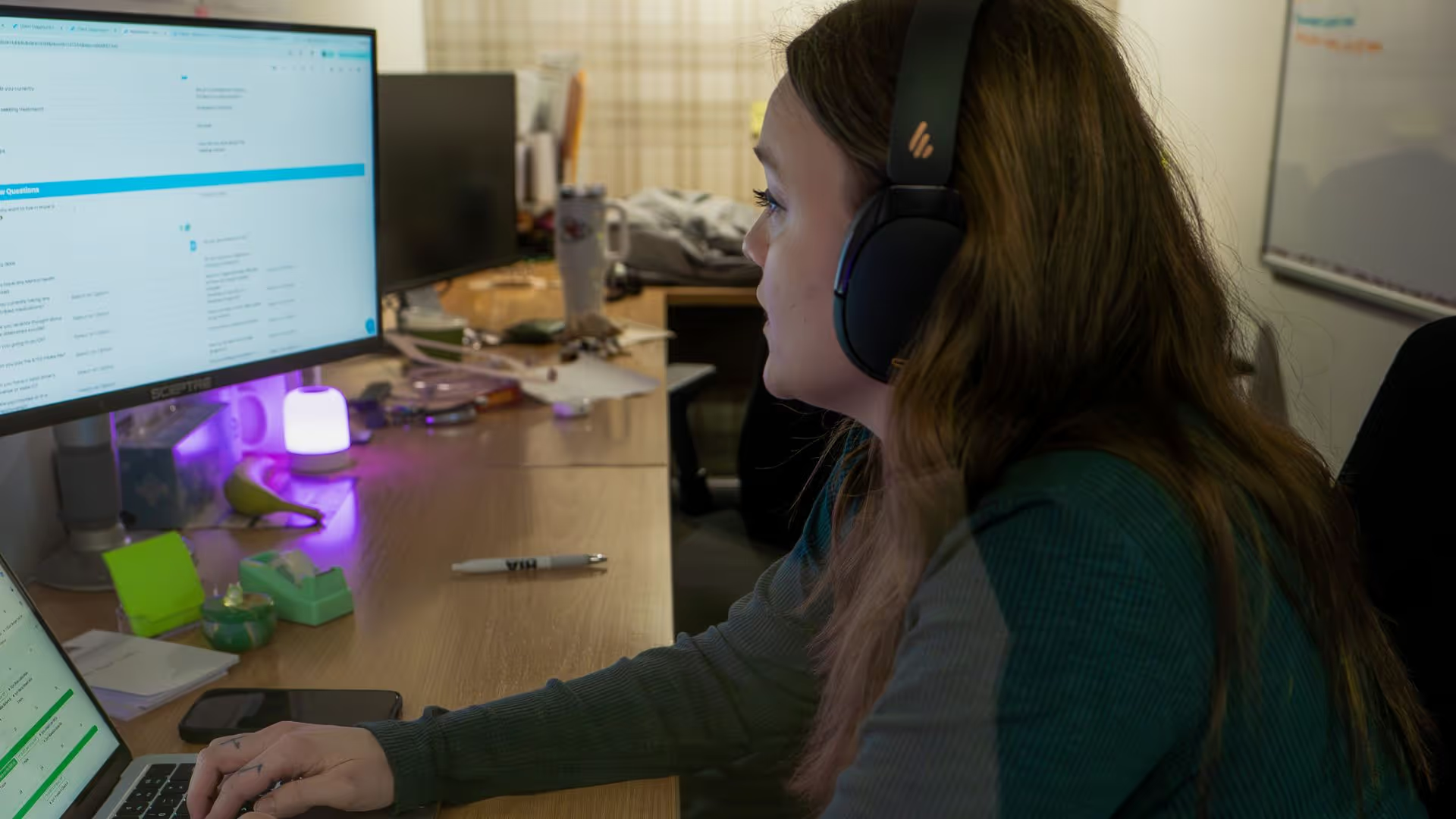
The HopeLine: Flipping the Switch on Addiction Recovery
Every call to the HopeLine sounds a little different, and some are more memorable than others. For Jade Jolly, one of her most memorable calls came from a mother desperately searching for help for her daughter.
At the time, the mother on the other end of the line was completely lost. Her daughter was an addict, and nothing was snapping her out of it — not even jail time. She called the HopeLine, searching for something else to try, pleading with Jade to help her save her daughter.
“She called for help because her daughter was so far gone that she finally realized that what she was doing was not helping her daughter,” Jade shared.
Throughout the course of a year, Jade continuously answered phone call after phone call. With each call, the mother became more desperate as exhaustion and fear took over.
Then, the calls just stopped.
“Her daughter didn’t have motivation and did not really want to be clean. She had no desire to pursue recovery,” Jade explained. “But after four months of silence, something clicked with her daughter, and everything changed.”
During those months of silence, the daughter had returned to jail. Jade spoke with her towards the beginning of this period of incarceration and could tell she simply wasn’t ready. But after a few months in jail, her mindset shifted. She started spending more time in her Bible and having deeper conversations with her mother about faith and what life could look like if things were different.
When the daughter was released from jail, she reached back out to Jade — and this time, she had fully dedicated herself to coming to Hope is Alive. She didn’t want to move from Tulsa to Oklahoma City, but she did it anyway to move into one of the homes.
Since entering Hope is Alive, her journey has not been without setbacks. She entered the program with additional challenges, including a diagnosis that can make maintaining healthy interpersonal relationships more difficult.
The good thing is that she had self-awareness about her diagnosis and an understanding of how it could impact her recovery. She didn't deny the fact that she had this diagnosis, and she was willing to go to therapy and work on coping skills. Because of that, she was allotted the ability to come into the program.
“As far as I know, she is doing great. She’s done everything we’ve asked her to do and is focused on her recovery,” Jade shared. “Watching the switch in her brain flip from not wanting to be sober to fully embracing our program has been incredible. She’s undergone such a drastic change.”
For Jade, this story is a reminder of why the HopeLine exists. Not every call ends with an immediate solution, and not every person is ready the first time they reach out. But every call matters, and every call has the opportunity to change a life.
Finding Hope Podcast: Trusting God With a New Year
As a new year begins, many of us think about fresh starts, goals, or resolutions — but does a new year really bring lasting change?
In this episode, we reflect on a powerful quote from Shane Pruitt: "A new year doesn't make a new you, if you keep living the way you've always lived. A new you only happens when you let an eternal God take over, and He changes how you live."
This is especially true for those loving someone struggling with addiction.
We talk about what real change might look like — meeting your own needs, taking a courageous step to attend a Finding Hope meeting, or simply learning more about what Finding Hope is all about.
If you’re longing for rest, healing, or a fresh start, we also invite you to sign up for this year’s Finding Hope or Hope After Loss retreat.
For more information, visit:
Surviving a Relapse
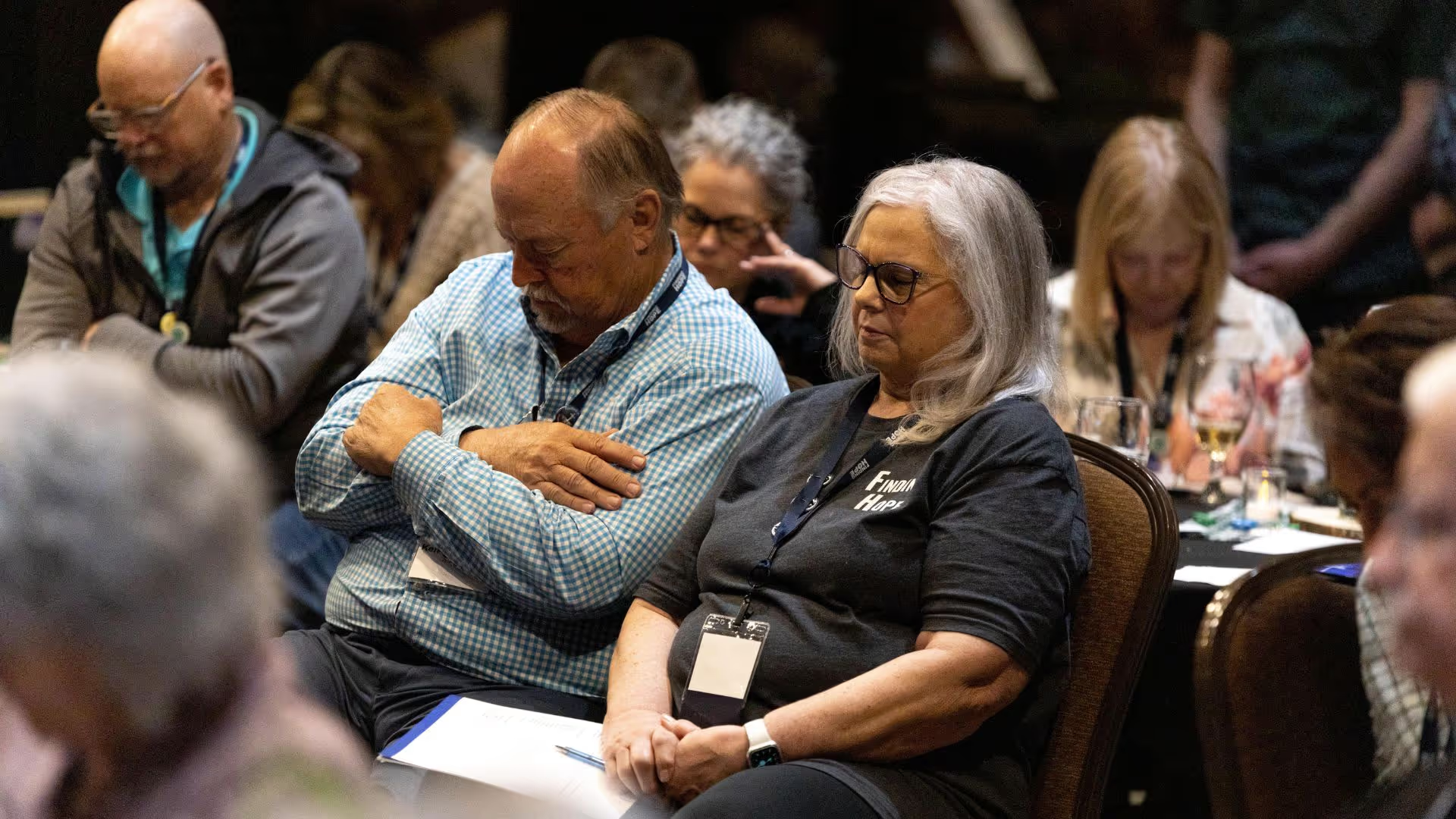
Surviving a Relapse
When we love someone who struggles with substance use disorder, we often live in fear of relapse. We wonder if we will make it through if it happens, because statistics from the National Institute on Drug Abuse indicate that anywhere from 40 to 60 percent of people with addiction will experience a relapse. Relapse often feels like a “when, not if” situation.
If You Suspect a Relapse
If your loved one has relapsed or you suspect they have, know that you will make it through. The initial emotions — panic, disappointment, fear — are normal. And there are healthy ways to respond once you move beyond them.
Five Steps to Help You Through Their Relapse
Step One: Don’t Shame or Blame
Your loved one likely already feels guilt and shame. Approach them with love and understanding, and choose a time when both of you are calm.
Ways to approach them:
- “I noticed [behavior], which leads me to believe [concern]. Is that true?”
- Use “I feel” statements:
- “I feel anxious when….”
- “I feel scared when….”
- “I feel nervous when….”
Step Two: Set Boundaries
Boundaries protect you, not punish them. Examples:
- They aren’t allowed in the house if actively using/drinking.
- You won’t bail them out of jail.
- You won’t give them money.
What boundaries do you have in place if a relapse happens?
Step Three: Feel to Heal
Don’t suppress your emotions — acknowledge them.
- Reach out to your Hope Giver.
- Journal.
- Pray.
- Put it in your God box.
- Talk to a counselor.
Step Four: Encourage, But Don’t Rescue
Encourage them to get help, but let them take ownership of their recovery plan. If we go into "fix-it mode," we risk our own emotional relapse.
Step Five: Prioritize Self-Care
Taking care of yourself is essential. You cannot want their recovery more than they do. Here are some ways to care for yourself:
- Go for a walk.
- See a counselor.
- Attend a Finding Hope meeting.
Relapse is Not the End
Relapse does not mean failure! Addiction is a chronic disease requiring daily treatment, so use relapse as an opportunity to learn and grow.
You are not alone. Keep choosing hope.
“I will lead the blind by ways they have not known, along unfamiliar paths I will guide them; I will turn darkness into light before them and make the rough places smooth. These are the things I will do; I will not forsake them.” Isaiah 42:16
For more information, visit:
Recovery Done Differently: An Inside Look at Hope is Alive
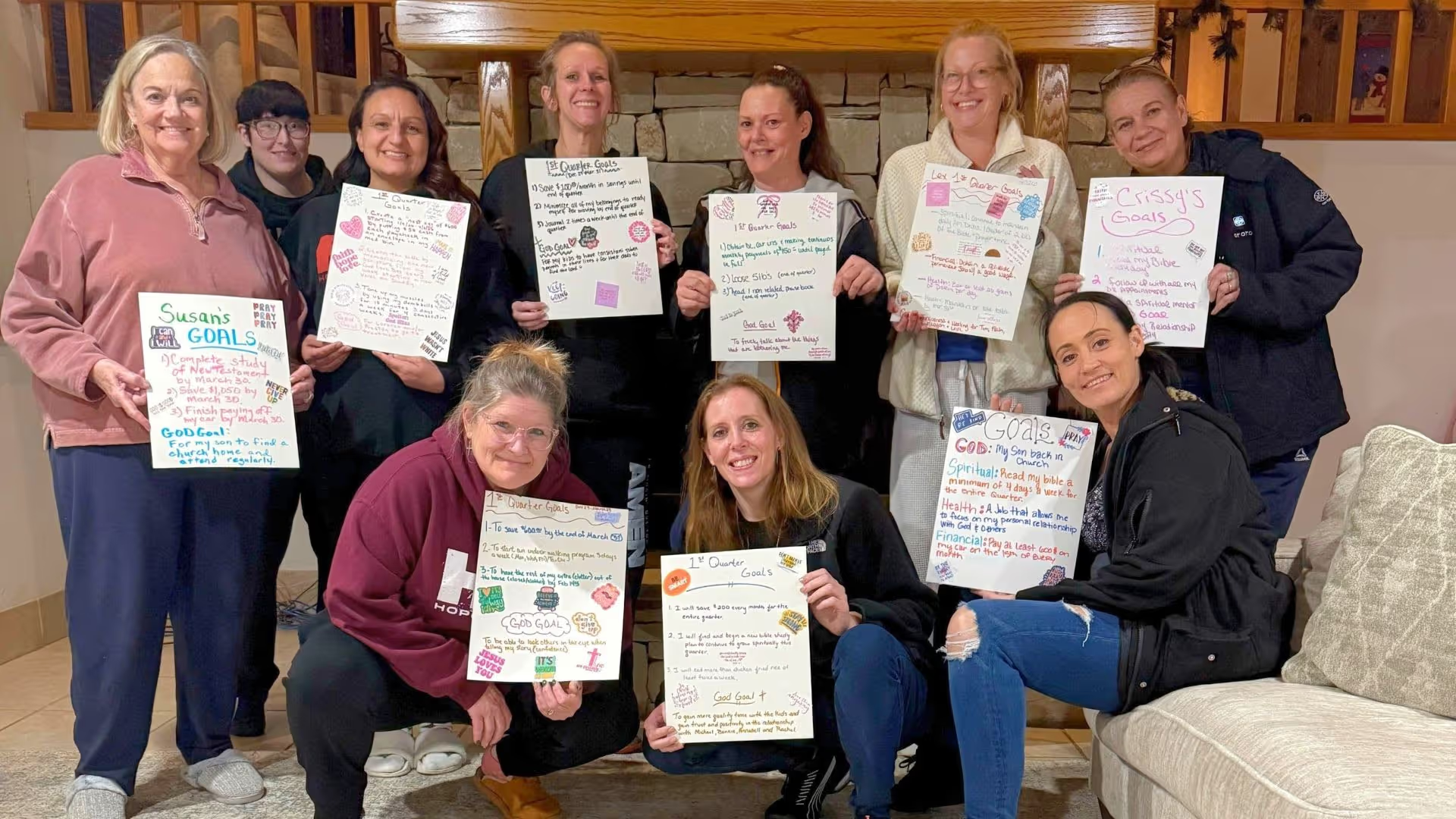
Recovery Done Differently: An Inside Look at Hope is Alive
People often ask us what makes Hope is Alive different.
Yes, we provide safe homes.
Yes, we offer structure and accountability.
Yes, we walk men and women through addiction recovery.
But the real difference is our culture.
Inside every Hope is Alive home, there are certain standards we uphold, a mindset we protect, and a faith we stand on. Collectively, we call this our Resident Culture Code, and it defines who we are long after addiction no longer does.
We Live Next-Level, Radically Changed Lives
At Hope is Alive, sobriety is just the starting point. Our residents pursue change in every area of life — faith, relationships, work ethic, leadership, and purpose. Our residents are men and women learning how to live fully alive, not just clean.
We Get to Be Here
Gratitude shapes our homes. Residents know they aren’t here by accident. They’ve been given an opportunity many never get to heal, grow, and rebuild. That perspective changes how they show up every day.
Fun is Required
Inside our homes you’ll find laughter, brotherhood/sisterhood, shared meals, workouts, fishing trips, and life lived together. Fun builds connection, and connection saves lives.
We Show Up and Set the Tone
Our residents understand that people are watching. Families, communities, and those still struggling want to know if real transformation is possible. So our residents and alumni lead by example, showing what faith-filled recovery can look like.
We Take Pride in Our Homes
Our homes are more than houses. They’re places of healing. Residents learn responsibility and ownership, sometimes for the first time in years. As they care for their environment, they begin to care for themselves, too.
We Trust Our Leaders
Our homes are built on trust — trust in God first, and trust in the leaders placed to guide and protect our residents in sobriety.
We Give Back What Was Given to Us
No one gets here alone. Time, encouragement, prayer, service — our residents learn to freely give what was freely given to them. This outward focus is a powerful step in breaking the chains of addiction.
We Celebrate Everything
Every sober day matters. Every win is worth celebrating. At Hope is Alive, encouragement is constant. Victories, big and small, are shared together. Always.
We Stand in the Gap for Each Other
Brotherhood and sisterhood are essential. When someone stumbles, others step in. Our residents learn they don’t have to walk alone anymore, and they never forget that.
Jesus is Always the Answer
Above all else, our culture is rooted in faith. We believe lives are restored through Christ, and everything we do flows from that truth. Our residents are alive today because of grace. And they live with purpose because of it.
Be a Part of Our Culture
Culture at Hope is Alive isn’t just something we talk about — it’s something we live out together.
Be part of a community where hope is alive by donating or volunteering today.
The Isolation of Addiction
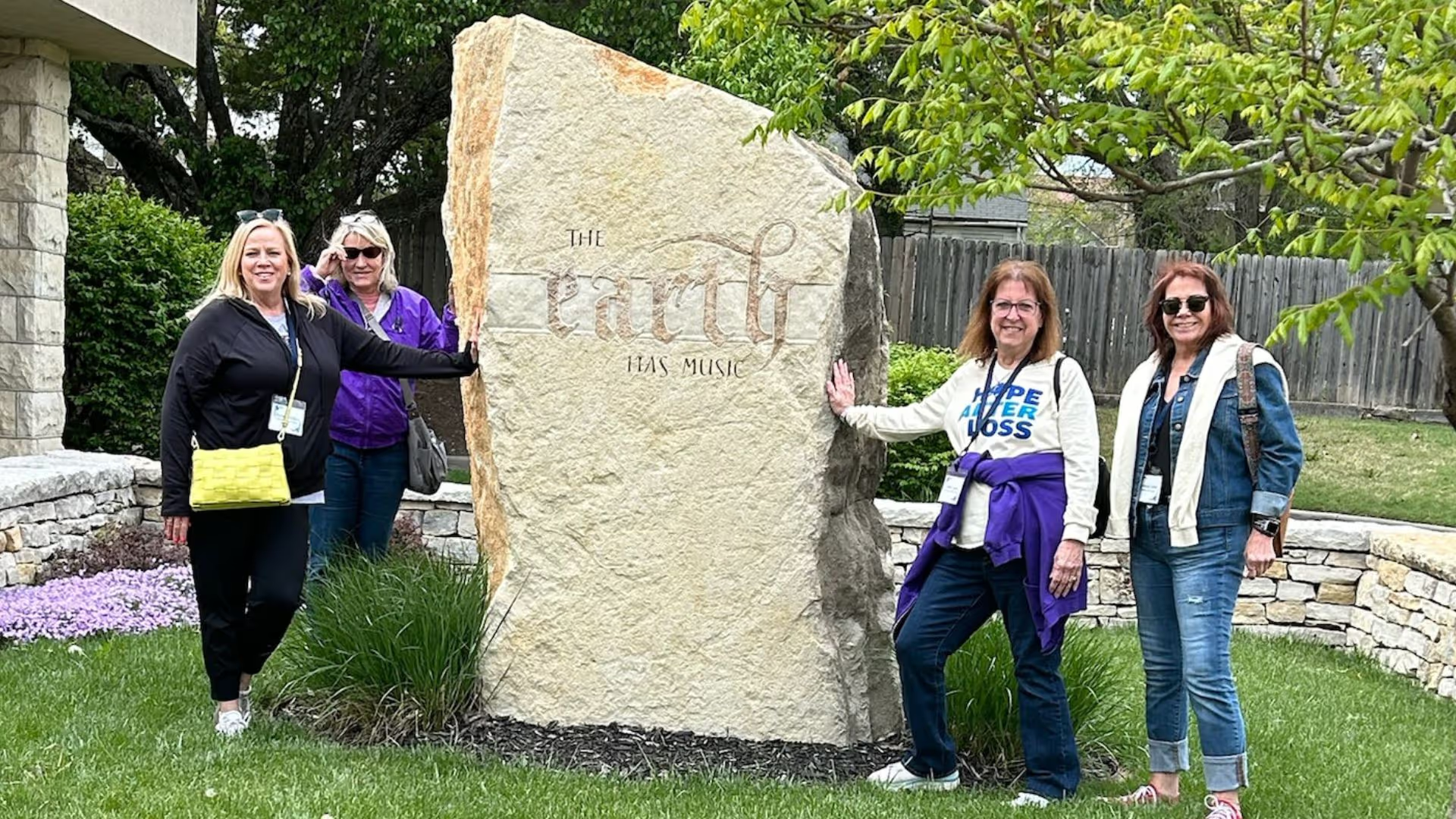
The Isolation of Addiction
Do you feel like you are on an island?
Some may think living on an island would be an amazing experience filled with adventure and relaxation. But before long, your resources would run out, the storms would come, the bugs would invade, and isolation would hit.
When we love someone in addiction, it can feel like we are stuck on an island with nowhere to go and no one to turn to. Will this storm ever stop? Will the bugs go away? Will I ever see family and friends again? Can I ever enjoy life again?
The answer is yes, but you are the one who must make the decision to seek help for yourself. You must put in the work to get off that island. Is it easy? No. But is it necessary? Yes. Will you be grateful you did? Yes.
If you feel like you are stuck on an island alone, it’s time to use the resources you do have to get off it. Attend a Finding Hope meeting. Reach out to another Finding Hope member. Listen to the Finding Hope Podcast. Reread the Finding Hope book. Complete the Finding Hope YouVersion plans. Do it and know that an action always beats intention.
“Fight the good fight of the faith. Take hold of the eternal life to which you were called and about which you made the good confession in the presence of many witnesses.” 1 Timothy 6:12
For more information, visit: