Articles & Resources
Explore articles and resources designed to bring encouragement, insight, and hope for every step of the recovery journey.
Introducing The Healing Center


Introducing The Healing Center
We are so excited to introduce you to the next step in our ministry, The Healing Center.
The Healing Center is a brand new recovery center just outside of Oklahoma City, set on 75 peaceful acres, created to help men and women find freedom from addiction during their first 45 days of sobriety.
Here, we believe that lasting sobriety comes from radical life change. First, we provide a safe, structured environment where people can truly heal. Then, we address the roots of addiction. We don't just want to break old habits. We want to find the why and turn that weakness into purpose.
Our Christ-centered community and holistic faith-based approach set us apart from every other addiction recovery program available.
At The Healing Center, residents are surrounded by encouragement, support, and accountability as they walk out their journey towards freedom. Our staff is passionate about seeing lives transformed from the inside out. And we are committed to helping you achieve lasting sobriety.
The Healing Center is a place designed to care for every son and daughter, brother and sister, mother and father — anyone ready to focus on what matters the most, their recovery.
We know that with hope, healing is possible, lives can be rebuilt, and families can be restored.If you'd like to learn more about The Healing Center, or if you have someone struggling with addiction today, please visit our website. We would love to help you and your family take the next step toward freedom.
With hope,
Lance and Ally Lang, Hope is Alive Founders
How to Stop Pain from Consuming Your Life

How to Stop Pain from Consuming Your Life
The more our pain consumes us, the more it will control us.
Can you relate? I know I can. Many of us loving an addict can.
Pain is real. Hurt is real. Fear is real. Anger is real. And when we allow these emotions to consume us, then they will start to control us. They will control our reactions to others. They will control how we feel about ourselves. They will control how we see the world. Ultimately, they will cause us to give up our HOPE.
When we are in pain, we begin to think that we will never get out of this cycle and that we will be stuck in pain forever. I remember thinking, Will I ever be happy again? I didn’t think it was ever possible. As pain and suffering consumed me, that is all I could think about. I truly believed that this was what the rest of my life would be like.
But I am here to tell you that I am now happy. I found peace because I no longer let pain consume me. But I am not immune to pain, and you are not either. That is why we must learn how to work through pain in a healthy way.
Here are some helpful tips to get us through pain so that it does not control us:
- Recognize that you are in pain. By acknowledging that our pain is real, we can begin to heal.
- Give the pain to God for Him to carry.
- Pray the Serenity Prayer and make a list of things that are in your control and things that are not in your control.
- Find a healthy way to release the pain. Go for a walk, listen to worship music, journal, read God’s word, call another Finding Hope member, or attend a Finding Hope meeting. Find what works for you.
The pain will not go away overnight, but we can find peace and hope again. Don’t let pain control you anymore; take that first step towards healing.
“And the God of all grace, who called you to his eternal glory in Christ, after you have suffered a little while, will himself restore you and make you strong, firm, and steadfast.” 1 Peter 5:10
For more information, visit:
Habakkuk | Bible Reading Plan
Habakkuk: Wrestling With God and Trusting Him Anyway
Inspired by Tammy Posey, who lost her son Benjamin Posey to addiction, this six-day devotional is designed for those grieving the loss of a loved one to addiction. If you’ve ever sat with unanswered questions, replayed painful memories, or wondered where God was in the middle of it all, this plan is for you. Through Habakkuk’s honest conversations with God, you’ll find permission to bring your own hurt, doubts, and “what ifs” into His presence.
Start the plan here: Habakkuk: Wrestling With God and Trusting Him Anyway
Shame Fueled by Addiction

Shame Fueled by Addiction
“Shame can hold us back, hold us down, and keep us staring at our feet.” —Melody Beattie, Beyond Codependency
It’s easy to feel shame when you love someone who struggles with substance use. This shame you may be experiencing or have experienced is real. Until you recognize it for what it is, you can’t begin to heal.
More often than not, shame keeps us weighed down, feeling like we’re stuffed in a box. This leads us to feeling trapped, like there is no way out. The enemy wants us to feel stuck there. He wants us to feel weighed down. He wants us trapped. He wants us to feel alone. He wants us to believe no one else is going through it. He wants us to believe it’s our fault. He wants to keep you where he has you, with little to no hope.
He doesn’t want you to share your story. He doesn’t want you to connect with others. He doesn’t want you to lean on God.
I remember the shame I felt when I discovered my husband was an alcoholic. What will people think? Will people think I am the reason he drinks? He's a Christian and a good guy — will others judge him? If I stay, will people judge me?
I also recall the shame I felt as I lied when he went to rehab. He is just in Texas for a little bit.
I even carried the shame into my first Finding Hope meeting… What will these people think of me as a wife? What if I see someone I know?
Again, these are all lies from the enemy.
So how do we let go of the shame so we can begin to heal?
- Verbalize the way you feel: ”I am feeling shame from my mother’s drug addiction.” and say out loud, “My husband (son, granddaughter, etc) is an alcoholic.” This allows you to admit your honest feelings to yourself and acknowledge that your loved one does struggle.
- Write down all the shame you feel, as well as any other feelings that are keeping you trapped.
- Share what you’ve written with a safe person like a trusted friend, a Finding Hope Leader, or a licensed counselor.
- Tell that one person or group that you have been lying to about what is really going on with your loved one. It will be more freeing than you know.
- Get connected or stay connected to a Finding Hope group!
Don’t let the enemy keep you from the HOPE we find in Jesus.
”In You, O Lord, I put my trust; let me never be ashamed; deliver me in Your righteousness.” Psalm 31: 1
For more information, visit:
Become a Monthly Partner to Keep Hope Alive
Become a Monthly Partner to Keep Hope Alive
Every day, men and women walk through our doors carrying years of pain, shame, and hopelessness as a result of years of addiction. But here at Hope is Alive, we believe that every life matters and that freedom from addiction is possible.
Help us radically change the lives of drug addicts and alcoholics by becoming a monthly partner today.
Because of monthly partners, lives are being set free from addiction, families are being reunited, and generations are being changed. But there are still so many who need a chance to begin again. That’s where you come in.
When you give each month, you’re helping keep our recovery homes open and thriving. Your gifts help us provide a safe and stable home for residents taking their first steps out of addiction; they help us give recovering addicts and alcoholics a chance at long-term sobriety.
No matter the amount, your monthly gift brings hope and healing to our residents.
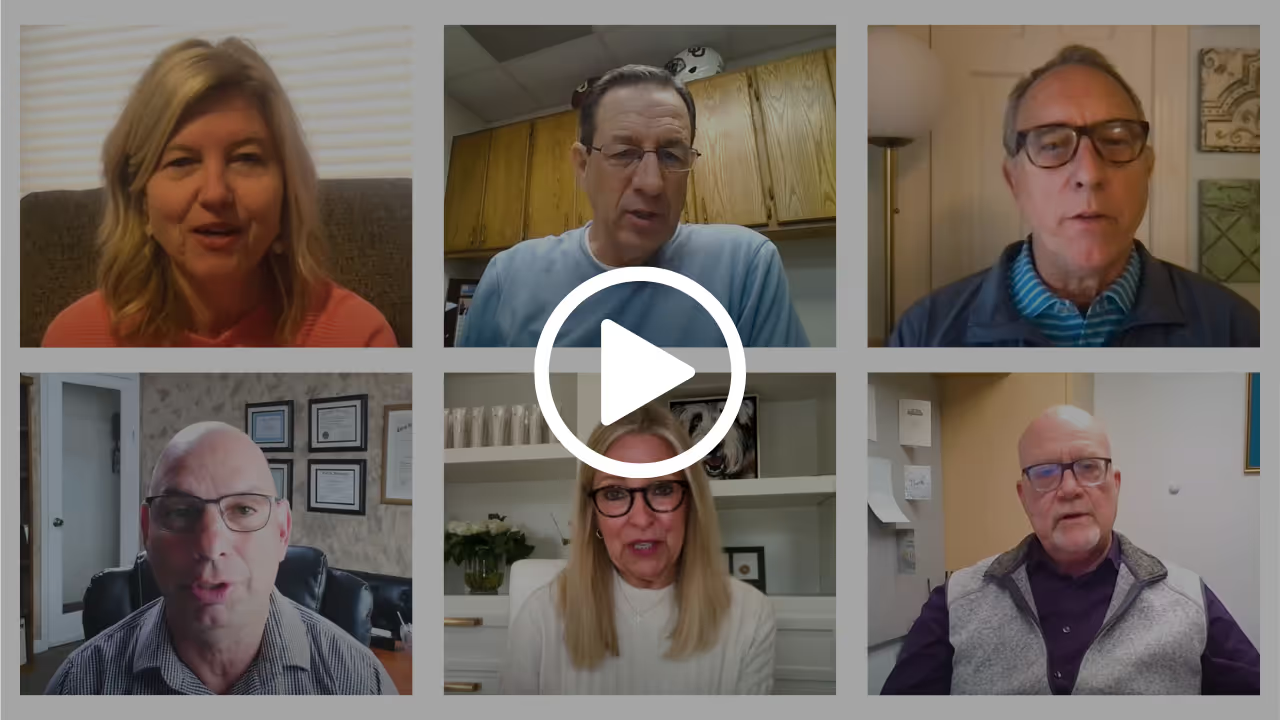
Hear From Our Team
Our mission has purpose, and together we’re moving it forward. Even some of our staff members are monthly partners. They’ve seen the impact firsthand, and they choose to give because they know every dollar truly changes lives.
“I became a monthly partner before joining the staff several years ago. I said yes because when I walked into the Weatherford home to deliver a meal, I could tell there was just something different about it. There was a presence in that home that felt so powerful. I knew I had to support it in one way or another.” —Jacy Burrows
“When I was at the lowest point in my life, Hope is Alive stepped in and met me where I was at. Almost seven years later, I am married and truly living my best life as a Hope is Alive alumni and staff member. Having the opportunity to give back and support the next person who is looking to radically change their life is truly a no-brainer and something I am honored to do.” —Sean Fitzpatrick
“I had believed in Hope is Alive for many years before coming on staff. To me, it only makes sense to personally support the very mission I invite others to join in moving forward. My favorite part about being a monthly partner is seeing the debit on my account; it reminds me to stop and pray specifically for the residents of each home.” —Amanda Green
Don’t wait — become a monthly partner today!
Hope Changes Everything | Bible Reading Plan
Hope Changes Everything
Pain, fear, sin... these don't have to run your life. Discover who God made you to be with practical steps and empowered encouragement, because hope changes everything. (This plan is adapted from the book Hope Changes Everything by Lance Lang.)
Start the plan here: Hope Changes Everything
A Mission Worth Supporting: Hope is Alive
A Mission Worth Supporting: Hope is Alive
You don’t have to be a big church to make a big impact. Family Church in Wichita, Kansas, is living proof of that truth.
Their partnership with Hope is Alive began not with a program or a plan, but with a simple visit. When Pastors Boone and Debbie Baker first visited an HIA home, they had no idea how profoundly the ministry would shape their lives. After joining a men’s group one Sunday evening and witnessing the honesty, hope, and Christ-centered support within the home, they quickly realized this was far more than another organization to donate to. It was a mission worth giving their hearts and time to.
“We fell in love with what HIA was doing, and how they were doing it,” Boone shared. “We wanted to partner with something that sees success, follows scripture, and truly points people to Christ.”
With HIA, that’s exactly what they found.
It didn’t take long for Debbie to find a personal rhythm in serving. She began visiting the women’s home regularly, always with her now-famous crockpot roast, potatoes, and carrots. But it’s not the meal that matters most to her; it’s the relationships. Debbie stays to talk, listen, laugh, pray, and participate in sister shoutouts, which have become one of her favorite parts of the night.
“I just love those girls,” she said. “I’m proud of them for what they’re accomplishing.”
And she doesn’t keep the experience to herself. Debbie brings a friend along every single time she visits a home — someone who hasn’t been there before — because she wants others to feel what she feels when she walks through those doors. Without exception, each person leaves deeply moved by what they experience inside the HIA homes.
As Boone and Debbie shared their own involvement with HIA, the rest of Family Church began to catch the vision. People started volunteering, serving meals, and building relationships with residents. One elder spoke at a men’s home and returned so encouraged that it sparked even more interest and engagement throughout the church. From there, it has continued to build.
After seeing how powerful shoutouts were in the HIA homes, Debbie wondered whether the same kind of encouragement could bless their own church. So Family Church gave it a try — and the response was overwhelming.
“It was just precious what the people stood up and said about one another,” Debbie shared. “It was a good thing.”
What started as a single visit has now become a thriving partnership — one that is shaping hearts, strengthening community, and opening eyes to both the realities of addiction and the hope found in Christ-centered recovery.
Are You Addicted to Your Addict?

Are You Addicted to Your Addict?
This is a tough question, but one that you need to really think about and answer honestly: Are you addicted to your addict?
What does that even mean? Initially, you may say, “No, that is a crazy question. How could I be addicted to my loved one?” But I want you to really stop and think about the following questions that might help you see more clearly if you are addicted to your addict.
- Are you excessively helping him/her?
- Are you neglecting your own needs? Do you even know what you need?
- Are you taking on their problems as your own to fix?
- Do you want their sobriety more than they want it?
- Are you trying to control the situation?
- Are you obsessively focused on their addiction and how to get them sober?
- Are you using up all your energy and time focusing on them and searching for the perfect cure?
- Are you shoving down your feelings and thinking they don’t matter?
- Are you always giving, giving, giving?
- Do you have a hard time saying “no” to others?
If you answered yes to the majority of these questions, you are most likely addicted to your loved one. You are also stuck in the cycle of codependency. I have been there too. We become addicted to trying to fix him/her. We become addicted to controlling the situation with our threats and manipulation strategies. We become addicted to searching the internet for the best therapists, treatment centers, and cures to the point that we neglect our own needs.
Stepping out of the cycle of codependency can feel scary, uncomfortable, and unnatural, BUT it is the best thing for you and for your loved one. Remember, nothing will change if nothing changes… Maybe that change needs to be taking that first step out of the cycle of codependency.
"Am I now trying to win the approval of human beings, or of God? Or am I trying to please people? If I were still trying to please people, I would not be a servant of Christ." Galatians 1:10
For more information, visit:
The Illusion of Control: The Story of Robert Holsonbake
The Illusion of Control: The Story of Robert Holsonbake
People experiencing addiction often tell themselves things like:
- “I can stop anytime.”
- “I’ll only use on weekends.”
- “This time will be different.”
- “I’ve got it under control now.”
These beliefs feel convincing, especially during periods of short-term success, but they conflict with the reality of addiction as a chronic, relapsing brain disorder.
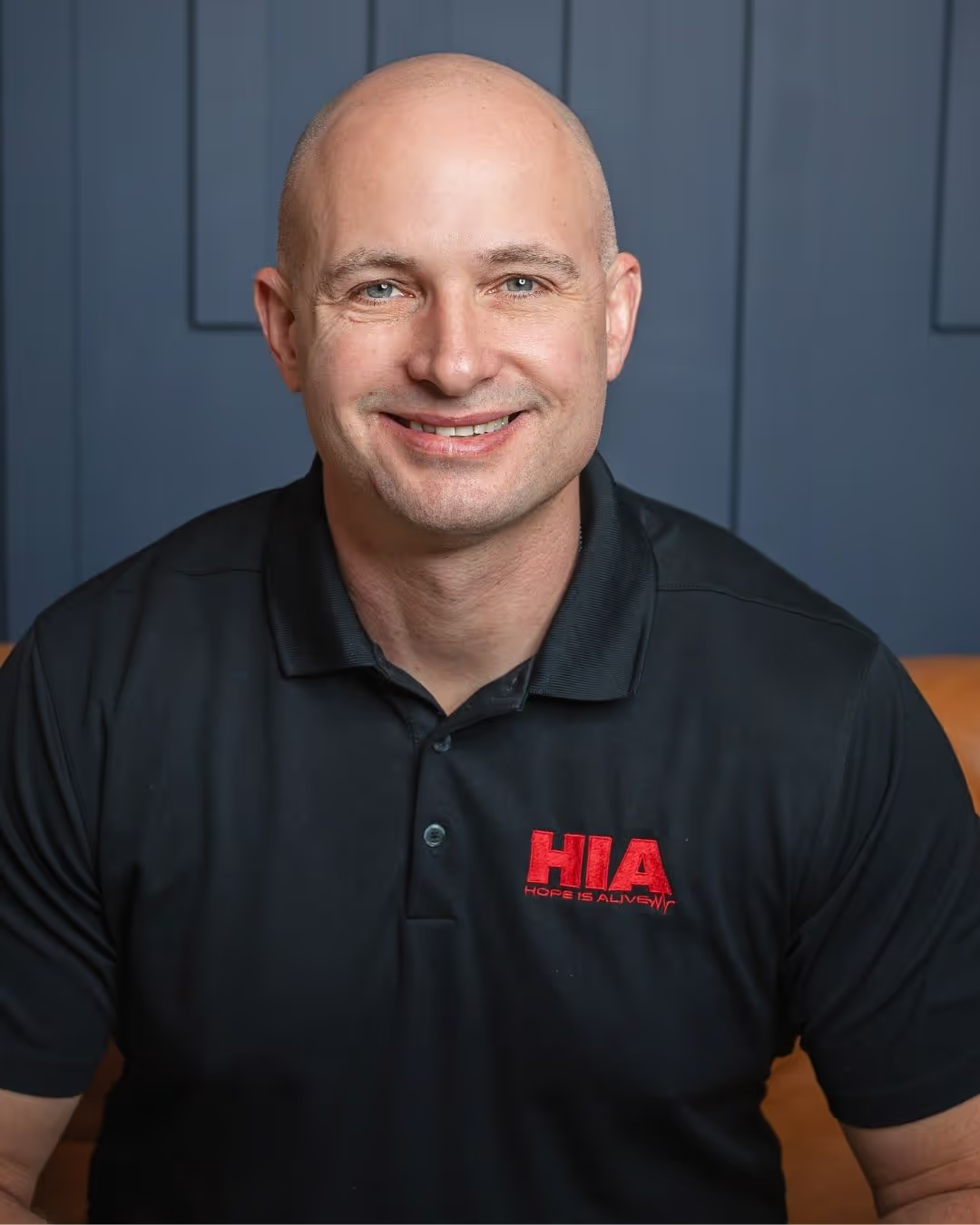
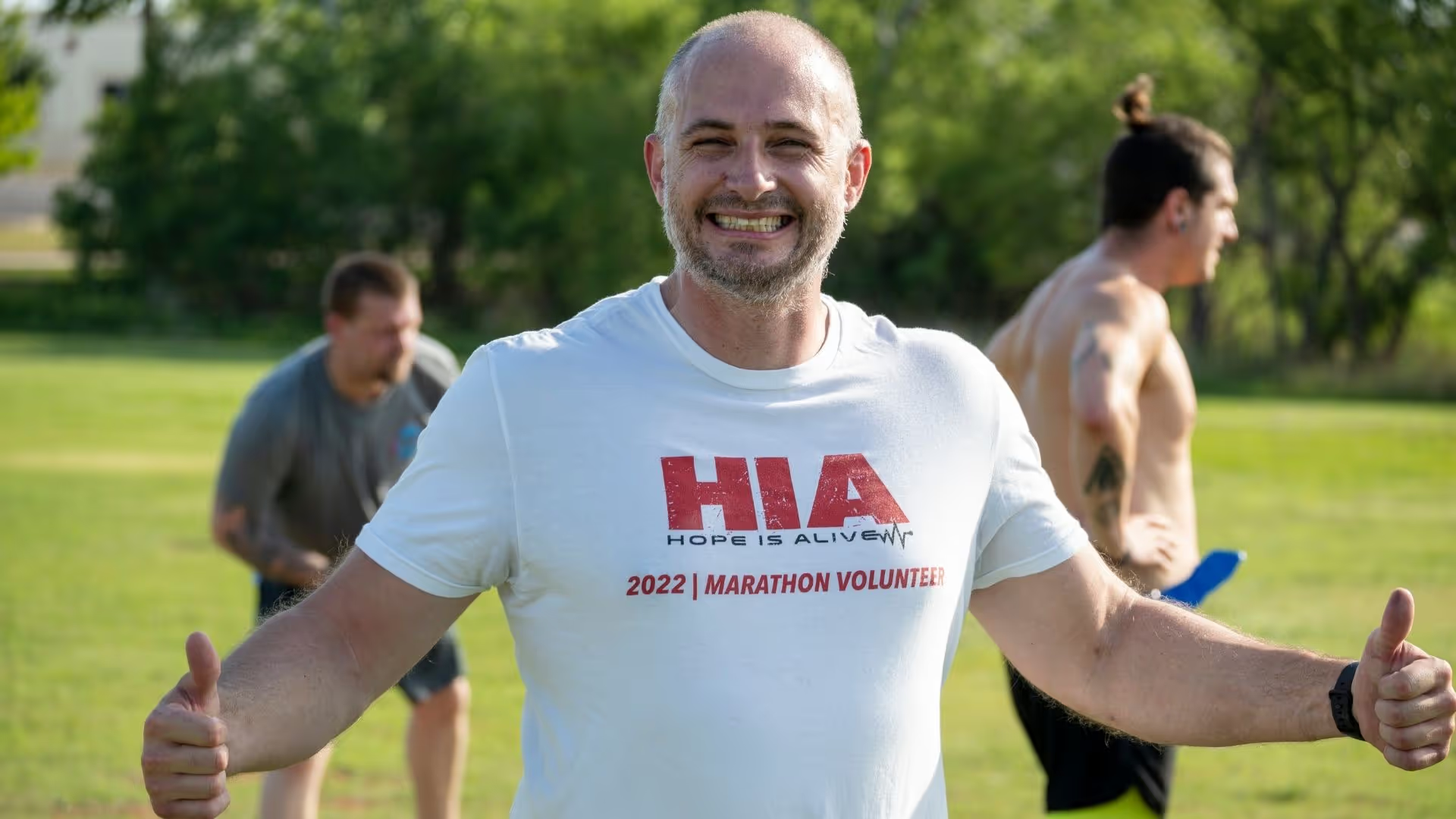
Like many others, Robert Holsonbake (aka Rob) was caught in this cycle of substance use — a cycle that lasted 25+ years.
“I always had the illusion of control,” Rob shared. “I thought I could put the bottle down anytime, but I kept drinking because I simply either didn’t want to stop or didn’t care to.”
It didn’t matter that Rob bounced from job to job, fired time after time for showing up to work drunk or hungover. It didn’t matter that he burned more bridges than he could count, losing relationships and friendships left and right. It didn’t matter that he had received multiple DUIs and was facing a second felony charge that would result in prison time. All that mattered was alcohol and his desire to numb himself to everything that surrounded him.
The Reality of Addiction Recovery
Even though Rob didn’t have a desire to get sober, his family never stopped trying to give him his life back. So, for years, Rob chased the promise of being “fixed.” He enrolled in programs, completed requirements, and did everything asked of him on paper. From the outside, it often looked like success.
But internally, nothing had changed.
“I could follow any structure you gave me,” Rob said. “I could look like the golden boy, check every box, and graduate. But the whole time, I was just waiting until I could drink again.”
Each time Rob regained some stability — a job, a place to live, a clean record — he returned to alcohol, convinced this time he could control it. He started with beer. Then a few beers every night. Then liquor. Then bigger bottles. Then drinking in the morning just to stop the shaking.
Eventually, alcohol wasn’t something he used to relax or escape — it became something his body needed to survive.
“It got to the point that I was drinking to live. My body depended on it so much that if I would have stopped, I probably would have died. Yet, I still felt like I could control it.”
That illusion of control led Rob down an even darker path. He drank through depression, continued unemployment, and isolation. He drank despite knowing the consequences. He drank even when he no longer wanted to live — ironically because of how much alcohol had impacted his life.
Then one night, everything nearly ended.
After more than 25 years of relentless drinking, Rob’s father found him facedown in bed, unresponsive. At first, he thought his son was dead. An ambulance rushed Rob to the hospital, where doctors told him the truth plainly: If he had been found even an hour later, he wouldn’t have survived.
His organs were shutting down. His body was malnourished. Alcohol had consumed everything.
Still, even that didn’t deter his drinking.
“Everyone thinks alcoholism is something that can be cured. I was told that if I went to rehab, I would be cured — I would be fine,” Rob explained. “But I think that’s a misconception about addiction.”
By this point, he had already learned that recovery built on performance didn’t last.
“Every program I tried focused on stopping the behavior,” Rob explained. “But no one ever helped me understand why I drank.”
Without addressing the root causes — trauma, emotional suppression, abandonment, and a lifelong need for control — sobriety became temporary. Alcohol always found its way back into his life, often more aggressively than before.
As long as Rob believed he could manage his addiction, he never truly faced it. Until Rob was finally faced with a choice he couldn’t manipulate.
After his hospitalization, Rob’s father gave him an ultimatum: “You can either live out in the woods, or you can go to rehab and get yourself straight.”
Rob had moved in with his father after one of many failed rehab attempts, believing the isolation of the countryside would keep him safe. At first, the distance from the liquor stores and lack of transportation felt like a barrier Rob couldn’t cross.
But that mentality didn’t last once he got a job, some money, and a key to a vehicle. Only this time, alcohol pushed him to a new level of alcoholism — a level that was placing an extreme amount of stress on his father. Because Rob’s father already had a heart condition, his health declined to the point that even his doctor knew that Rob needed to find somewhere else to live.
“My dad giving me that ultimatum is what saved my life,” Rob shared. “That is when it hit me that God was giving me another chance. There was a reason He was still keeping me around. So, I chose rehab.”
It was during his first week at rehab that Rob finally surrendered everything to God.
“I heard this voice in my head, but it wasn’t my voice. He simply asked me if I was finished, if I was done. I told Him I was — I couldn’t do it anymore. I told Him to let me see what He could do with me. From that point on, I’ve surrendered everything to Him.”
While Rob had previously based all his actions on “looking good” for God and others, he was now doing everything for himself and his salvation. Naturally, that pushed him to look at recovery and his sobriety differently.
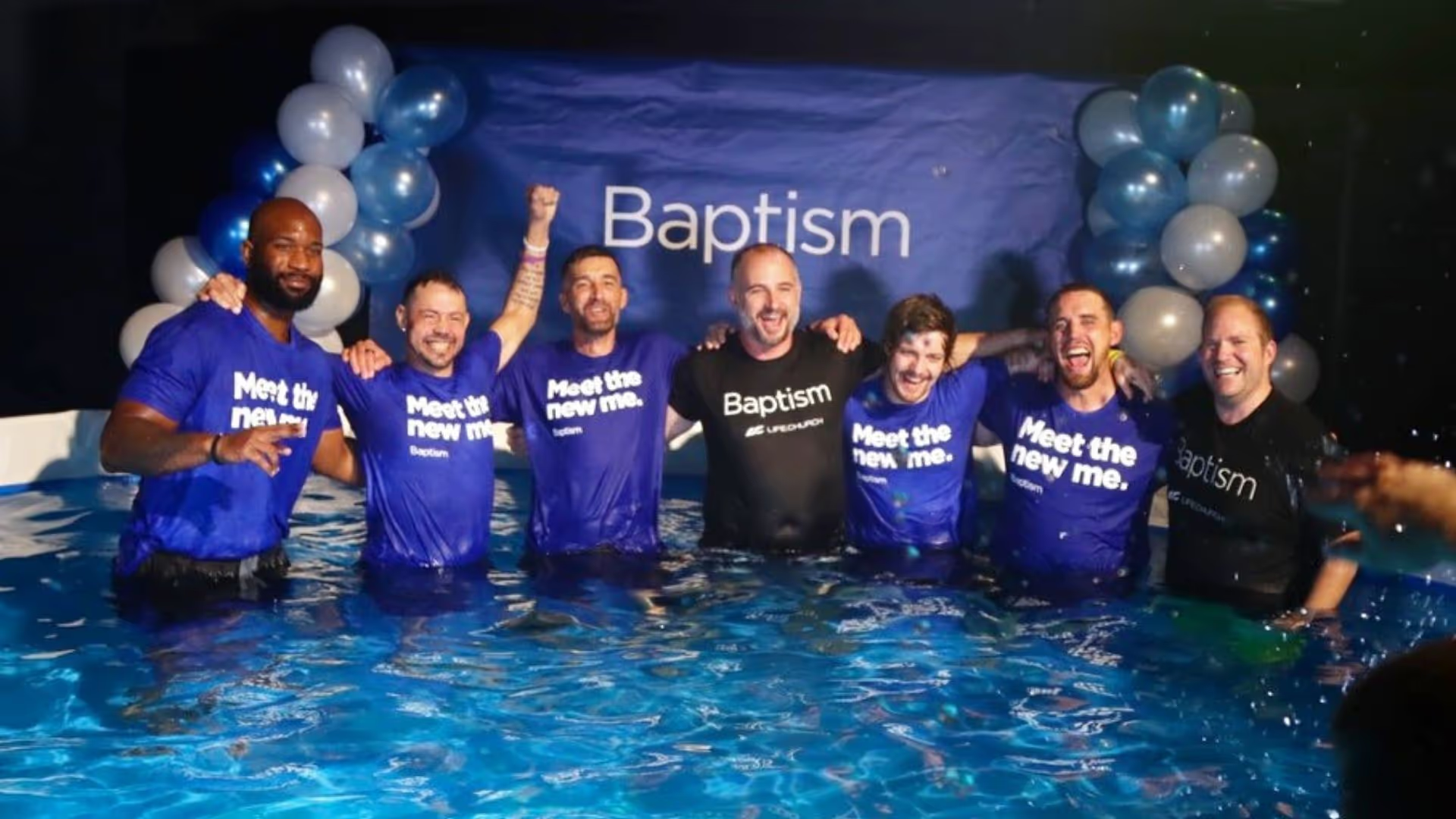
Recovery Done Differently
“I went from not wanting to live, praying for God to take my life because I couldn’t take it myself, to seeing life in HD because God answered my prayer to take my cravings away.”
During his time at his final rehabilitation center, Rob felt God stirring something new in him. Despite having no formal training and very little confidence in his biblical knowledge, he felt called to step forward and lead a Bible study. He didn’t feel capable, but he also knew he couldn’t ignore the calling.
So Rob began walking through the cabins, simply asking the other men if they wanted to read Scripture together. He was surprised by how many people joined him. Each morning, men gathered to talk about the Bible and how they related to it. What was meant to last an hour often stretched into three or four.
That Bible study became a place of connection and healing. Men who felt like they had lost everything and everyone found a brotherhood in Christ.
For Rob, it was the first time he realized God could use his story — not in spite of his past, but because of it.
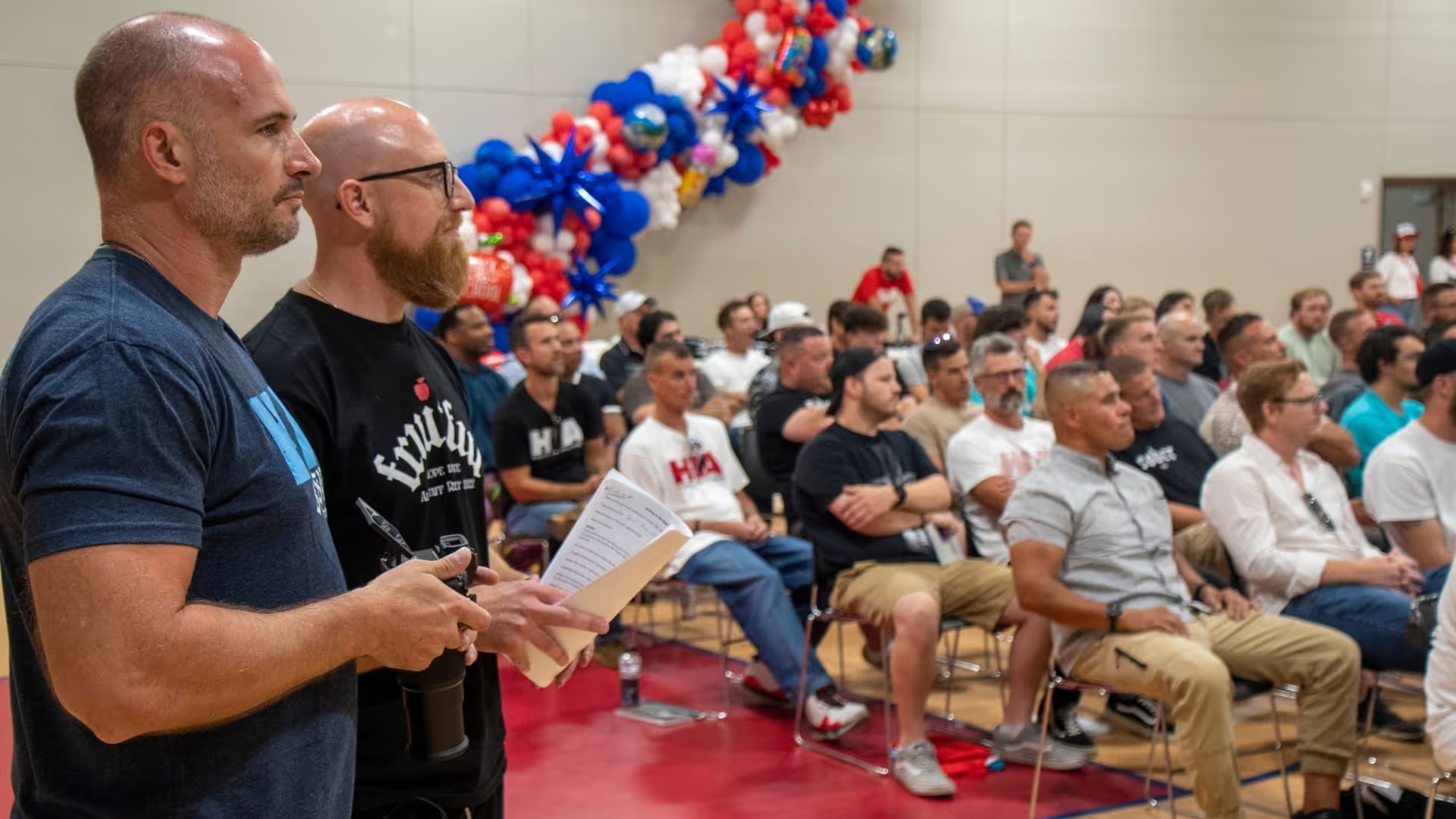
As Rob’s time in treatment began to come to an end, he knew something was different. For the first time, he wasn’t just thinking about staying sober — he was thinking about how he would live sober. He knew he needed structure, accountability, and community rooted in faith if he was going to continue the life God had started rebuilding.
During a Night of Hope event, Rob was introduced to the heart of Hope is Alive, and instantly knew it was the next step for him. Up until his graduation date, Rob stayed in contact with the Hope is Alive team. He gave them updates, and in turn, Hope is Alive made preparations for him to enter a home right out of treatment. When graduation finally came, Rob went straight from treatment to a Hope is Alive home because he couldn’t wait to get there.
“I’ve been in other sober living homes and ‘programs,’ and they are nothing like Hope is Alive,” shared Rob. “Instead of fighting for sobriety in a rundown, grungy place, Hope is Alive put me in a nice house with great people who were all bettering their relationships with Christ.”
From the start, the brotherhood of Rob’s home welcomed him with open arms. If he needed anything, they were there to help him. Whether it was getting a good meal, having someone to talk to or pray with, or just knowing there was support, Hope is Alive changed Rob’s perspective on addiction recovery.
Hope is Alive does recovery differently. Instead of focusing solely on alcohol, Hope is Alive helped Rob uncover the patterns that had been shaping his life long before alcohol became a coping mechanism.
“At Hope is Alive, they don’t just ask you what you’re using,” Rob explained. “They ask why you were using in the first place.”
Through the program, Rob began identifying his process addictions — unhealthy attachments to control, performance, sex, and relationships. When things felt uncomfortable, uncertain, or painful, he looked for something — anything — to numb, distract, or escape. If it wasn’t alcohol, it was performance. If it wasn’t performance, it was unhealthy relationships based on sexual desire. If it wasn’t relationships, it was isolation.
As Rob continued working through these patterns, it became clear that none of them started in adulthood. Rather, like many other addicts and alcoholics, they started in childhood.
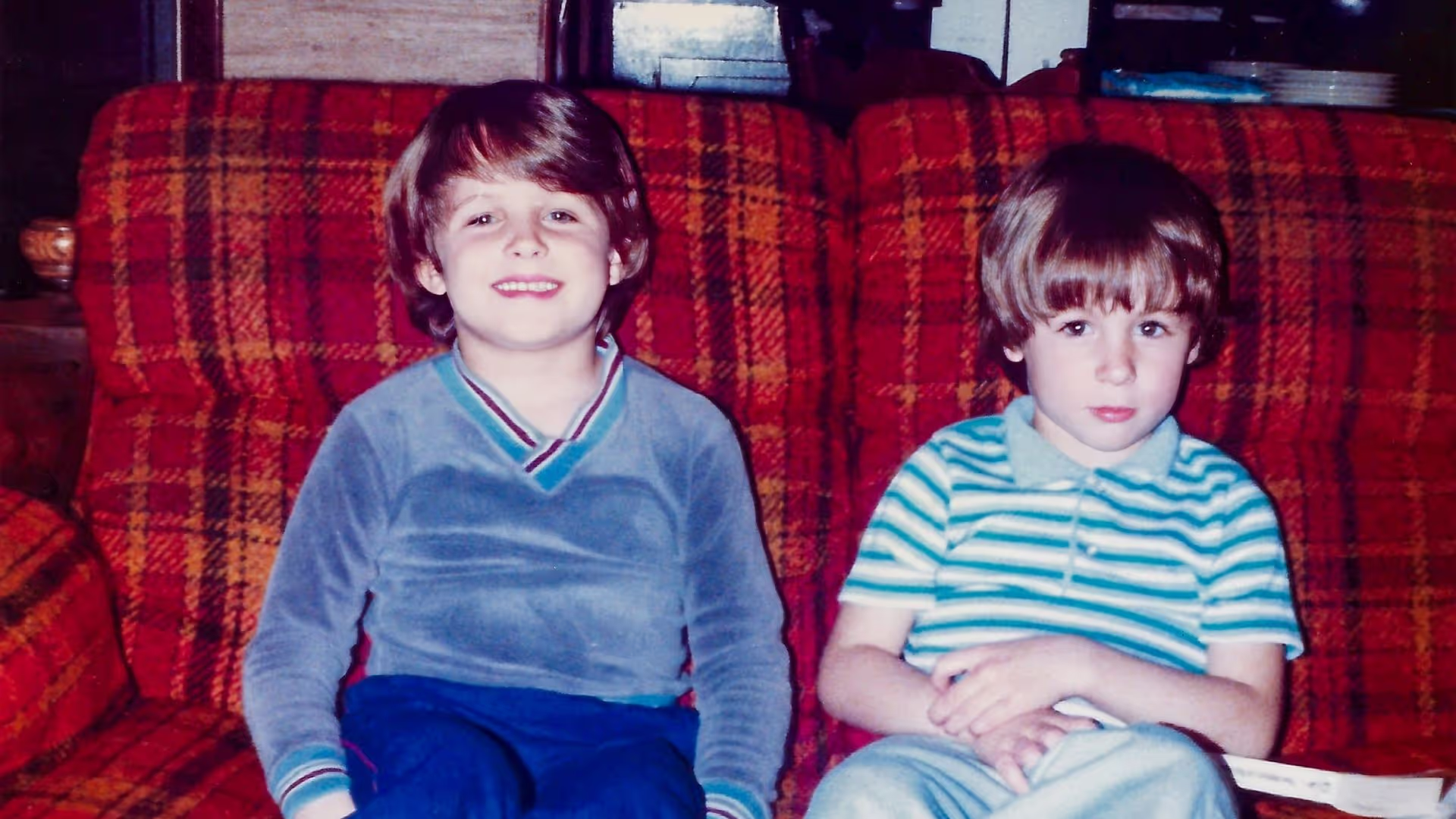
Long before alcohol entered the picture, Rob learned that emotions — especially for men — were something to control, not express. He grew up in an environment where anger was the only emotion that felt acceptable, and even that came with consequences. Sadness, fear, confusion, or pain weren’t talked about. They were pushed down.
“My dad had a bad temper. Anger was the only emotion that was openly expressed in my childhood,” Rob explained. “That shaped how I saw God. I thought He was like my dad, just waiting for me to mess up.”
Rob describes growing up with a “God in a box” — a faith built on rules, fear, and performance rather than relationship. God felt distant and angry. Jesus felt kind and loving. The Holy Spirit felt abstract and impersonal. Because of this view of God, the church, and Christians, Rob considered himself an atheist for 25 years.
With little faith and no one to turn to at home, Rob instead turned to control.
That need for control was reinforced by deep abandonment wounds. When Rob was young, his parents divorced, leaving him with questions and insecurities he didn’t know how to process. Later, at just 12 years old, Rob experienced sexual abuse at the hands of his older stepbrother
While he did everything he could to bury the experience, the damage was done. As a result, Rob overcompensated. He detached from emotions and leaned into sexual relationships without intimacy or vulnerability. Love became transactional. Relationships were built on appearance and desire, not connection. That pattern was reinforced at home, where value was placed on how people looked rather than who they were.
“My alcoholic lifestyle was so selfish that I didn't believe in marriage. The way I interpreted relationships with women also kept me from wanting children or a family of my own.”
For everything else that Rob didn’t know how to name, alcohol became the easy coping mechanism.
While he was able to experiment with other substances and walk away, alcohol was different.
“I did drugs and put them down,” Rob explained. “But alcohol impacted me differently. I couldn’t put it down. From the moment I had my first sip when I was 12 years old, alcohol had me. Every time I got a buzz, I didn’t stop until I either got sick or blacked out.”
This is described in the Big Book of Alcoholics Anonymous as the obsession of the mind — the inability to leave alcohol alone once it takes hold. And for Rob, that obsession ruled his life for more than 25 years.
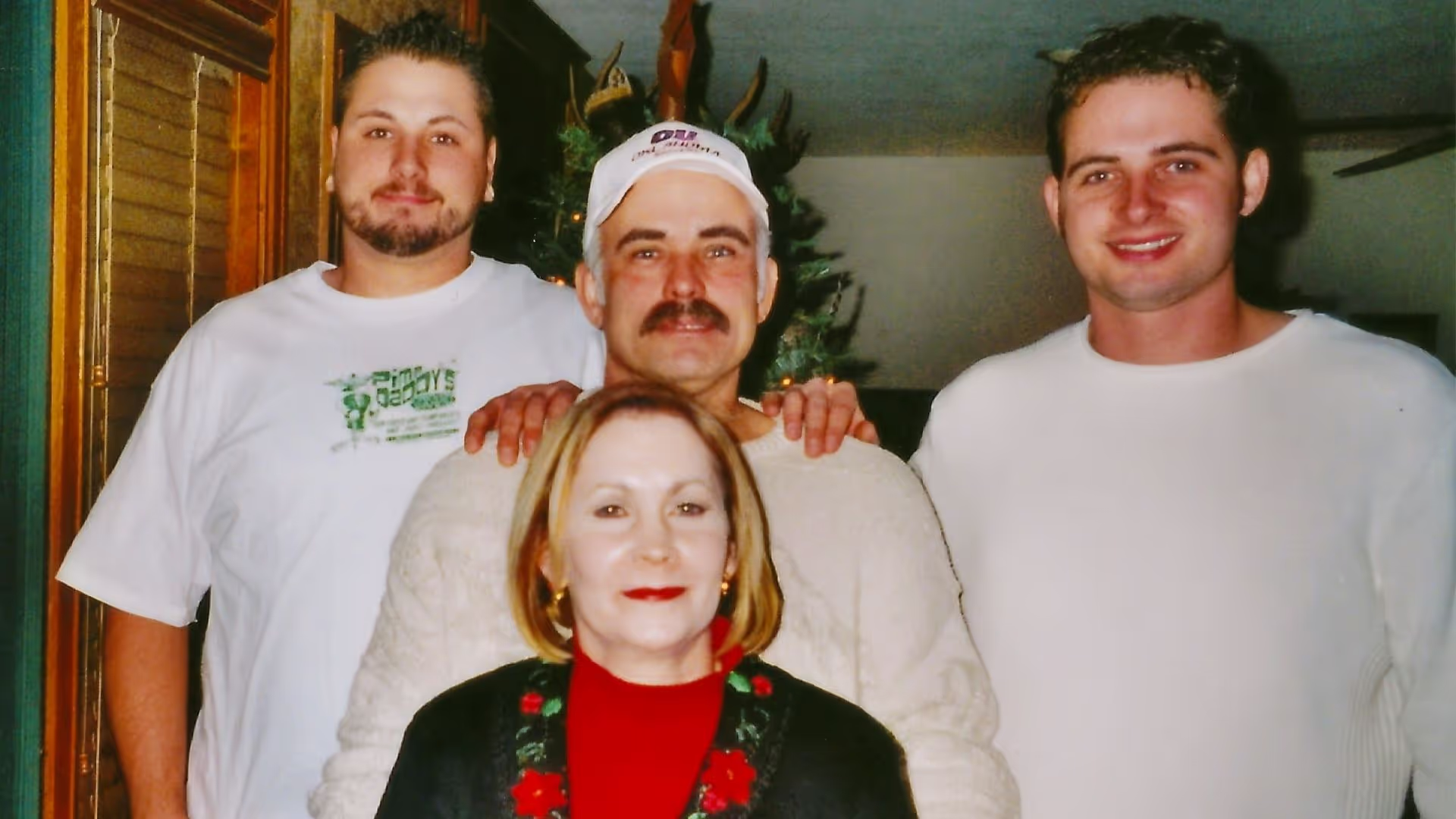
His mom recognized it early on. She was the one constantly researching treatment centers, making calls, and trying to get him help. She knew addiction wasn’t something he could simply outgrow.
His dad, on the other hand, struggled to understand it.
“He would ask me, ‘Why can’t you just stop?’” Rob said. “I didn’t fault him for it, but the reality was that I had no control over my drinking.”
That misunderstanding only added to Rob’s shame — reinforcing the belief that if he just tried harder, performed better, or controlled himself more, everything would change. But, because of Hope is Alive, Rob no longer has this mentality.
“I’m still gonna stumble and fall, but now I know how to deal with it better.”
A Life of Sobriety
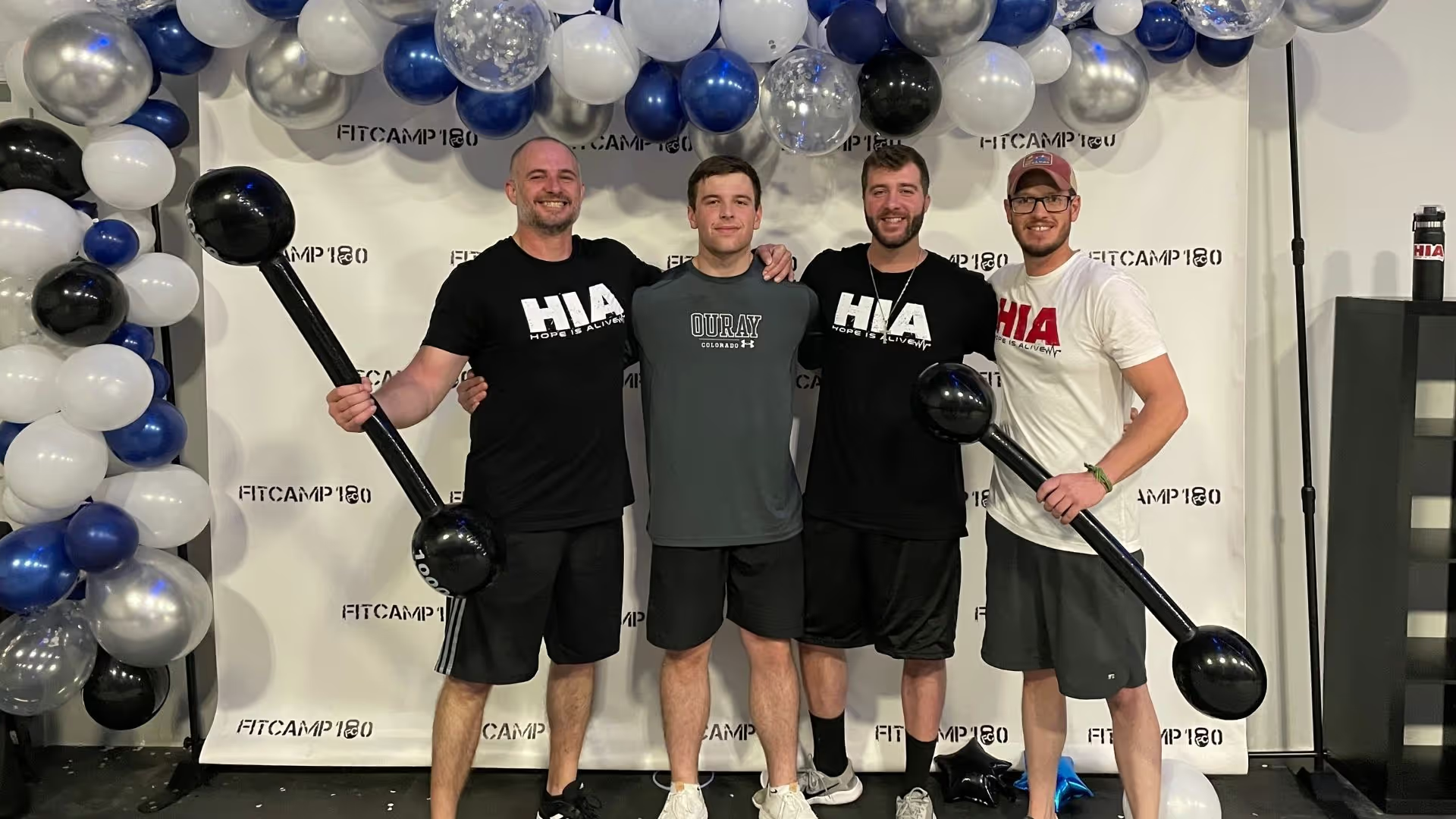
February 8, 2021, marked the end of Rob’s 25-year battle with alcoholism.
Since then, God has blessed Rob with a life he never imagined. He restored the creative gifts Rob had always loved. He surrounded him with a healthy community. And He gave Rob the opportunity to walk alongside others who are still trapped in the same cycle he once believed he could manage.
“I started working for Hope is Alive three months into the program, almost four years ago. I haven’t looked back since.”
Today, Rob understands that recovery isn’t about never struggling again — it’s about knowing how to respond when struggle comes.
Hope is Alive didn’t promise him a perfect life or an easy path. What it gave him instead were tools to cope better and a community that truly gets it. The obsession that once ruled his mind no longer defines his life — God does.
Live for Today

Live for Today
“What do I need today — for me?
Too many times, we think about tomorrow, two weeks from today, three months from now, etc. We forget to live for today.
I remember the weekend I learned about my husband’s addiction. My mind quickly jumped three weeks ahead to Easter. I wondered what we would do and what would happen, forgetting to live in the present rather than the future.
God’s word says in Matthew 6:34, “Therefore do not be worried about tomorrow, for tomorrow worry about itself. Each day has enough trouble of its own.”
When I find myself worrying about the future, I tend to not see God’s blessings. My worries turn to anxious feelings. My anxious feelings turn to fear. My fear turns to hopelessness. My hopelessness turns to depression. This cycle is not healthy — for me, you, or anyone else.
Here are a few things that have helped me:
- Begin your day in gratitude. Write down three things you are grateful for, big or small.
- Begin your day in God’s word. Don’t look at your text messages, emails, social media, etc., until you have read God’s word, God’s truth. Find a verse to meditate on throughout the day/week. Before you go to bed, reread the verse you have been meditating on.
- Throughout your day, focus on God’s blessings. At the end of the day, write down one or two ways God blessed you that day.
- When those worried thoughts begin to cloud your mind, write them down, give them to God (sometimes multiple times a day), call another Finding Hope member, speak truth yourself, go for a walk/drive, paint, listen to worship music, read, change your scenery, watch a funny show, etc. Do something else.
“Let the morning bring me word of your unfailing love, for I have put my trust in you. Show me the way I should go, for to you I lift up my soul.” Psalm 143:8
For more information, visit:
Hope is Alive’s 2025 Impact Through YouVersion
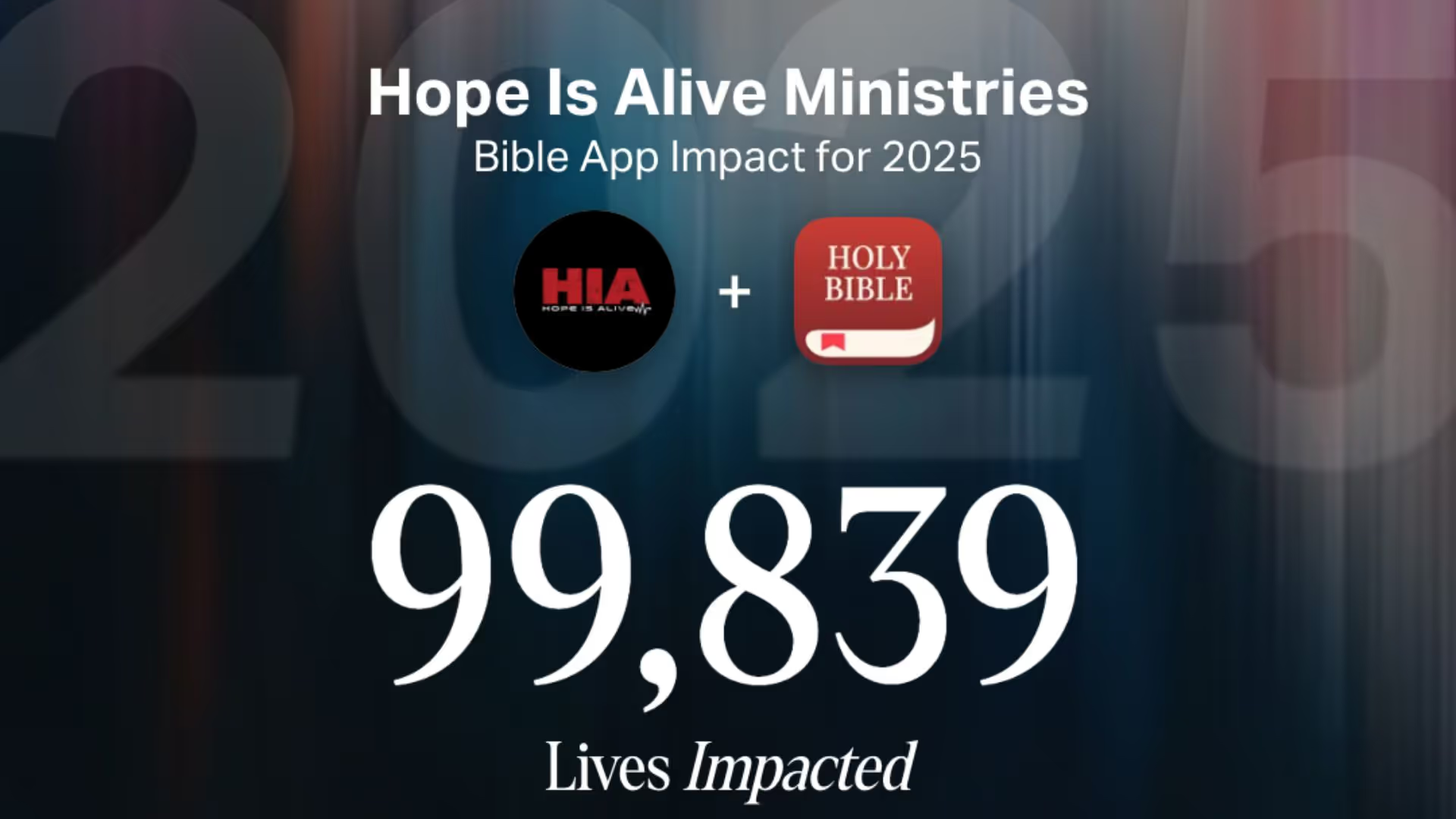
Hope is Alive’s 2025 Impact Through YouVersion
Hope is Alive believes that no one impacted by addiction should ever feel alone. In 2025, the YouVersion Bible App served as a powerful tool for connecting people touched by addiction to a community that truly gets it.
Through YouVersion, Hope is Alive offers Scripture-based Bible plans created for recovering addicts, those who love someone battling addiction, and those grieving the loss of a loved one to addiction. These plans meet people in some of the most painful and vulnerable moments of their lives, reminding them that hope is alive.
In 2025 alone, 101,179 people subscribed to Hope is Alive Bible plans. That’s over one hundred thousand moments where God’s Word spoke directly into someone’s situation. Whether it’s a person fighting for sobriety one day at a time, a spouse or parent learning how to love without losing themselves, or someone processing deep grief, these plans offer honesty, compassion, and hope rooted in Scripture.
In 2025, 1,354 new followers chose to stay connected with Hope is Alive on YouVersion. That growing community represents people who didn’t just want a single plan, but ongoing encouragement and support.
Looking ahead, YouVersion will continue to be a key way for Hope is Alive to share hope with people wherever they are.
No one is alone. Hope is alive.
Read our YouVersion plans today by clicking here!
God Will Care for You and Your Addicted Loved One
God Will Care for You and Your Addicted Loved One
When the world around us seems to be in chaos, it is easy to forget who God is and that He is in control. Whether we are worried about an illness, our loved one’s addiction, a work situation, family dynamics, etc., we must remember that our God will never leave or forsake us, our loved one, or our situation. Deuteronomy 31:6 says, “Be strong and courageous. Do not be afraid or terrified because of them, for the LORD your God goes with you; He will never leave you or forsake you.”
Our God is faithful. Our God is good. Our God is present. Our God is mighty. Our God is sovereign. Our God is in control.
Sometimes in this world of brokenness, it is hard to be strong and courageous. In those moments, we need to evaluate ourselves and think about where we are placing our trust. Is it in worldly things, worldly humans, or worldly situations? We must shift our trust back to God and remember that He already knows the outcome of every situation.
This week, remember:
- GOD’S GOT THIS.
- GOD’S GOT YOU.
- GOD’S GOT YOUR LOVED ONE.
“Trust in the Lord with all your heart and lean not on your own understanding; in all your ways submit to him, and he will make your paths straight.” Proverbs 3:5–6
For more information, visit: