Articles & Resources
Explore articles and resources designed to bring encouragement, insight, and hope for every step of the recovery journey.
Battling a Loved One's Addiction

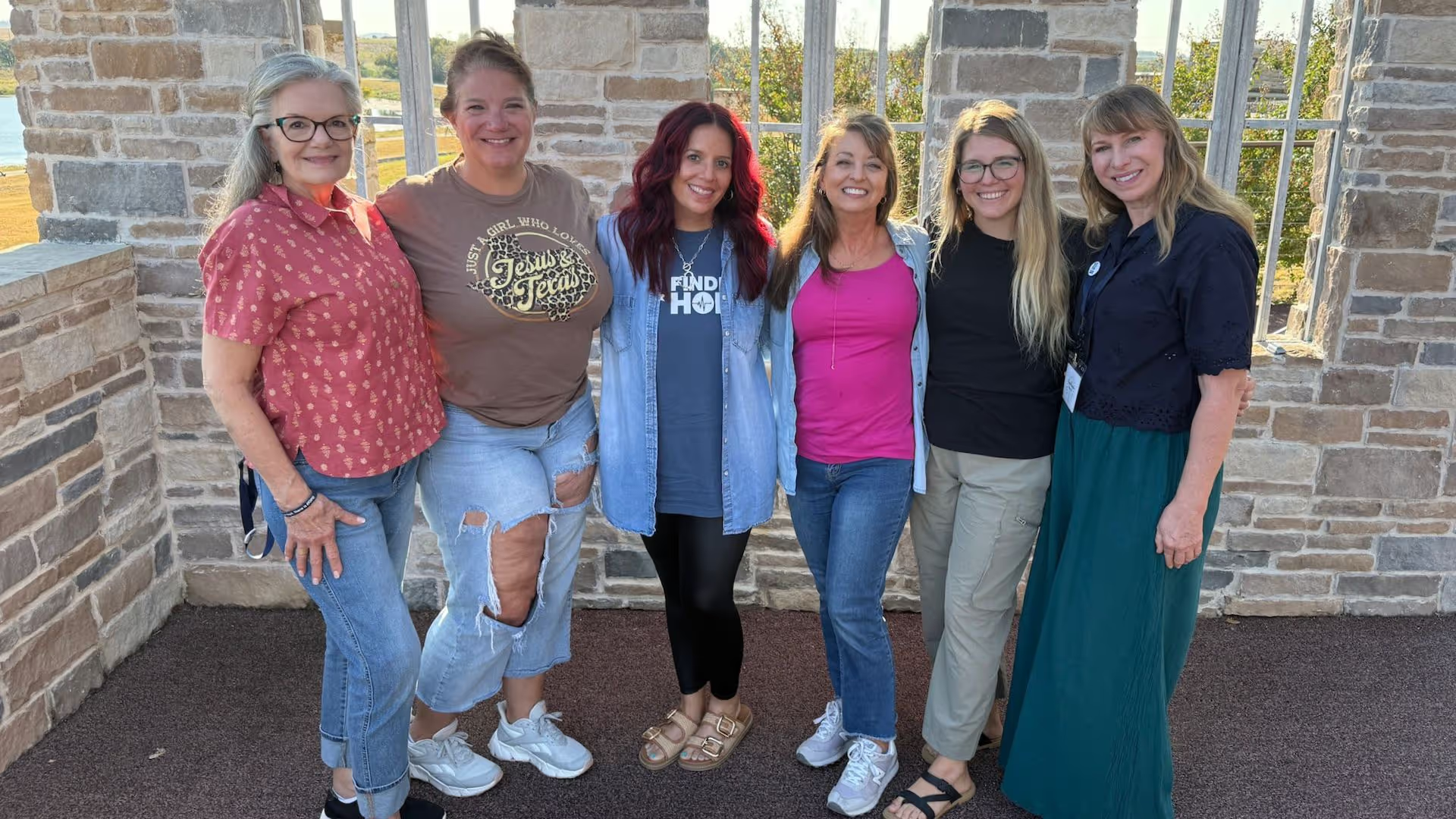
Battling a Love One's Addiction
Loving an addict isn’t easy. We want to get in the middle of their battle and fight for them. We will sacrifice everything, including ourselves, and fight as hard as we can for them to find recovery and a life of sobriety. everything, including ourselves, and fight as hard as we can for them to find recovery and a life of sobriety. But the reality is: It isn’t our battle.
When we step in and fight for our loved ones, we give them nothing to fight for. Why would they need to fight if someone is doing it for them?
When we step in and fight for our loved ones, we don’t allow God to help them fight their battle. Who would you want fighting with them, man or God?
When we step in and fight for our loved ones, we keep them from finding true recovery. Are they in recovery for us or themselves?
When we make it about us, we hinder them. But when we step away from their battle and stop fighting for them, it gives them the opportunity to fight for themselves. It gives them the opportunity to want recovery for themselves. And it allows God to do His mighty work without any roadblocks.
All the energy you are using to fight their battle, give it back to yourself.
Fight for yourself.
Invest back into yourself.
Do something you love.
Love yourself.
Join a Finding Hope support group.
You are not alone. It's not your fault. There is hope.
“But let each one test his own work, and then his reason to boast will be in himself alone and not in his neighbor. For each will have to bear his own load.” Galatians 6:4–5
For more information, visit:
HIA’s School Support Program Delivers "Future Me" Talk to Local Schools
HIA’s School Support Program Delivers "Future Me" Talk to Local Schools
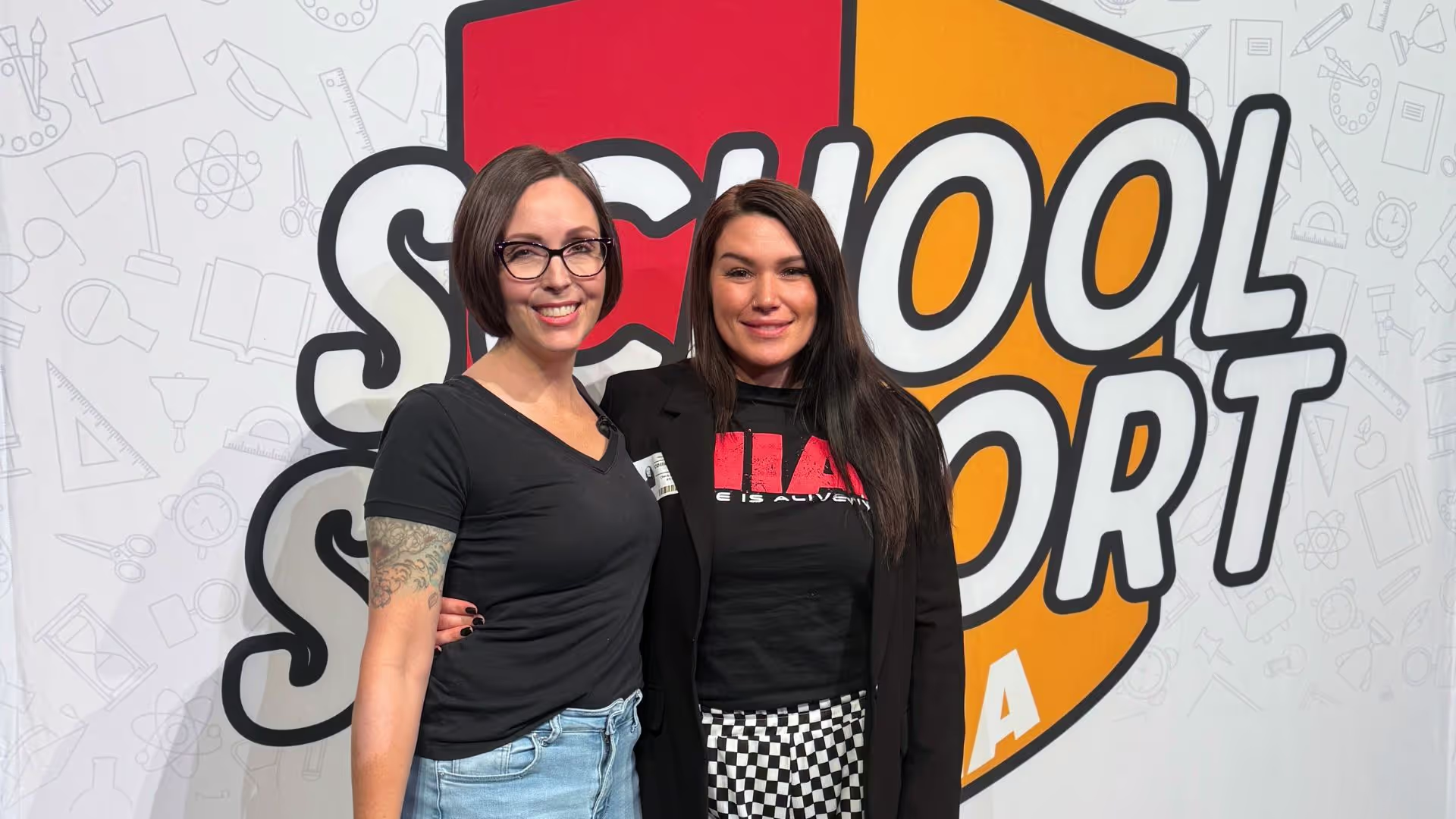
Last week was a big one for our school support team, who spent two awesome days at Casady School before wrapping up the week with an unforgettable visit to Jones High School. Let’s just say, students and parents showed up ready to learn, share, and grow!
Casady School: Real Stories, Real Science, Real Hope
At Casady School, our school support team packed in back-to-back assemblies and an evening parents’ night that brought everyone together for honest conversations about teenage addiction.
To kick things off, Senior Development Manager Ann Sandager shared a powerful and deeply personal testimony that immediately captured the students’ attention. Growing up in Edmond, just a short distance from where many of them now live, Ann’s story felt especially relatable.
Ann spoke candidly about her battle with drugs and alcohol to hone in on the reality of teenage addiction. She explained that her addiction began at a young age and continued into her early adulthood, only coming to an end because of Hope is Alive. Ann emphasized that addiction can happen to anyone, and so can recovery.
After Ann’s testimony, our school support team transitioned into a presentation on the science of addiction. They walked students through how the brain develops and explained what happens when drugs or alcohol are introduced before it’s fully formed. By breaking down how substances impact the brain, body, and emotions, our team helped students see just how powerful — and dangerous — those early choices can be.
Students were surprised to learn just how quickly habits can form and how much damage can occur, even from “casual” drug and alcohol use. The presentation opened their eyes to the real, scientific consequences of addiction, building off the foundation of Ann’s personal experience.
But the conversation didn’t stop there. Students also learned how positive coping strategies — like talking about their feelings, connecting with trusted adults, and finding healthy outlets for stress — can make a real difference in avoiding substance use altogether.
By the end of the sessions, students had an entirely different perspective about recreational drug and alcohol use — and most importantly about addiction in its entirety.
That night, our team met with parents to keep the conversation going. Together, they explored the same neuroscience and talked about how to support their kids through all the ups and downs of adolescence. In that room, parents found a safe place to ask questions, share experiences, and encourage one another. By the end of the night, a real sense of community had formed.
Jones High School: Discussing the Dangers of Addiction and Overdose
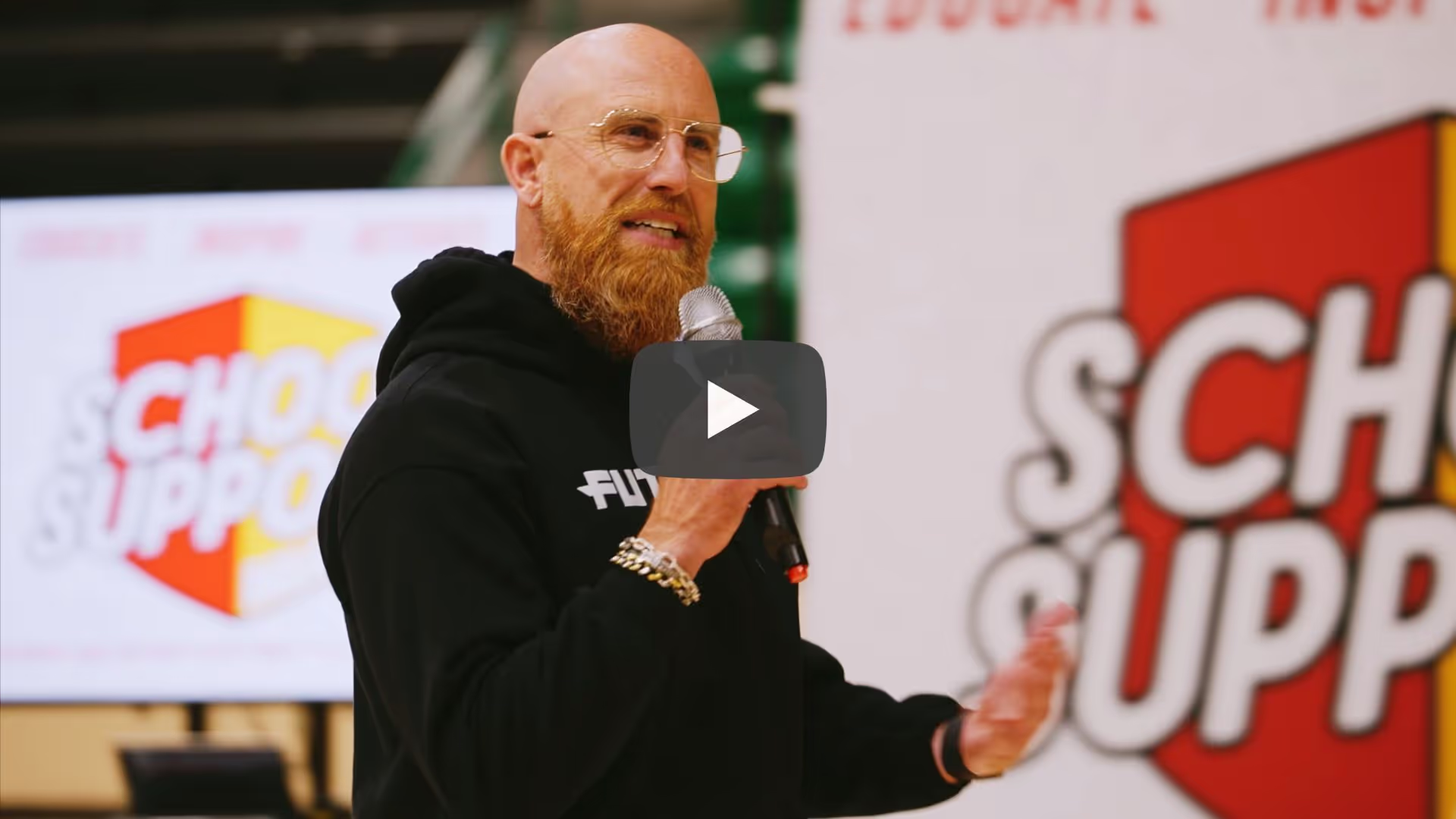
On Thursday, our school support team visited Jones High School to talk with students about the dangers of addiction and overdose. Our team also touched briefly on brain development before turning things over to HIA Founder Lance Lang, who closed out the assembly with his high-energy “Future Me” talk.
During his talk, Lance challenged students to think about who they want to become and how the choices they make today shape that future. Watch part of his “Future Me” talk below.
Bringing Hope to the Next Generation
Hope is Alive’s School Support Program envisions a world where our youth are so empowered and secure that drugs and alcohol aren’t appealing! Our program is designed to dismantle harmful mindsets by educating on the signs, risks, and stigma of addiction and overdose. By providing tools and resources that reflect God’s love, instill purpose, and establish supportive school communities, we help students embrace their design, worth, and ability to make informed choices for a healthy lifestyle.
Our mission is to educate, inspire, and activate school communities to stop the cycle of addiction and cultivate hope-filled futures.
Embracing Nature’s Healing Power

Embracing Nature’s Healing Power
As I connect with others who have lost loved ones to addiction, I am continually struck by how much our loved ones shared in common. Nearly all of them possessed a profound and unique love for nature. Lexi, in particular, found deep joy in being immersed in God’s creation — from the majestic mountains of Colorado to the winding nature trails near our home in Wichita. She often spoke of her dream to help people in recovery, not in a sterile, lifeless room, but gathered together outdoors, beneath the shade of a tree, enveloped by the beauty and peace of nature.
Psalm 19:1–2 says, “The heavens declare the glory of God, and the sky above proclaims his handiwork. Day to day pours out speech, and night to night reveals knowledge.”
Recently, these verses struck me in a new way. Because sometimes I doubt.
Sometimes I doubt what I’m doing, why I’m living, and what my purpose is. If God is even real. Maybe I’m just going through the motions. Maybe death is just random, and my daughter is gone, and I am left with nothing but hurt from missing her and thinking about what could have been. Maybe this whole life is pointless.
And then I go on a walk.
How can there be so many different types of trees just around the small pond in my neighborhood? Pine trees with poky needles, willows with their long droopy branches, tall maples, sturdy oaks. Then I see the “Feathers” family — the big black and white duck with his troupe of followers — waddling to their favorite spot near the pond. I watch the wind ripple the water, and the shimmery reflection of the sky and clouds mirrored in its silvery surface. On the sidewalk in front of me, a swarm of tiny ants zigzags around the upturned shell of a dead cicada. Then I notice an unexpected burst of scarlet purple blooms on a nearby bush that I hadn’t seen before. “Day to day pours out speech.” All of nature sings out the stunning and creative handiwork of God. The scene that is before me, which I often take for granted, is so fascinating. Everything around me is instinctively growing, moving, living, and breathing, empowered by its Creator.
Romans 1:20 comes to mind. “For his invisible attributes, namely, his eternal power and divine nature, have been clearly perceived, ever since the creation of the world, in the things that have been made.”
Finding God in Nature
Sometimes God speaks to us through Scripture, but other times He speaks even more emphatically in the great outdoors. It’s like He’s saying, Look at me! Here I am all around you! How can you doubt my existence? Look at my incredible handiwork! I am speaking to you without words. Just open your eyes and feast on my artwork! Everything around us is designed with such careful detail — evidence of God’s existence and his loving care.
And the night brings even more evidence of God. Just look up at the night sky! Humans have not even scratched the surface when it comes to space exploration. As a matter of fact, the more we learn, the more we realize how little we know. Our galaxy, the Milky Way, is composed of billions of stars, each millions of light-years away, but it is just a blip in the entire universe. The nearest neighboring galaxy, Andromeda, is 2,500,000 light-years away. Since one light year alone is six trillion miles, that’s a pretty long way! And the universe is filled with billions of these galaxies, all made up of millions and billions of stars.
When the psalmist says, “...night to night reveals knowledge,” he is making the understatement of the century! It is truly impossible to begin to fathom the depth of the knowledge he refers to. It is unthinkable, unimaginable.
With hope,
Kris Darrah, Lexi's Mom
For more information, visit:
Do Fear and Dishonesty Interconnect?

Do Fear and Dishonesty Interconnect?
How many times have you said “I’m fine” when asked how you are? I’ve been trying to find a new answer to that question since losing my daughter, Lacy, 11 years ago. I feel like a liar when giving the most common answer: “I’m fine.” Now, I want to be honest.
The truth is, I haven’t truly been fine on many of those days. When I counted, I realized there are more than 4,000 of them. It makes me wonder: Over all that time, how often have I hidden how I really felt just to make others more comfortable?
Thanks to God, I am now more comfortable saying, “I am doing the best that I can.”
It’s not a big deal, right? Just a little more honesty. But let me tell you, honesty has led to more genuine conversations. I have seen firsthand that when we are more transparent with others, people feel that they have permission to be more transparent with us. I have had complete strangers look me in the eye and say something personal and relational just because I gave them a real answer.
I also used to struggle when people would ask me where my kids live and if they are close by. I now answer honestly with this statement: “My daughter is in Heaven and my sons live within three miles of me.”
“Therefore, having put away falsehood, let each one of you speak the truth with his neighbor, for we are members one of another.” Ephesians 4:25
Honesty fosters trust and unity within the body of Christ. In other words, when you choose honesty, even when it’s hard, it brings favor on you. God is pleased with us when we are honest. I have found that, at times, being in a room full of grievers makes being honest difficult. Not all of us are ready for some truths about grief and loss. I never assume my truth is anyone else’s truth, but because of the community we are forming and because God’s word is our handbook, we continue to bring truth to the hurting.
I realized at our last moms’ retreat that some of the pain I still need to work through is forgiving myself for how numb I had become during the final years of Lacy’s addiction. I realized that I wasn’t honest with my feelings during that time. I couldn’t name my feelings. I was hiding from the truth. This can happen in the nightmare of addiction, and it can happen in grief. One of the exercises we use at our Mini Mom Retreats is writing down our feelings in percentages on a feelings chart. We do this at the beginning of the weekend and again when we leave. Honesty, through God’s word, overcomes fear.
What would the world look like if we could all be more honest with ourselves first and with others as well? Sharing truth can make us more vulnerable, more accountable, and more redeemed.
Ephesians 6:10–18 describes the FULL ARMOR OF GOD, the first of the six pieces being THE BELT OF TRUTH.
Let us all be more honest, as Jesus teaches in Matthew. ”Let your yes be yes and your no be no.”
Jesus’ call to honesty was not just about actions but also about the condition of the heart. Being honest in our words and actions is fundamental to following Christ, as we are called to live transparently before God and others.
With hope,
Rhonda Kemp, Lacy's Mom
For more information, visit:
Celebrating Life the Sober Way: Homecoming Weekend 2025

.avif)
Celebrating Life the Sober Way: Homecoming Weekend 2025
Every fall, something extraordinary happens at Hope is Alive. Residents from all across the country pack up, head to Oklahoma City, and gather for one amazing Homecoming weekend!
At Hope is Alive, we believe sobriety should be full of fun, not just rules and routines. That’s why we host a Homecoming weekend! Homecoming gives us the chance to celebrate milestones, make memories, and remind everyone just how good life in recovery can be.

This year, over 200 residents and staff from all of our markets joined us for our most unforgettable Homecoming yet!
.avif)
Homecoming weekend kicked off with house vs. house volleyball at Crossings Community Church on Friday night (shoutout to Tulsa men’s house and the women’s staff team for their wins!).
Saturday brought donuts, dodgeball, and trivia at The Cube, where the North Carolina Crystal Coast men’s house took home the championship, and half-off rent for their crew!
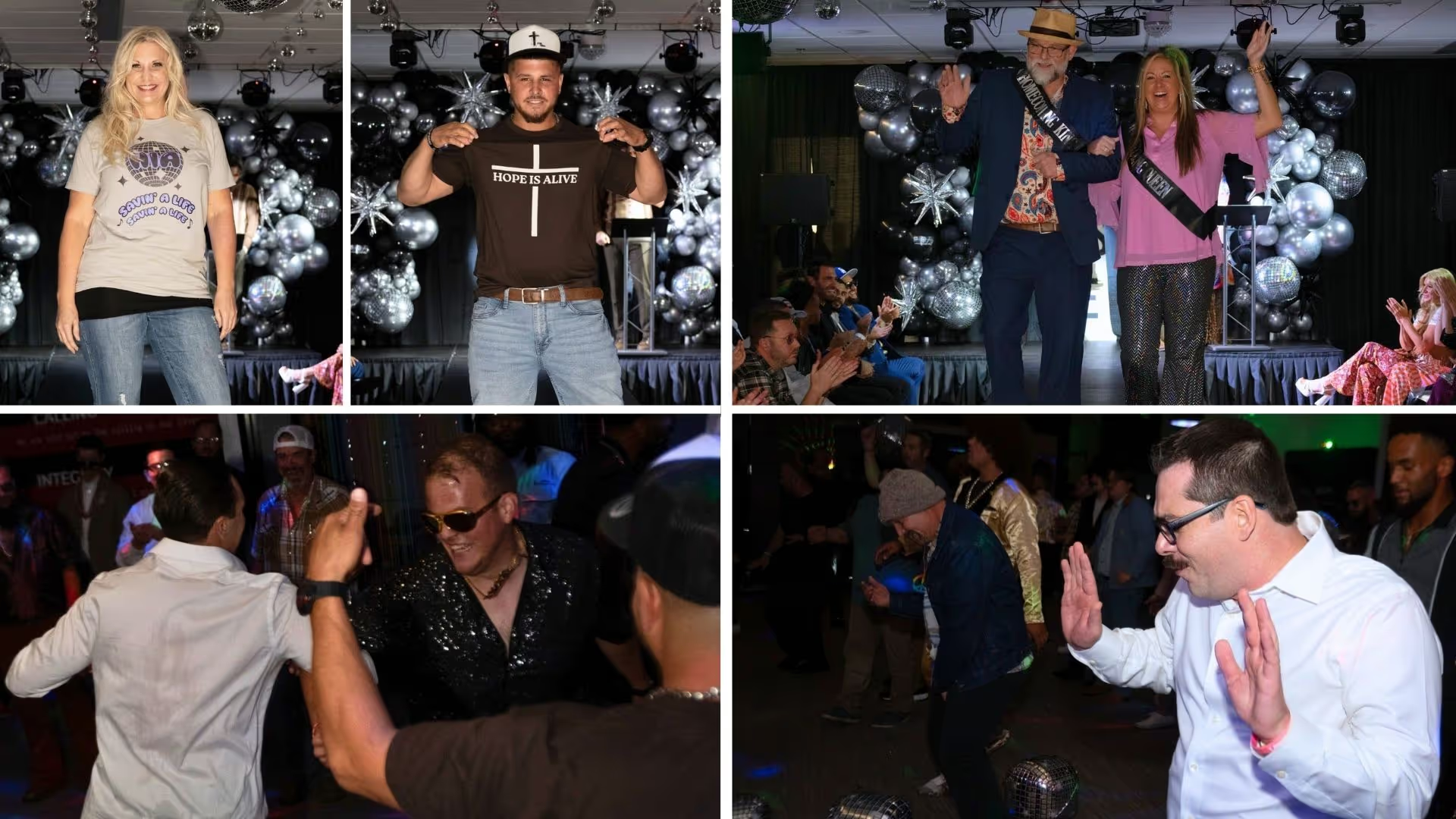
Saturday night started with Project Runway, where residents took to the stage to show off their custom-designed t-shirts, competing for bragging rights as the best designer.
Closing Saturday night out was the Homecoming dance. This year’s theme was “Funky, Fresh, and Clean,” complete with disco lights, mocktails, and nonstop dancing. Every resident, whether they walked into the night intending to dance or not, had an amazing time!
On Sunday, we brought the weekend to an end with worship, a message from Founder Lance Lang, and 42 powerful baptisms!
.avif)
Overall, Homecoming was a huge success, and a big reminder of why we do what we do: to show that life in recovery is not only possible but also worth celebrating.
“We’ve heard so much great feedback from residents saying they never thought they could have fun in sobriety. But after Homecoming weekend, they know they can. That’s what it’s all about,” shared Julie Quinlan, senior leadership and development manager for Hope is Alive.
A Mother’s Journey Through Grief and Addiction

A Mother’s Journey Through Grief and Addiction
God has transformed my thinking to “be in agreement with Me,” a phrase I heard so clearly the day I had to give my sweet girl back to Him.
My name is Rhonda Kemp. I lost my daughter, Lacy, at the age of 30 when she passed away from an opioid overdose. My world stopped. Now, it’s forever changed.
The day Lacy was born, she not only helped free me from a bad relationship, but being her mom gave me such a profound love in my heart, a love that I had never experienced before. When she was placed in my arms, I knew I would give her everything within my power to ensure her happiness and safety in this life.
My biggest fear was losing her, as is the biggest fear of many parents entrusted with the care of an amazing child from God. I always thought if I kept her around the right people, in good schools, loved her with all my heart, and kept her in church, then she would grow up with all the tools that she needed to navigate through this world. She was protected from seeing anyone use alcohol or drugs in our home, but after two knee surgeries at the age of 17, she was introduced to opioids.
Several years after those surgeries, she and a new set of friends began to party. That was when she began to abuse opioids. Her struggle with addiction began and lasted between seven and eight years.
After a very painful weekend trying to pass a large kidney stone, Lacy overused opioids along with a sleeping aid called Klonopin, and God called her home. Outside her apartment that same day, I heard God say to me, “Be in agreement with Me.” God spoke those words to me then, and I hold them in my heart and mind to move forward.
Lacy brought life and laughter to everyone she met, and she left us with so many unforgettable memories of how special she was. Although her absence from our family has been devastating, I am forever grateful that I was blessed to be her mom for 30 years.
Finding Hope After Loss
About four years ago, God introduced me to Hope is Alive Ministries. Through Hope is Alive, I have the opportunity to volunteer with residents in recovery, lead a Finding Hope support group for those who love someone in addiction, and lead a Hope After Loss grief support group for those who have lost someone to addiction. The support and love I have found in Hope After Loss has been life-altering. Through Hope After Loss, members always have someone to talk to and lean on through their grief journey.
I have a purpose now, and that is to be there for others, just as my daughter would have been if she had found a way to sobriety. God has taken my pain and used it for something good. His ways are always the best ways, as it says in Isaiah 55:8–9: "For my thoughts are not your thoughts, neither are your ways my ways," declares the LORD. "As the heavens are higher than the earth, so are my ways higher than your ways and my thoughts than your thoughts.”
If you have not joined Hope After Loss, I encourage you to attend a meeting this month. By walking through grief together in the light of God’s Word, we can begin to find strength, purpose, peace, and HOPE in the midst of our circumstances.
With hope,
Rhonda Kemp, Lacy’s Mom
For more information, visit:
Under the Underpass: The Story of Brie Enterline
Under the Underpass: The Story of Brie Enterline
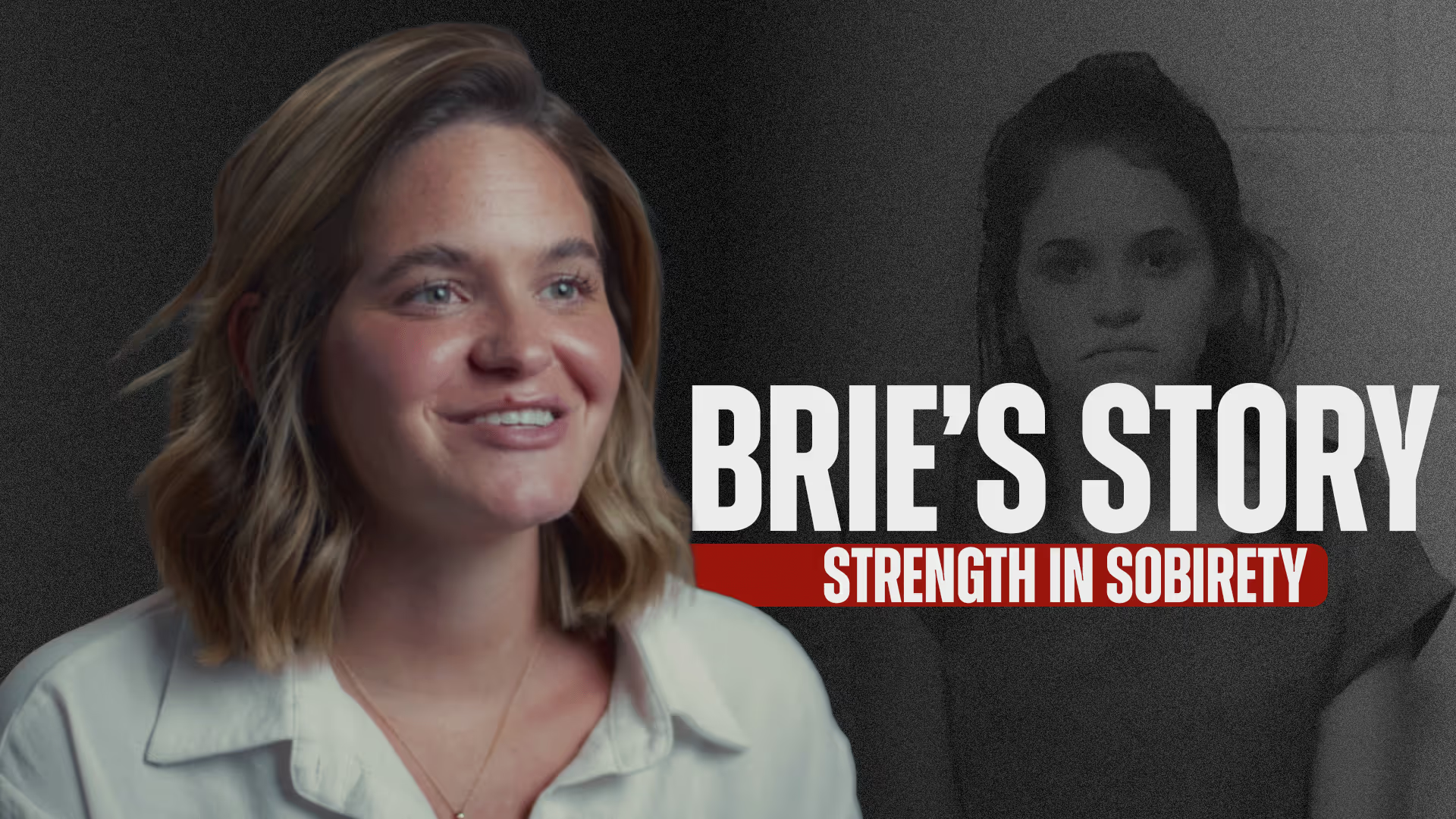
“I was just really reaching for absolutely anything to change the way that I felt. So, I tried finding it in men. I tried finding it in alcohol. I tried finding it in various different kinds of drugs. Then I found fentanyl. It's like my whole entire life I was driving in the middle of a thunderstorm, and I was finally under an underpass for just a second, and all the noise stopped.” —Brie Enterline
Those words capture the struggles of countless women everywhere. Women who don’t feel worthy of love. Women who don’t feel important. Women who think everything is their fault. Women who feel alone. Women like Brie, who just need a little hope.
When Brie first came to Hope is Alive, she didn’t really want to be there. She was guarded, unsure, and just wanted to figure out how to stay sober. Little did she know that learning to stay sober would lead her to so much more.
Through the life-changing curriculum at Hope is Alive, Brie discovered healthy ways to face her pain — to process both the grief of her past and the challenges of her present. She found strength in her sobriety.
And through the Hope is Alive community, Brie realized that she didn’t have to walk this journey alone. For the first time, she was surrounded by people who truly understood what she’d been through — people who had felt the same pain, the same shame, and the same desperate search for something to make it all stop.
Sometimes all it takes is one story to remind us that we’re not alone. Watch Brie’s story below to see how hope brought her back to life.
Addiction Rewritten | Bible Reading Plan

Addiction Rewritten: Addiction Takes, God Provides
Addiction can take more than we realize — our peace, our identity, our relationships, and even our hope. But God is a provider, not a thief. In this 30-day devotional journey, you’ll uncover how God can meet you in the mess, rewrite your story, and restore what addiction tried to steal. With God, nothing is wasted. Addiction makes false promises, but God always delivers on His. Through Him, you have a powerful testimony worth sharing.
Start the plan here: Addiction Rewritten
HIA Welcomes October 2025 Graduates Into Alumni Association
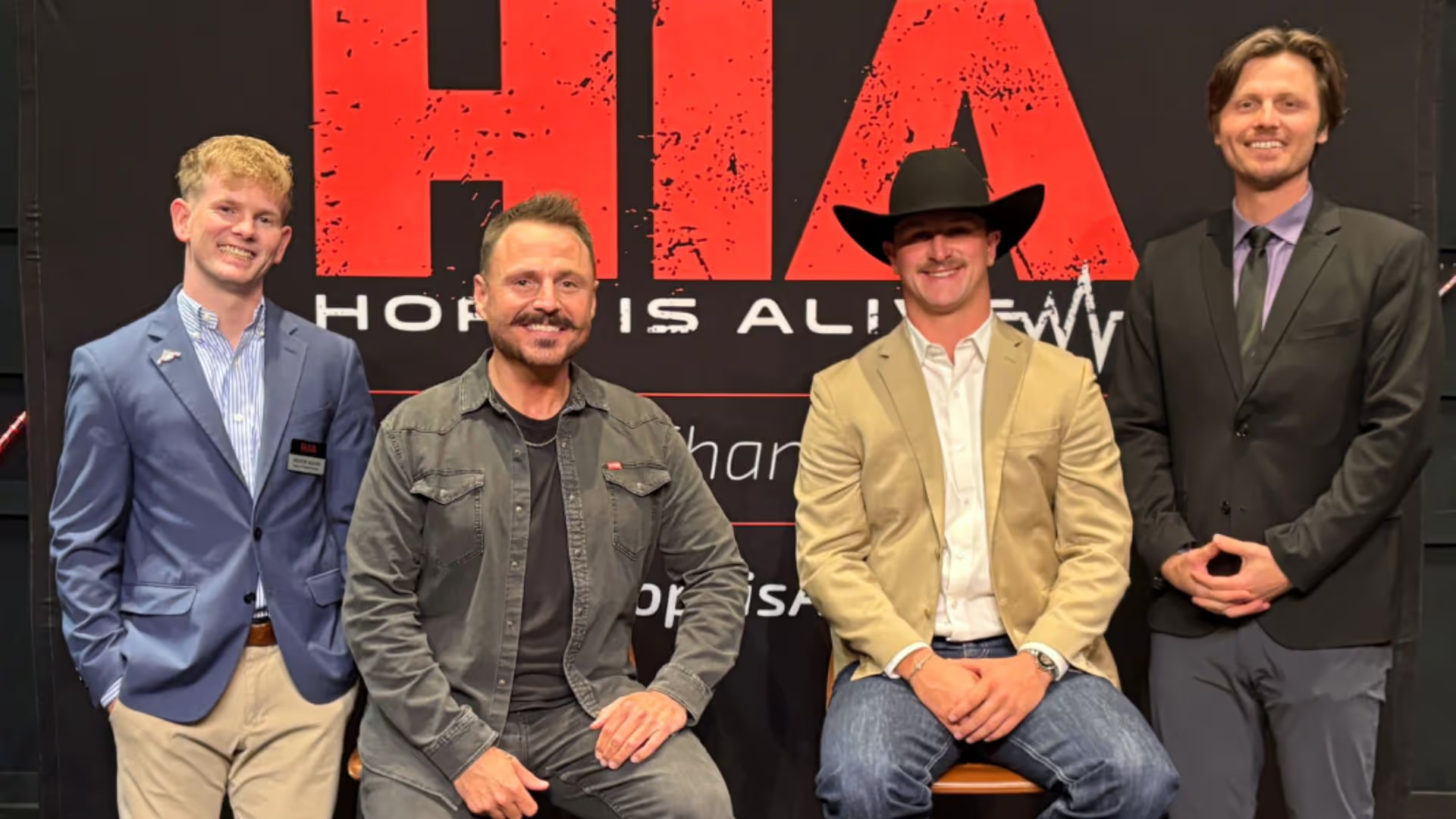
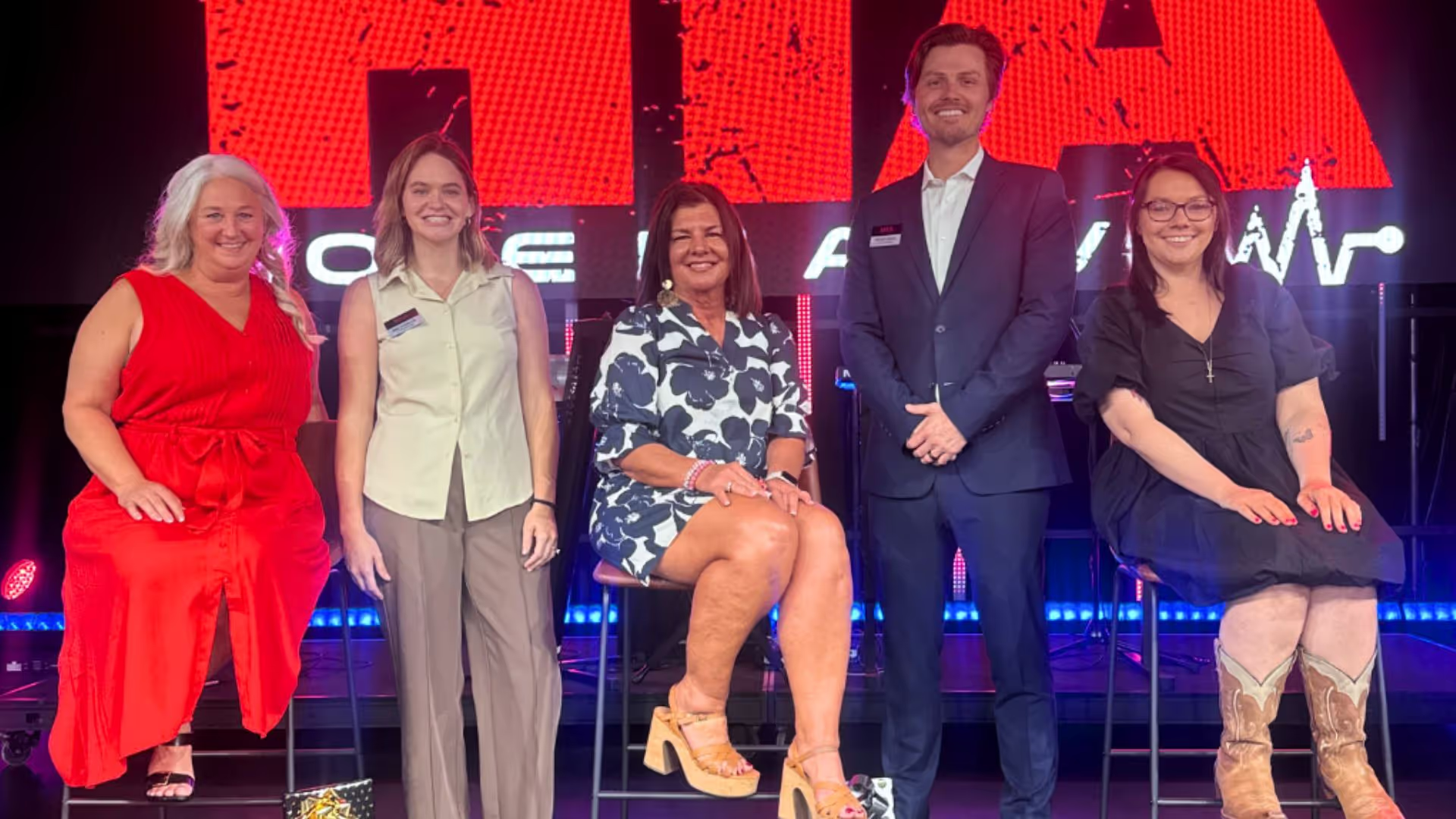
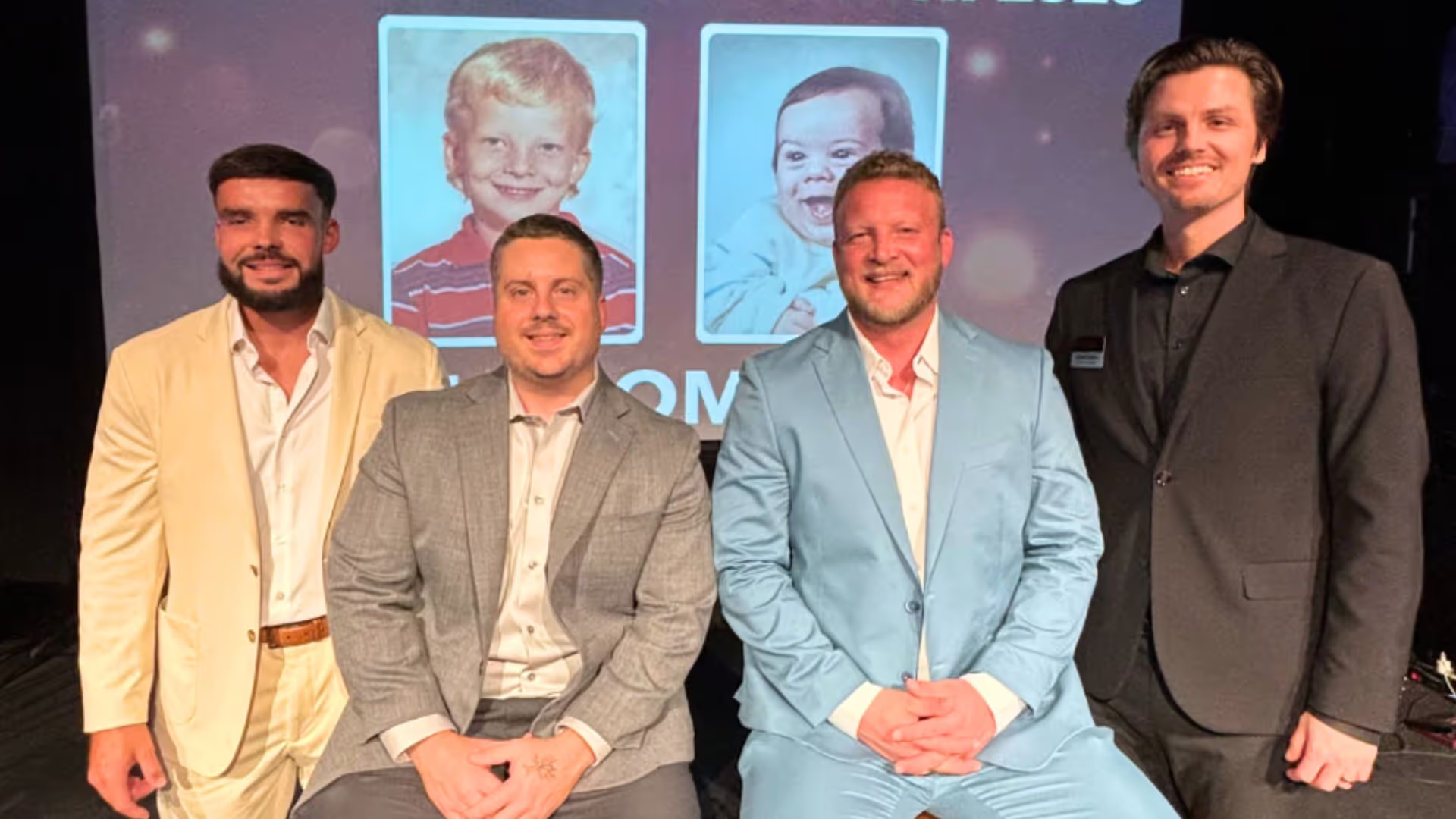
HIA Welcomes October 2025 Graduates Into Alumni Association
We are thrilled to celebrate seven incredible men and women who have completed the Hope is Alive program this October! This month, we proudly recognize three graduates from Tulsa, two from Weatherford, one from Dallas, and one from Oklahoma City!
So far in 2025, 38 residents have reached this life-changing milestone. Since the very beginning of Hope is Alive, an inspiring 291 individuals have graduated!
Our alumni association is rapidly growing, and with it, a powerful community of men and women who continue to live out the principles they learned in our program. These alumni are mentoring current residents, serving in their churches, rebuilding families, and showing others that recovery and lasting freedom are possible.
At Hope is Alive, our recovery homes are more than just places to live. We intentionally create communities and environments where radical life change is possible. In our homes, residents find structure, accountability, and encouragement through a faith-based, three-phase program designed to help them grow spiritually, emotionally, and personally.
But the support of Hope is Alive doesn’t end when residents graduate.
According to Julie Quinlan, senior leadership and development manager at HIA, “The alumni association is an instrumental part of Hope is Alive. After a resident graduates from our program and moves out of our homes, it is vital for them to have a community of like-minded people to connect with. The alumni association not only builds community and lifelong friendships, but is also a great resource for when our alumni struggle with any area of life.”
The mission of Hope is Alive is to radically change the lives of drug addicts and alcoholics — and that mission is gaining momentum.
Know someone who needs help? Reach out today! We're here and ready to walk this journey with them.
Never forget: hope is alive.
Faith Over Fear
Faith Over Fear
Faith over fear. How many times have we heard this phrase? I know I've heard and read it hundreds of times. It's on t-shirts, mugs, signs, bags, hats, jewelry, journals, keychains, and so much more. Because I see this phrase all the time, I never really stop to think about what it truly means.
So what does it really mean?
To understand what it means to have faith over fear, we must first understand how fear affects us. Our fears drive us to control. When we are fearful, we enter “fix-it” mode. We feel that if we can control the situation, then we will no longer be worried, anxious, or fearful. We associate control with everything being okay again.
But the opposite is true. Our fear and control cause us to go crazy, because 10 out of 10 times, our trying to control situations/people doesn’t work. Sometimes, we even make the situation worse. The truth is, we need to surrender our control and have FAITH in the One who has the power and control. That’s what it means to have faith over fear.
Faith is trusting and believing in God’s plan. We do not see the whole picture — we just see a part of it. God sees and knows the entire plan, and we must have the FAITH to trust Him. We must not allow our fear to drive us to control.
“For I am the LORD your God who takes hold of your right hand and says to you, Do not fear; I will help you.” Isaiah 41:13
For more information, visit:
Under Addiction’s Control
Under Addiction’s Control
Addiction controls the person and ALL those around.
I recently heard someone share that statement with me, and I believe it to be 100% true. When addiction hits our homes, it not only controls the one struggling with substances but also those who love that person.
That statement reminds me of a marionette. The person controlling the strings above is the addiction, and the puppets below are the ones impacted by the addiction: family and friends. Our lives become consumed and dictated by addiction. Addiction tells us what to do, what not to do, how we should act, how we should not act, how we should feel, how we should not feel, where we should be, and where we should not be. The list goes on and on.
To get out from under addiction’s control, we must cut the strings. A marionette cannot be controlled without strings.
But how do we cut the strings?
First, we have to recognize and acknowledge that we are being controlled by addiction. Then, we must do the hard thing and detach ourselves from it (i.e. cut the strings). We also need to set boundaries that protect us financially, mentally, emotionally, and spiritually (If I feel… then I will), as well as seek professional counseling or therapy. Don’t be afraid to say you need help!
Remember, you can do hard things and give yourself grace. Cry if you need to. Scream if you need to. Do what you need to do. And continue to stay connected to a local or Zoom Finding Hope group.
“May the Lord give strength to his people! May the Lord bless his people with peace!” Psalm 29:11
For more information, visit:
The Roles We Play in Addiction
The Roles We Play in Addiction
When we love someone who is addicted to drugs or alcohol, it’s easy to take on roles that were not designed for us. It’s easy to take on roles that we create rather than just the one God assigned us.
God designed us to play one important role in our loved ones’ lives.
Maybe it's mom.
Maybe it’s son.
Maybe it’s wife.
Maybe it’s brother.
Maybe it’s grandmother.
Maybe it’s friend.
Whatever it is, God designed us to play that specific role only. But how often do we forget what living one role looks like?
When our loved ones struggle, we begin to take on the roles of therapist, sponsor, nurse, secretary, life-coach, maid, investigator, banker, shopper, and/or taxi driver. We do everything and anything to feel like we are helping them. But we are not honoring God or helping our loved ones when we take on the roles we are not called to be.
If we take on roles that God has not designed for us, then we are not able to fulfill the roles that He has designed for us.
God created us for a purpose. He selected us as our loved ones’ mom, son, wife, brother, grandmother, friend, etc. for a reason. So, ask God to remind you of what that role looks like, and ask Him for the strength to get back to that role.
“Only let each person lead the life that the Lord has assigned to him, and to which God has called him. This is my rule in all the churches.” 1 Corinthians 7:17
For more information, visit: