Support the vision at Hope Is Alive? Give a donation.


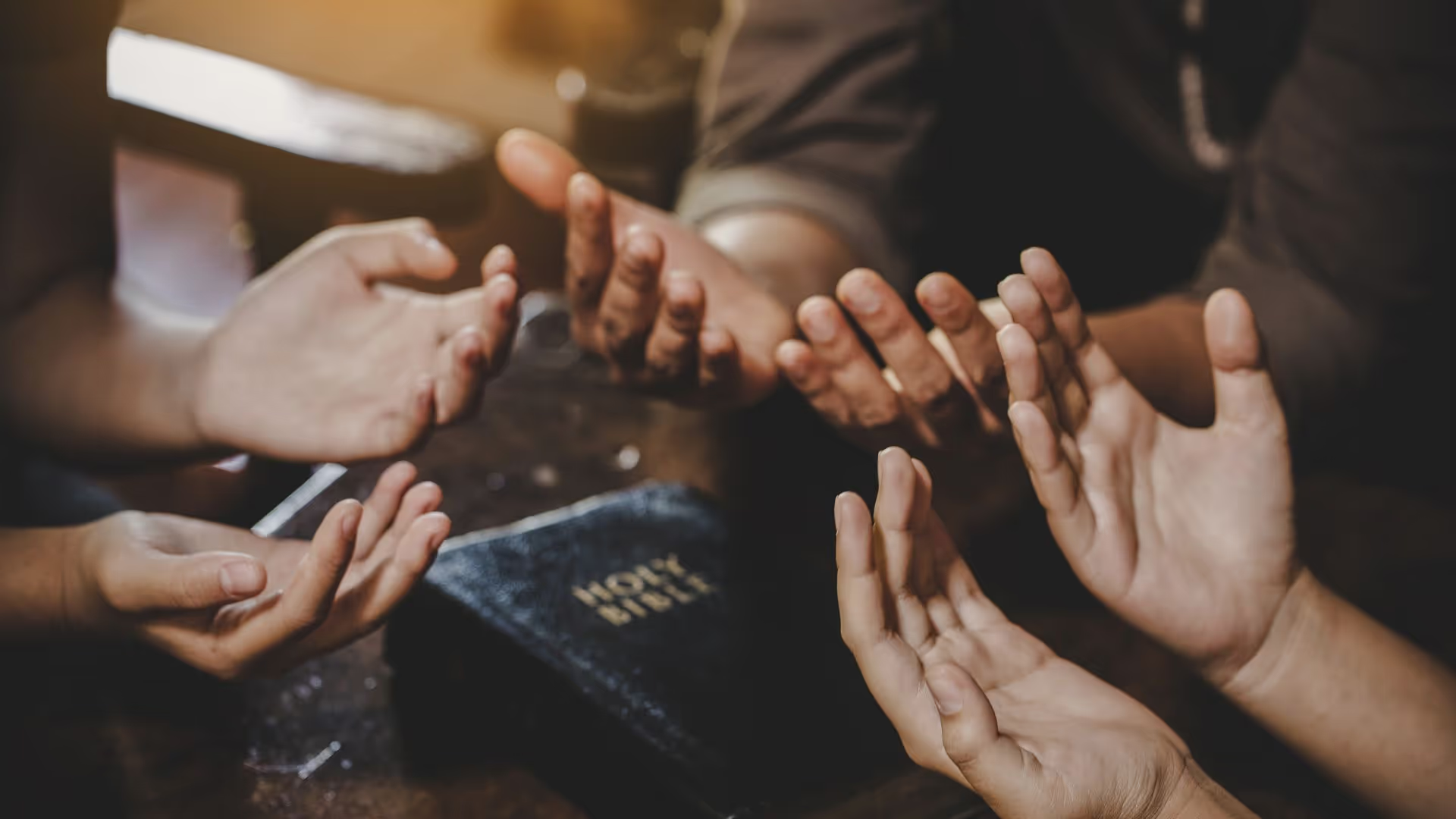
“God grant me the SERENITY to accept the things I cannot change; COURAGE to change the things I can; and WISDOM to know the difference.”
If you’ve ever loved someone who battles addiction, you’ve probably found yourself reciting this prayer more times than you can count. I know I have. There were countless nights I whispered it through tears, not even sure what I was really asking God for — just knowing I couldn’t keep carrying the weight anymore.
The Serenity Prayer dates back to the early 1930s when theologian Reinhold Niebuhr first wrote it for a sermon. It soon made its way to Alcoholics Anonymous (AA) through one of its early members and was quickly adopted by the recovery community. By the mid-1940s, it had spread far and wide — printed on cards for soldiers during WWII and prayed by millions across the world.
It’s amazing how one short prayer can bring so much hope. And it’s no surprise it’s become foundational to recovery. It’s a daily reminder that peace isn’t found in control, but in surrender.
“God grant me the serenity to accept the things I cannot change.”
When I first heard this line, I thought I understood it. But it wasn’t until I had to accept things I never wanted to — that my loved one had relapsed, that I couldn’t make him choose sobriety, that our family life would look different — that I really began to understand what serenity meant.
Serenity isn’t pretending everything’s okay. It’s finding peace even when it’s not.
It’s realizing that control is an illusion and that my job isn’t to fix others. Rather, my job is to trust God with what’s out of my hands.
When life feels out of control, we often respond in extremes — some of us work harder to control every detail, while others throw our hands up and give up completely. But true serenity comes when we surrender the outcome to God and let Him be God.
“And the peace of God, which transcends all understanding, will guard your hearts and your minds in Christ Jesus.” Philippians 4:7 NIV
“Be still, and know that I am God.” Psalm 46:10 NIV
Letting go wasn’t easy for me. But each time I chose to stop trying to manage the chaos and instead hand it to God, I felt a little more peace take root. That’s serenity — and it starts with acceptance.
“The courage to change the things I can.”
When my loved one first went to treatment, I thought the hard part was over. But I quickly learned recovery wasn’t just his journey — it was mine too. I had to face my own patterns of control, fear, and enabling. And that took courage.
Courage doesn’t always look loud or brave. Sometimes it’s quiet. Sometimes it’s showing up for counseling when you’d rather stay numb. It’s setting a boundary and keeping it. It’s choosing peace over chaos, even when it hurts.
God calls us to be strong and courageous — not because we can handle everything, but because He goes with us.
“Be strong and courageous. Do not be afraid or terrified because of them, for the LORD your God goes with you; He will never leave you nor forsake you.” Deuteronomy 31:6 NIV
“For the Spirit God gave us does not make us timid, but gives us power, love, and self-discipline.” 2 Timothy 1:7 NIV
Courage means changing what we can — our responses, our boundaries, our healing — and leaving what we can’t to God.
“And the wisdom to know the difference.”
For years, I thought wisdom meant having all the answers. But now I see it’s more about discernment, learning when to act and when to be still.
When I finally accepted that I couldn’t change someone else’s choices, I asked God daily for the wisdom to know where my responsibility ended and His began. Wisdom isn’t something we muster up — it’s something God gives freely to those who ask.
“If any of you lacks wisdom, you should ask God, who gives generously to all without finding fault, and it will be given to you.” James 1:5 NIV
The Serenity Prayer is more than words — it’s a way of living. A rhythm of surrender, courage, and trust.And every time I pray it, I’m reminded that peace doesn’t come from fixing someone else’s brokenness. Peace comes from letting God work in mine.
With hope,
Darcie Stephens, Finding Hope Coordinator
For more information, visit: