Support the vision at Hope Is Alive? Give a donation.


What does winning look like in addiction recovery? At Hope is Alive, success is measured in radically transformed lives.
Our philosophy reaches far beyond monthly or yearly sobriety milestones. Faith-based recovery programs are often met with skepticism, but HIA continuously produces real and significant outcomes.
Just like anyone and anywhere, those in HIA have their flaws, crises, and complaints. However, the default is grace, not condemnation.
It all comes back to a simple — but not easy — piece of our Resident Culture Code: “Jesus is always the answer.”
Ally Lang, Hope is Alive co-founder and co-CEO, realizes not everyone is eager to open a Bible and start praying. However, that doesn’t change our foundation.
“We don’t force anything. We just tell them, ‘Hey, we’re going to talk about Jesus as the answer.’ And it’s funny what that does,” she said, referring to the transformations HIA has witnessed among people.
“I’ve seen God’s blessing on Hope is Alive through the individual miracles that have happened within our residents’ lives,” Ally said.
And while church attendance is mandatory for program residents, sitting in a pew isn’t the same as allowing the Holy Spirit to change and redeem you.
“It’s really tough to infuse God in secular things, but we have chosen to do that,” Ally said. “We believe the ultimate healer is Jesus, and that He is the answer to everything.”
No one in the program is required to be a Christian or prove their faith. And yet, to date, approximately 400 HIA residents have chosen to publicly display their new life in Christ through baptism.
“We’ve baptized so many people, and that is different from other recovery programs,” Ally said. “We’re not afraid to step into any mess or situation and say, ‘There’s a way out, and we’ll do it with you.’ We would never take faith out of our program.”
Even with God at the center of everything, HIA leadership knows firsthand the difficulty in kicking such a deeply ingrained habit. But not everyone understands addiction’s stronghold. Wives can’t comprehend why their husbands won’t stop drinking. Dads don’t believe their sons who say they can’t stop shooting heroin.
It’s often confusing and difficult to grasp the physiological components of addiction and how it rewires the brain and body.
HIA defines addiction as: “A biological, psychological, social, or spiritual disease that is, by nature, chronic, progressive, and fatal, ending in jails, institutions, death, or recovery.”
That definition narrows the line between “addict” and “everyone else.”
“People understand picking up work as a substitute for self-esteem,” Ally explained. “People understand their crutch on food as a barrier to having to actually feel their emotions. And if you can walk somebody through and help them understand, ‘Oh wait, I’m one step away from this myself,’ then they have more empathy for addicts.”
The apostle Paul speaks about the inescapable sin nature in every person: “I do not understand what I do. For what I want to do I do not do, but what I hate I do.” (Romans 7:15) Sin nature only furthers the destruction and entanglement of addiction.
Instead of acknowledging this inherent nature, many recovery programs focus on genetic components, generational cycles, or childhood trauma. HIA, on the other hand, encourages residents to dig deeper. Rather than shifting the blame onto others, residents assume responsibility for their own actions as they discover the reasons behind their coping mechanisms.
Hope is Alive started with co-founder and co-CEO Lance Lang’s desire to live in a like-minded, sober community, but his wife, Ally, really got into the weeds and turned it into a structured system. It transitioned from men attending 12-step meetings and living together to prioritizing working “process addictions” and holistic life change.
Process addictions, also known as emotional addictions, include codependency, shopping, gambling, eating disorders, sex and love addiction, and more. HIA residents peel back layer after layer of memory and trauma, discovering the subconscious motivations behind their behaviors and thought processes. They’re then provided with tools to change their behaviors.
“We consider substance abuse just a qualifier to get someone in the door,” Ally said. “Substance abuse is really not the problem. When I came on board, I wrote our program, and the belief system changed to working through process addictions. That’s kind of what sets Hope is Alive apart.”
It wasn’t easy to convince people that recovery is about much more than sobriety.
“I had to fight tooth and nail,” Ally remembered. “All these addicts were like, ‘No way. It’s just stop using and stop drinking.’ But when we implemented working through process addictions, we started to see all the spiritual bondage on our people. We’ve evolved by watching and holistically treating our people in the ways they need it.
“We say, ‘Hey, there’s nothing wrong with you, so come be a part of our community of similar individuals who are moving in the direction you want to go.’ Along the way, let’s unpack anything that might stand in the way of long-term recovery. And most sober living homes don’t even have a program to compare it to.”
So what does the program look like in practice? Made up of 65 objectives broken down into three phrases, the tasks and goals are far more than a checklist.
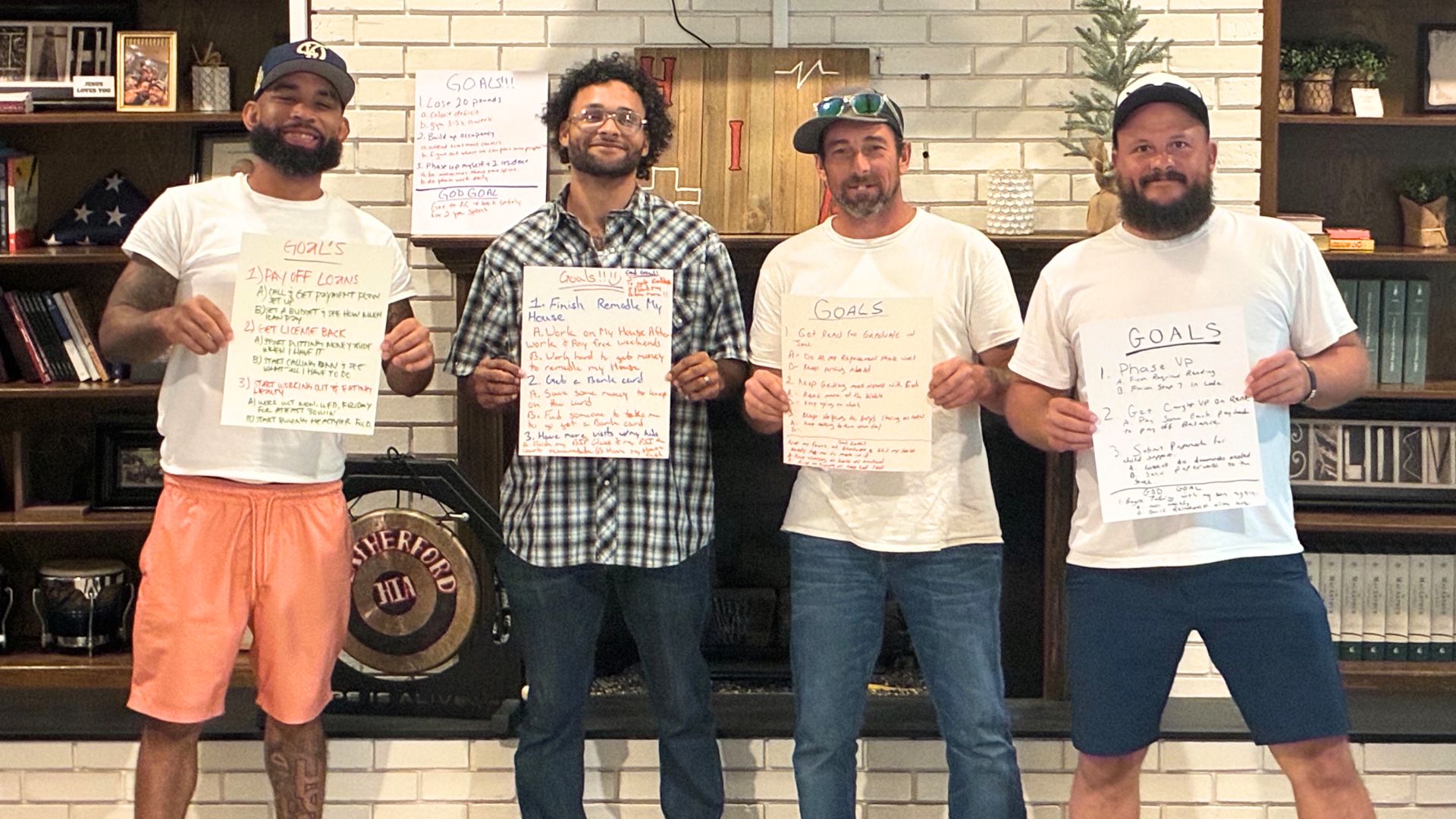
Phase One is about creating a foundation. Some men and women are newly sober, coming straight from rehab, while more than half (55%) are fresh out of jail or prison. HIA gives an opportunity to start a new life to individuals who often have no good place to go. Residents begin by working the well-known 12-step program with a sponsor and attending regular group meetings. The social aspect of peer support is one of the factors linked most closely to lifelong sobriety.
Residents are also expected to maintain a job and/or be enrolled full-time in school or vocational training. They pay an affordable monthly rent and rotate household chores. The spiritual facet of the program includes reading the Gospel and regularly attending a local church.
“They have an in-house buddy for the first couple of weeks who shows them, ‘This is how everything works,’” Ally said. “They take them under their wing and introduce them to a biblical community. That’s important, because they’re going to build lifelong relationships around recovery, whereas before they had lifelong relationships around using and drinking.”
In Phase Two, residents are equipped with the tools needed for a lifetime of sobriety by working through process addictions and learning healthy coping mechanisms. They gain financial independence by using tools like Financial Peace University and establish their own community through mentors and church family.
Finally, in Phase Three, participants focus on giving back through servant leadership. As they near graduation, residents will serve in their church and also lead their peers within the homes. Grant Green, HIA Senior Director of Programs, graduated from HIA in 2021, and he’s seen the value of ministering to others.
“As alcoholics and addicts, we’re very selfish and self-centered,” Grant said. “When we do just hang around a little bit, we start to see, ‘Oh, when I help someone out, that kind of feels good.’ Now, I’m more open to a spiritual experience with God when I’m not just thinking about Grant all the time.”
Most men and women live in HIA homes for an average of 18 months — significantly longer than most sober-living homes, with stays ranging from 30 to 90 days. The longer a person remains sober, the higher their rate of success.
Along with the requirements of the program are guidelines that protect residents and define the culture of Hope is Alive. Some of these rules include not being in a romantic relationship for the first year of living in a house, as well as staying sober.
“Typically, the number one thing that causes relapse in both addicts and alcoholics is a relationship,” Ally said. “The willingness to not be in a relationship for the first year of sobriety is pivotal to being able to work on yourself and not just replacing it with another addiction.”
There are over 200 medications banned from HIA homes as well. Staff are considerate of mental health and other health conditions, but they are intentional about their philosophy.
“It’s pretty radical, but we consider sobriety to include no mind-altering substances,” Ally said. “That means any sort of medication that would potentially change the way you feel.”
Agreeing to these stipulations involves submitting to a new way of life, which is not often easy.
“For most people coming into the program, it’s daunting because we don’t like authority and we don’t like rules,” Grant explained. “Structure isn’t something most drug addicts and alcoholics are used to, but this thing works because it’s exactly what we need.”
But the program isn’t all work and no play. In fact, the Resident Culture Code includes a key ideal of HIA: “Fun is required.” From ski trips to prom nights, HIA leadership intentionally celebrates sobriety and encourages residents to be proud of their new lives.
“People consider sobriety a death sentence for fun,” Ally said. “And we say, ‘No, actually it can be better. You can do it with your friends, you can be healthy, and you can call your family to tell them about it afterward.’”
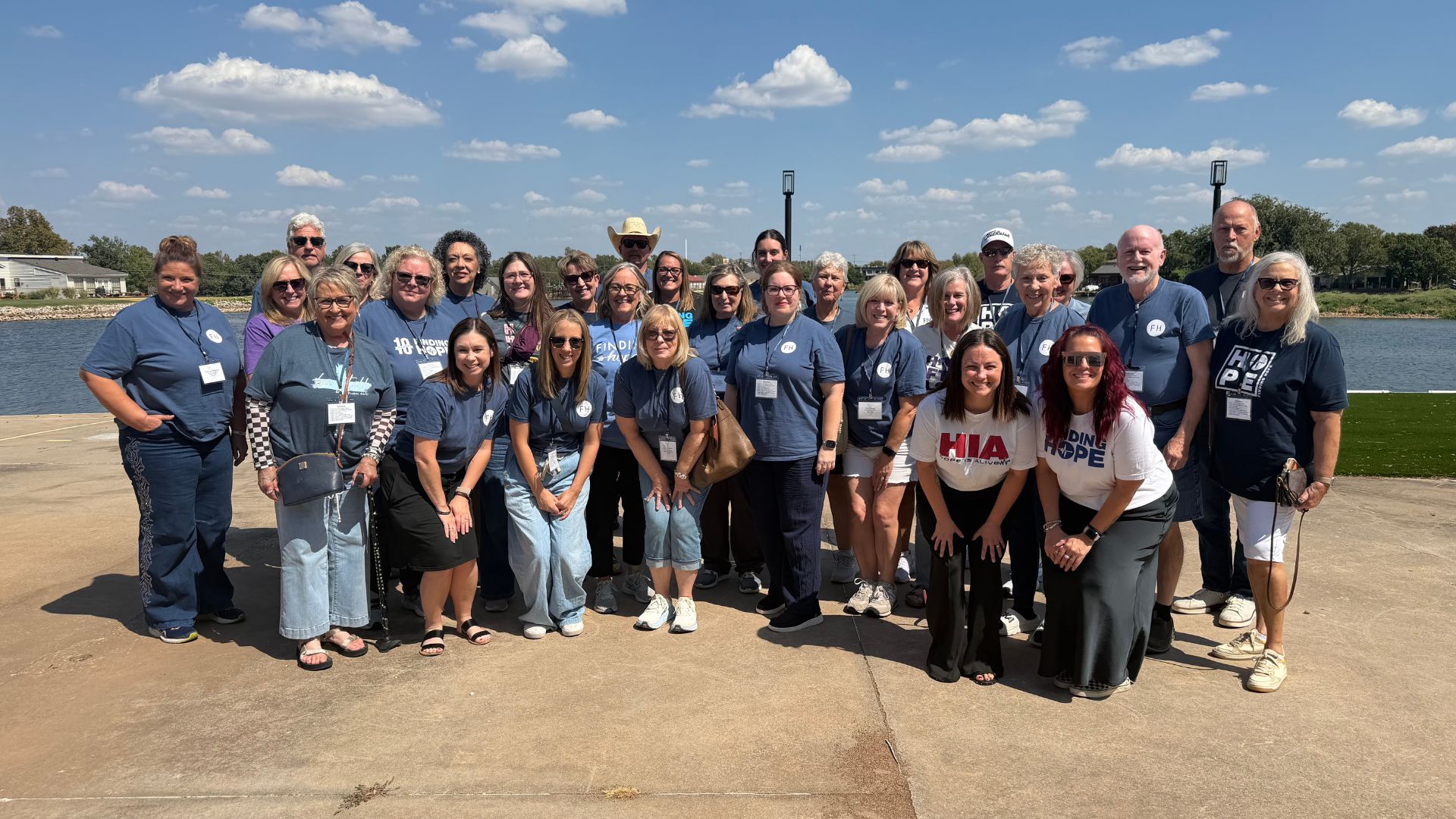
Phone calls to mom and dad are encouraged because the HIA family is not limited to only those in recovery from substances. HIA also ministers to families through Finding Hope, a support group for loved ones of addicts and alcoholics.
“Most of the time, they’re working through the same things as the addicts they love, because process addictions are passed down as well,” Ally said. “For example, maybe we learned to be a people-pleaser from our parents.”
Finding Hope is open to any loved ones of addicts, not just to people who know an HIA resident. In fact, sometimes a family member getting support through Finding Hope motivates an addict to get help.
“There are so many times where a loved one will go to a Finding Hope class for years,” Ally said. “They get healthy, learn things, and get tools in their tool belt, and then their loved one will get sober. We always try to connect parents and loved ones to the support classes, which is really their own sober-living recovery program to work.”
Family members are also allowed to come to intake, when a resident first moves in and agrees to work the program. They’re welcome to bring meals and visit their loved one.
“The addict’s family is involved in the recovery process as much as they want to be,” Ally said.
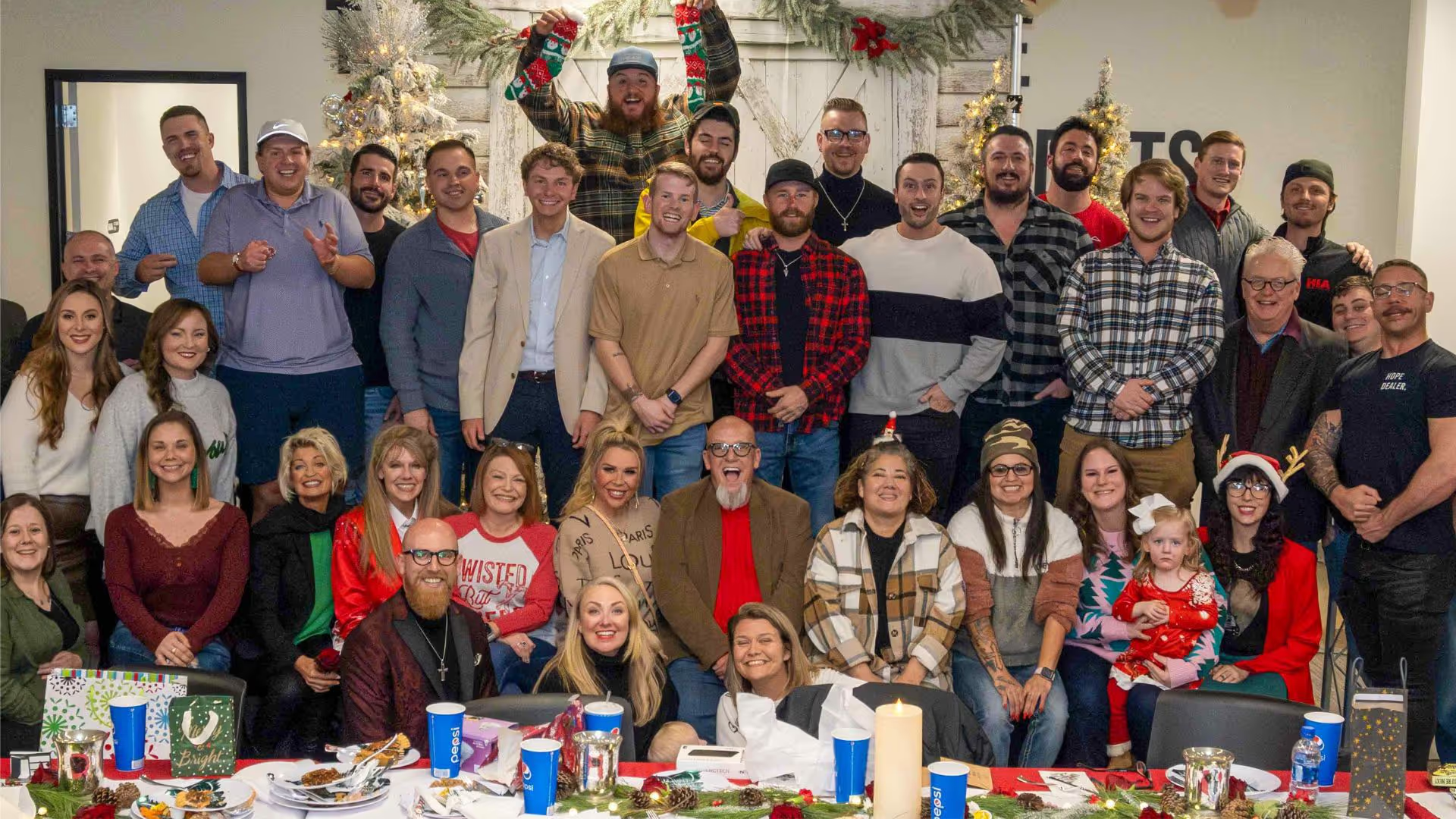
Any HIA alumnus will tell you that graduating from the program was only the beginning. But they also know their best days are ahead of them. Today, alumni have jobs ranging from real estate to ministry to entrepreneur. Many have earned college degrees, some have begun work with other recovery organizations, and others have chosen to pour back into HIA by joining the team full time.
Monthly meetings, group chats, and an open invitation to HIA meetings and events keep them in touch, especially since they consider themselves family. It also gives them an opportunity to encourage those still in the program — because they’ve walked in their shoes. Some alumni have even married each other (after graduation, of course).
“I feel like I’m the chief wedding and baby shower host,” Ally joked. “And that’s just life now, because we do all the moments together.”
Those big and small moments together have added up into (almost) unbelievable transformations. Men put behind selfish tendencies and put their families first. Women become mothers they never thought they could be. Sons and daughters start to respect their parents, and years or even decades of broken relationships are mended. And Ally Lang recognizes the driving force causing this radical life change.
“We’ve put all of our weight behind whatever God has called us to do,” Ally said, “because without God’s hand of blessing, Hope is Alive doesn’t exist.”