Support the vision at Hope Is Alive? Give a donation.


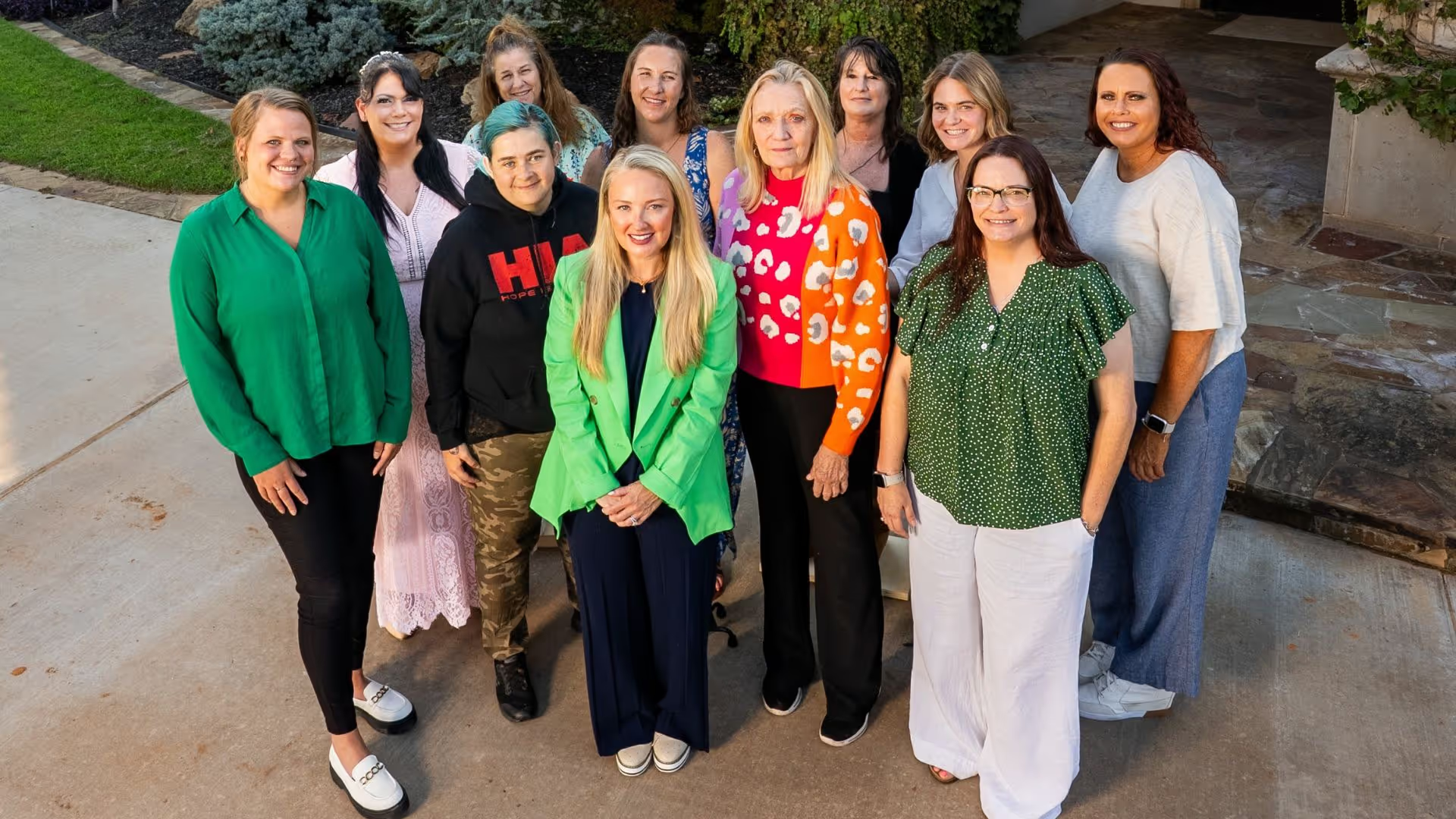
When Ally Lang first encountered the world of addiction, she didn’t fit the expected profile. She wasn’t an addict. She didn’t work in the medical field, and she knew nothing about addiction recovery. She was an event planner who was also a faithful Christian. So, how did she go from creating vision boards and coordinating linens to befriending heroin addicts and helping build a revolutionary addiction recovery program for women at Hope is Alive?
Fifteen years ago, Ally was dating an addict, (now her husband) Lance Lang. She supported him through his journey to sobriety, having no idea how much his addiction would shape her own future.
“It was an eye-opening experience to realize the trauma that friends and family members go through when dealing with someone in addiction, not knowing if our loved ones are going to be dead or alive that day,” Ally said. “There were so many times where I would go over and just check his pulse to see if he was still breathing and then leave, and he would have no idea I had been there.”
When Lance finally returned to work, sober, Ally realized just how much trauma she was carrying. They weren’t married. They didn’t have kids together. Yet she had stayed with a drug addict.
“I finally understood during my treatment for codependency what recovery was and what it meant for someone to have something outside of themselves control their entire life, whether that be substances, emotional issues, or something else,” Ally remembered.
After Ally came back from her treatment, she traveled with Lance as he began sharing his story in churches across Oklahoma. She sold copies of his book, Hope is Alive, from a booth at each event. One mother after another would approach with stories about their sons, and Ally offered them a clear path: detox, treatment, sober living. It was the same path Lance had walked.
But when those same brokenhearted mothers came with stories about their daughters, Ally didn’t have anything to give them. There was no clear path to walk down.
“I saw the desperation in these mothers’ faces when we told them that we didn’t have anywhere for their daughters to go,” Ally shared.“I saw the need for a women’s program, but I felt like it wasn’t my problem at the time. And then God made it my problem.”
Ten years ago, the landscape of addiction recovery primarily focused on the needs of men, leaving a painful gap in resources for women. After turning away desperate mothers time and time again, Ally knew something had to give.
“I’m not a drug addict or alcoholic, so I had never felt like this was a calling on my life,” Ally said. “That is, until that August day in 2015 when God completely wrecked me, and I wrote the email to Lance that changed everything.”
When Ally shared her vision for a women’s program with Lance, he knew he didn’t have the capacity or resources to handle it on his own, but he thought it had a lot of potential. He gave her two conditions: one, she would need to raise $50,000 to launch it, and two, she wouldn’t be paid to do it.
Ally accepted the challenge and devised a plan to raise the money, not realizing how difficult it would be. She started by hosting luncheons for women in the community, asking them to bring friends and donate to her vision. By the fourth event, they had raised only $1,000. Ally and Lance began to wonder if maybe God didn’t want this to happen after all.
But at that fourth event, God moved unexpectedly.
“There was a woman who looked like she wanted nothing to do with us the entire time,” Ally recalled. “She ran out the door as soon as it was over. Then the host brought us a check [from the woman] for $50,000.”
In an instant, the women’s program was no longer a far-off dream. With funding in hand, Ally began searching for the first women’s house. They weren’t in a position to buy, and landlords were less than eager to lease to a group of women in recovery. Door after door closed — sometimes because the house wasn’t right, other times because the owner wasn’t willing to take the risk.
After looking at 30 different properties, Ally was just about ready to throw in the towel. Thankfully, house number 31 had potential.
“I walked into the house, and it was absolutely perfect,” Ally remembered. “The landlord told me it was already under contract, but asked for my email just in case. When I sent it, he noticed that my email address was for Hope is Alive and wrote back, ‘Do you know Lance Lang? I gave him the first lease on his very first Hope is Alive house in Oklahoma City. If this is what you want it for, go save some lives.’”
The first female resident came from Wichita, Kansas, Ally’s hometown. The resident’s mother had been following Hope is Alive for years. When she walked through the home, she was in tears.
“I thought I would be dropping my 18-year-old daughter off at a disgusting little house,” she told Ally. Instead, her daughter got to heal in a beautiful, safe home in a respectable neighborhood.
From day one, the women’s program was full and quickly grew to a waitlist. Within two years, HIA opened a second women’s home in Oklahoma City, which filled just as quickly. God didn’t just give Ally the vision for the women’s program — He provided the money, the houses, the women to fill them, and the staff to support the mission.
“Your heart aches for them to win,” Ally said. “But you also see the devastation when some don’t make it.”
This is the brutal reality of addiction recovery. Sobriety isn’t easy. Every victory is hard-earned, and every relapse leaves a mark. It didn’t take long for Ally to realize that the women needed more than a bed, a curfew, and a meeting schedule.
“We were calling it the Hope is Alive program,” she said, “but it wasn’t a program. It was just rules and structure.”
In just a few weeks, Ally built what became the Hope is Alive Recovery Model — a holistic path that didn’t stop at sobriety but aimed to rebuild every part of a woman’s life.
“Most places just tell you to stop drinking and using,” she explained.“We say, ‘Let’s create a life so good you never want to escape from it again.’”
HIA’s Recovery Model goes deeper than surface-level sobriety. It addresses the root issues that fuel addiction, which can be just as destructive as chemical dependency. This means tackling process addictions — patterns like pornography, workaholism, eating disorders, or unhealthy relationships — and unresolved trauma, whether it be a “big T” trauma like abuse or a “little t” trauma like a hurtful comment. The incorporation of faith also makes HIA’s Recovery Model unique.
“I wrote a program that works all the way back from ‘I am a raging drug addict and alcoholic’ to ‘this is who God created me to be,’” Ally said. “Somewhere along the line, something happened to me that I had no control over, that shifted the trajectory of my life, that led me here, but it doesn’t have to define me anymore... And that was where the program was born.”
When Ally first pitched her curriculum, Lance wasn’t convinced her approach would work. But, he gave his blessing for her to try it with the women’s home, and it wasn’t long before radical life change in the residents became undeniable. The women were embracing a new beginning in Christ and fresh dreams for their futures.
“We opened people’s eyes to a whole new sector of recovery for women in Oklahoma,” Ally shared. ”We changed the landscape for men’s recovery, too.”
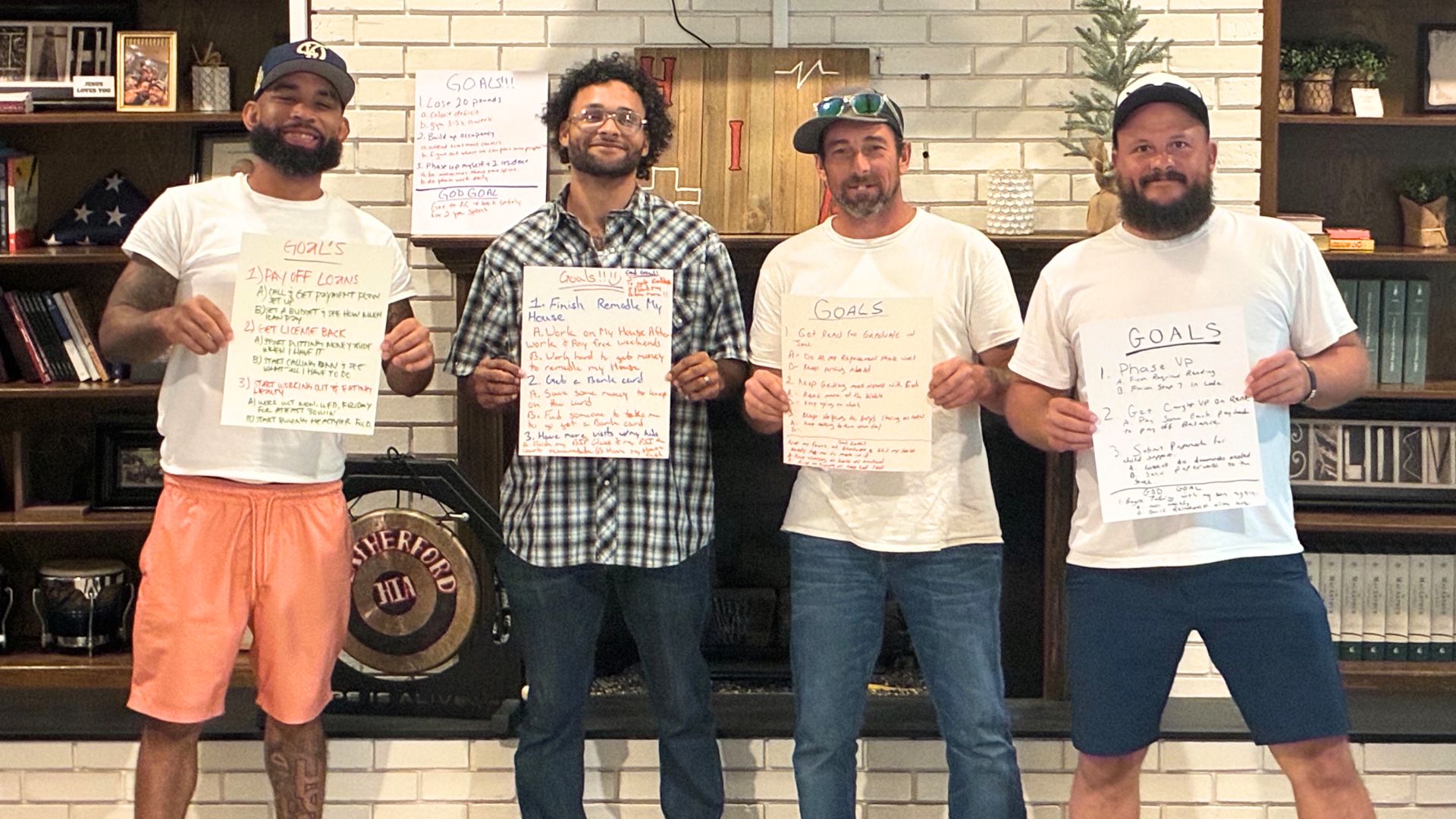
When the men in the HIA program saw the women growing in confidence and setting bold goals, they wanted the same for themselves. Eventually, the Recovery Model was expanded to the men’s homes, making it the heartbeat of HIA's approach to long-term recovery.
“When we started the program, I wasn’t a mom,” Ally said. “Looking back on it, having my own kids now, it is so profound to see what God was doing in our lives.”
She remembers Saturdays at the first women’s home vividly: they were alive with the sound of children’s laughter. Because HIA was able to offer a safe place for visitation, the home would often be filled with little ones running through the halls, playing in the yard, and wrapping their arms around their moms. Many of these children had gone years without being able to visit their mother in a stable environment. To witness those reunions and see those relationships thriving became one of the most powerful and unforgettable parts of Ally’s journey.
“It’s just incredible for me to watch these stories unfold, and that’s the women’s program story over and over again,” Ally said.
Amanda White was one of the first women to walk through the doors of the first HIA’s women’s home. She arrived carrying the weight of 13 failed treatment attempts. At intake, she told Ally, “This is no different. Nowhere else has worked for me, and this won’t either.” Amanda’s parents had spent unspeakable amounts of money on treatment, and hope felt impossibly out of reach. Still, Ally encouraged her to give the program a chance. Amanda stuck around and has been sober since the day she moved in — more than seven years ago. Today, she is happily married to another HIA alum, and they have one son.
Stories like Amanda’s strengthened Ally’s belief that transformation was possible. But one particular experience completely changed her perspective on addiction recovery. The woman had come to HIA straight from prison, not having seen her children in three years. A staunch atheist, she would openly challengeAlly at every Sunday meeting. Week after week, their debates about the existence of God became so common that the other residents would ask, “Are you two going to argue the entire time?”
This went on for seven months. Then, one afternoon, Ally stopped by for a one-on-one session. The woman looked at her and asked,“Hey ... what if you’re right?” Ally laughed and replied, “Wouldn’t that be crazy?” The woman said, “I think I’m ready,” and repeated the salvation prayer after Ally.
Two weeks later, Ally had the privilege of baptizing her, which revolutionized Ally’s view of women working through recovery.
“It showed me that everyone, no matter who it is, is worth investing into,” she said. “No matter how angry they are, how hurt they are by the church, how many drugs they’ve done, how messed up their body is from cutting and using, they are never too far gone for God to step in and rescue them. This is a program with eternal impact. Because I showed up that day, I’ll get to experience heaven with this woman.”
From that very first women’s home in Oklahoma City to a growing network of safe places for women to heal, the Hope is Alive women’s program has shown what can happen when faith meets addiction recovery. Over the past decade, women have walked in carrying the weight of addiction, trauma, and hopelessness, and they’ve walked out with restored families, renewed faith, and a future they never thought they’d have.
Even as the landscape of addiction shifts, Ally believes the heart of the program will remain the same.
“Drugs are always going to change,” she said. “Everything’s more readily available than it’s ever been before. Everything’s deadlier than it’s ever been before. But the truth is, the program won’t have to change because the program teaches you to believe all the things that God already says about you. And that never changes.”