Support the vision at Hope Is Alive? Give a donation.



Don’t just be okay living sober. Live a radically changed life. See how far you can go.
This is Hope is Alive’s challenge for all their residents. And for one Greenville resident, it became the turning point for a radically new life.
Born in eastern North Carolina, Terry Foy’s early childhood was shaped by instability. Both of his parents struggled with addiction and were involved in selling drugs. By the third grade, the environment had become so unsafe and unstable that his grandparents stepped in and moved him two hours away.
With his grandparents, Terry thrived. He played nearly every sport available — football, basketball, baseball — and excelled. He became a team captain, won state championships, and learned how to not only be a good teammate but also a good leader. On the outside, his life looked promising.
But as adolescence faded and his friend group changed, so did his hobbies. Once sports were out of the picture, Terry began drinking — later advancing to drugs like cocaine.
“I kept everything together for years, but in 2015, everything caught up to me. My drug use had escalated to IV heroin and fentanyl, and I was charged with over 70 felonies,” Terry shared.
Terry had started multiple businesses in the early 2000s and lost all of them by 2015. From there, he really spiraled and spent nearly eight years cycling in and out of jail and prison. His addiction continued, and so did the charges.
“There was a period where I stayed clean for about a year, but when my mom died, I jumped right back into addiction,” Terry said.
Another arrest followed. Then another sentence. And so on. It was a cycle he couldn’t escape, and one that he didn’t care about changing at the time.
But during what would become his final incarceration, Terry entered a short recovery program at Pitt County Jail that changed everything. It was there that he heard about Hope is Alive for the first time.
“At the time, I thought I was too far gone,” he shared. “I was 36 or 37 years old, and I had so many felonies on my record that I didn’t think society would ever take me back.”
When he was released from jail, Terry was faced with the harsh reality of his past. The people he once ran with had stolen his vehicle and destroyed his home, stripping it bare searching for drugs. Everything he owned was gone.
“When I came to Hope is Alive, I had nothing,” Terry said. “Just the pair of state boxers from when I was locked up.”
He arrived at Greenville’s Hope is Alive home with no possessions, little family support, and a deep fear of failure. For Terry, early days in the program were hard — not because he didn’t want change, but because he wasn’t sure he was capable of it.
At Hope is Alive, residents are encouraged to look beyond substance use and address the deeper patterns that fuel addiction. For Terry, that meant confronting isolation, perfectionism, and a long-standing fear of failure.
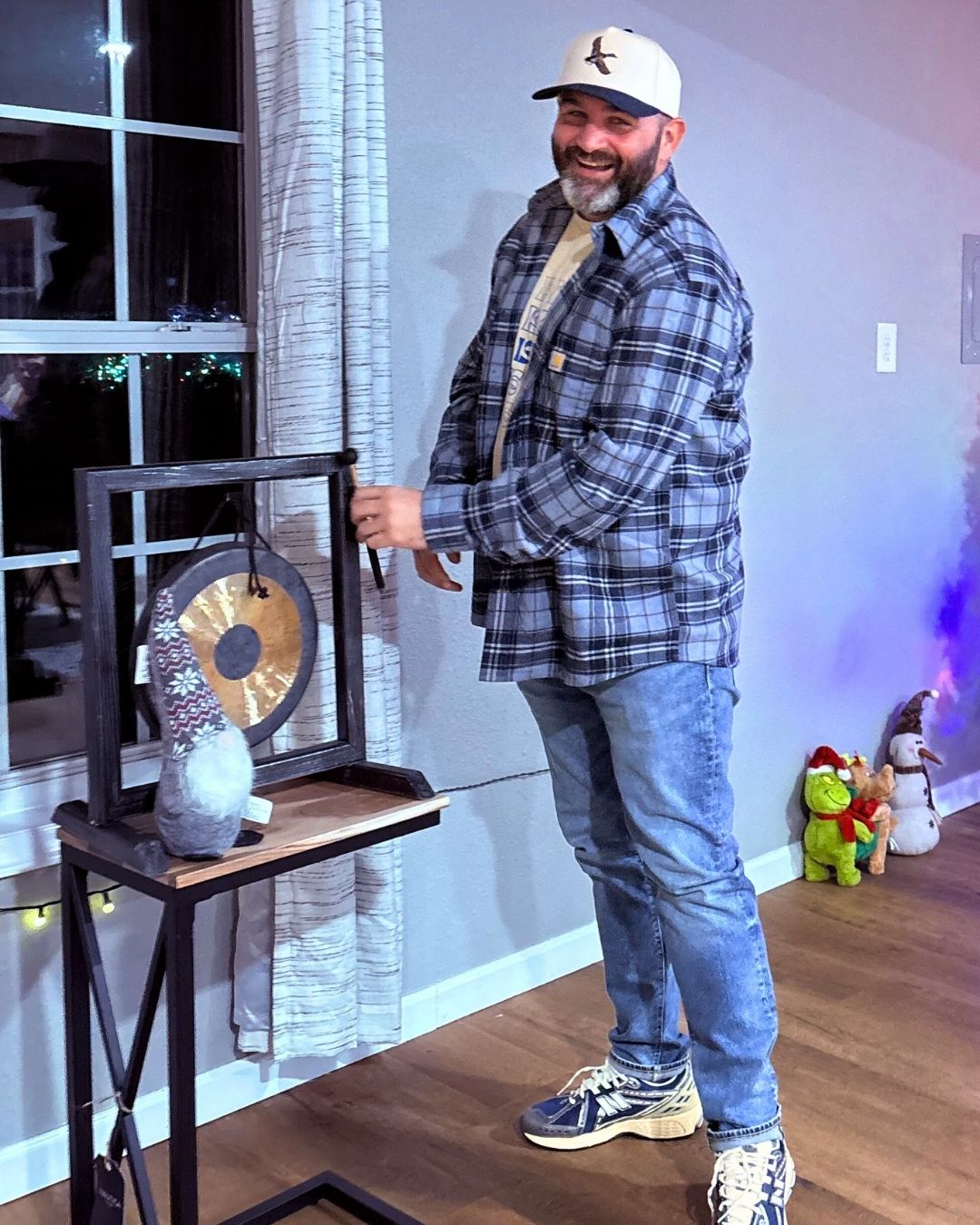
With the support of staff and mentors, Terry began recognizing how those unhealthy behaviors had shaped his choices for years.
Faith also became an important part of his recovery. Terry grew up in church and was active in youth groups, but he said faith never felt personal during his addiction. Instead, it felt conditional — something based on performance rather than relationship.
“I didn’t really understand God’s love,” he said. “I felt like if I did good, He would help me, and if I did bad, there was no hope for me. Because of Hope is Alive, that’s no longer the case.”
As Terry continued working through the program, he also began reconnecting with the Greenville community. Through Hope is Alive, he became involved with local churches, food banks, and outreach efforts. He also regularly attends Bible studies and has spoken at several detox centers with other residents.
The Greenville community has welcomed Terry with open arms. He has developed ongoing connections with local leaders, including judges, law enforcement officers, and community members, whom he previously thought would want nothing to do with him.
In a full-circle moment, the judge who sentenced Terry to Hope is Alive now serves as his mentor.
Greenville’s community support has made a tangible difference in his recovery. Terry has paid off all of his fines and is on track to complete probation in July, alongside his anticipated graduation from Hope is Alive’s recovery program.
When asked what Hope is Alive has changed most in his life, Terry’s answer is simple.
“Love,” he said. “I hadn’t spoken to my family for years before coming to Hope is Alive. Now, that relationship has been restored — just like my relationship with God.”
And that restoration has extended beyond his sobriety. Today, Terry’s father is also sober and fully present as a parent.
With stability in multiple areas of his life, Terry has a strong foundation to move forward in his recovery. Currently, Terry works in sales for a construction contractor and serves as the house manager at the Hope is Alive home in Greenville.
He doesn’t know exactly what the future holds, but he is excited to find out, as is everyone else that’s a part of his community.
Terry’s story is just one example of what happens when recovery is done in community. Any Hope is Alive alumnus will tell you that graduating from the program was only the beginning.
Life in recovery is not only possible but also worth celebrating.