Support the vision at Hope Is Alive? Give a donation.


People experiencing addiction often tell themselves things like:
These beliefs feel convincing, especially during periods of short-term success, but they conflict with the reality of addiction as a chronic, relapsing brain disorder.
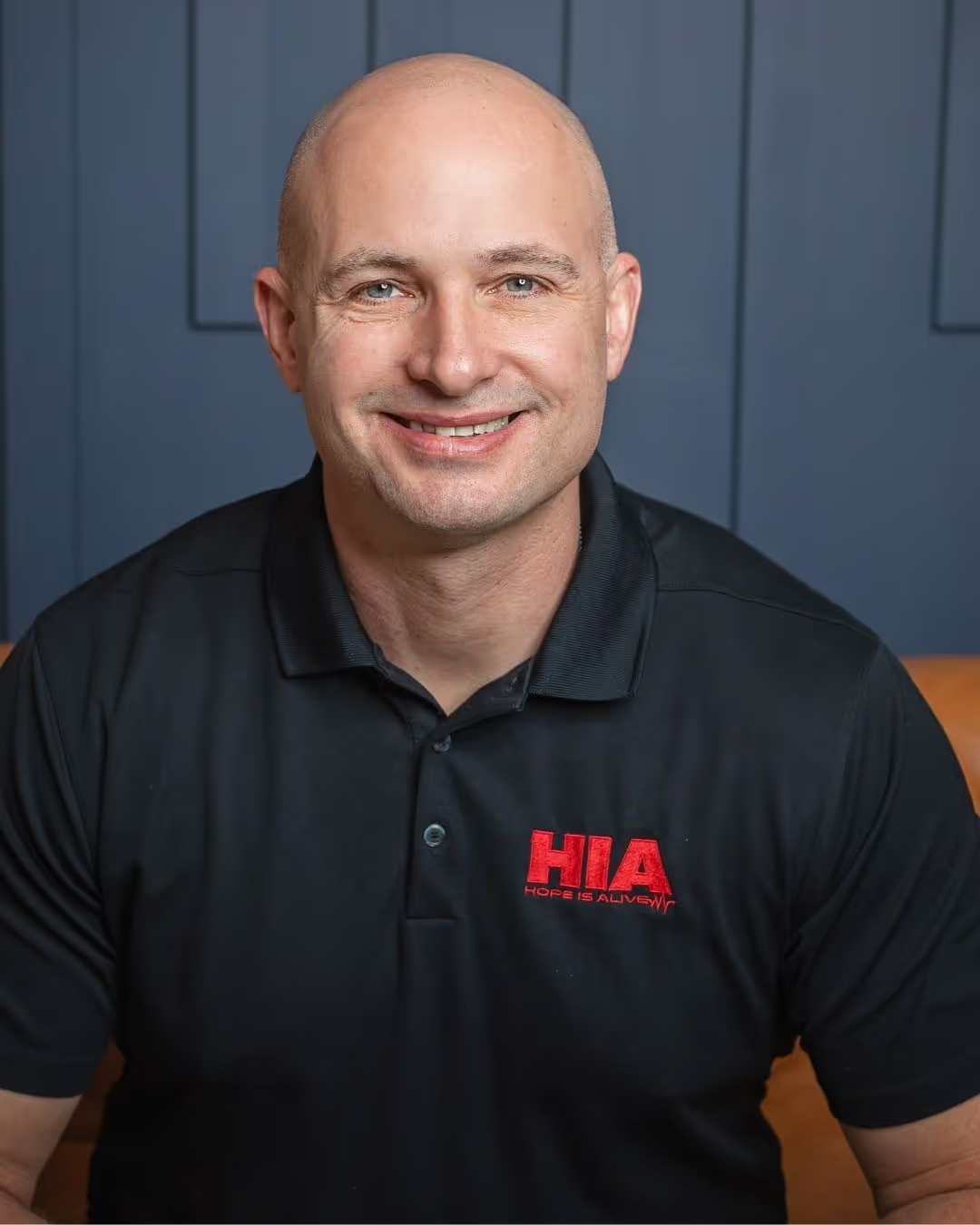
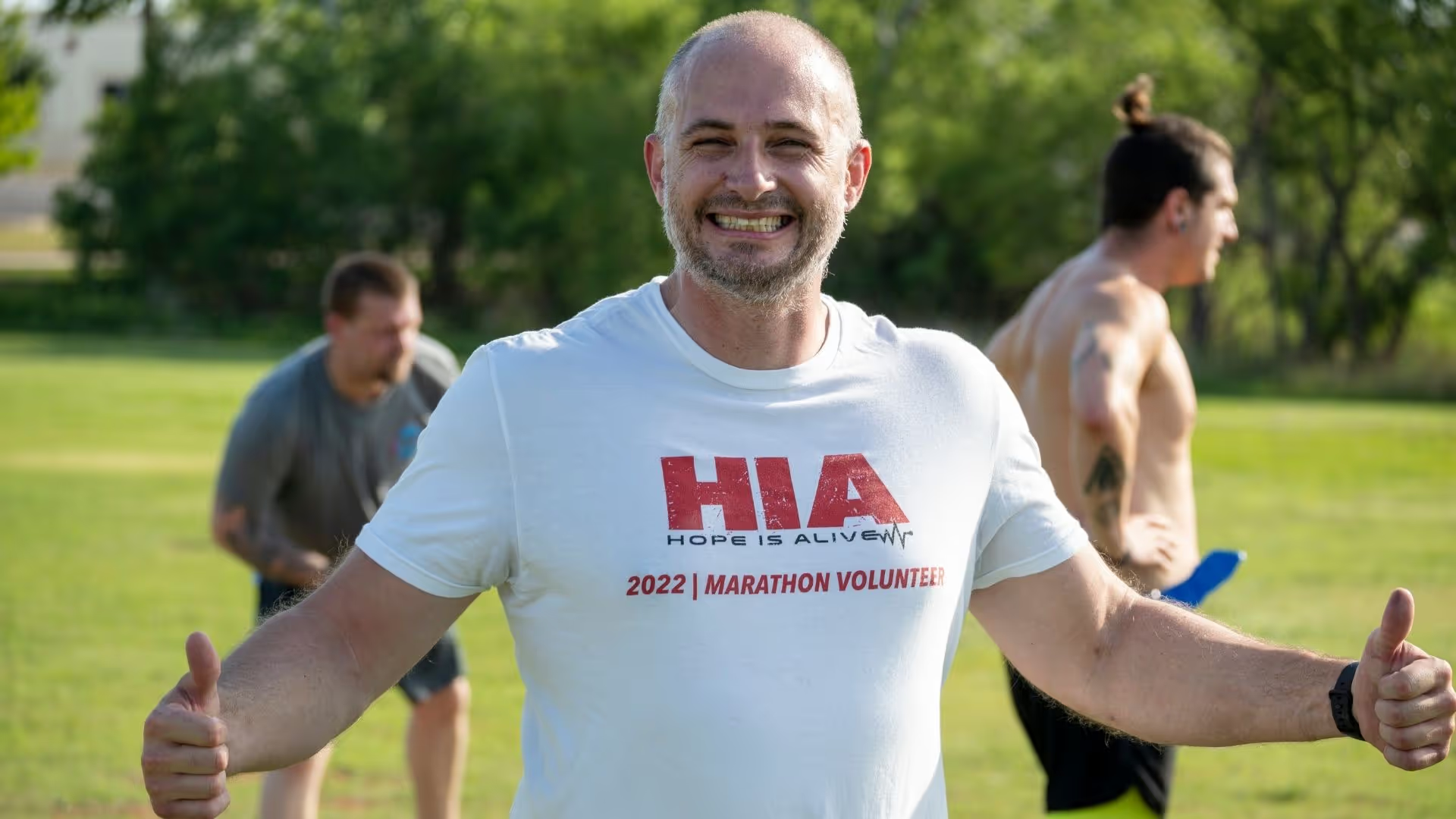
Like many others, Robert Holsonbake (aka Rob) was caught in this cycle of substance use — a cycle that lasted 25+ years.
“I always had the illusion of control,” Rob shared. “I thought I could put the bottle down anytime, but I kept drinking because I simply either didn’t want to stop or didn’t care to.”
It didn’t matter that Rob bounced from job to job, fired time after time for showing up to work drunk or hungover. It didn’t matter that he burned more bridges than he could count, losing relationships and friendships left and right. It didn’t matter that he had received multiple DUIs and was facing a second felony charge that would result in prison time. All that mattered was alcohol and his desire to numb himself to everything that surrounded him.
Even though Rob didn’t have a desire to get sober, his family never stopped trying to give him his life back. So, for years, Rob chased the promise of being “fixed.” He enrolled in programs, completed requirements, and did everything asked of him on paper. From the outside, it often looked like success.
But internally, nothing had changed.
“I could follow any structure you gave me,” Rob said. “I could look like the golden boy, check every box, and graduate. But the whole time, I was just waiting until I could drink again.”
Each time Rob regained some stability — a job, a place to live, a clean record — he returned to alcohol, convinced this time he could control it. He started with beer. Then a few beers every night. Then liquor. Then bigger bottles. Then drinking in the morning just to stop the shaking.
Eventually, alcohol wasn’t something he used to relax or escape — it became something his body needed to survive.
“It got to the point that I was drinking to live. My body depended on it so much that if I would have stopped, I probably would have died. Yet, I still felt like I could control it.”
That illusion of control led Rob down an even darker path. He drank through depression, continued unemployment, and isolation. He drank despite knowing the consequences. He drank even when he no longer wanted to live — ironically because of how much alcohol had impacted his life.
Then one night, everything nearly ended.
After more than 25 years of relentless drinking, Rob’s father found him facedown in bed, unresponsive. At first, he thought his son was dead. An ambulance rushed Rob to the hospital, where doctors told him the truth plainly: If he had been found even an hour later, he wouldn’t have survived.
His organs were shutting down. His body was malnourished. Alcohol had consumed everything.
Still, even that didn’t deter his drinking.
“Everyone thinks alcoholism is something that can be cured. I was told that if I went to rehab, I would be cured — I would be fine,” Rob explained. “But I think that’s a misconception about addiction.”
By this point, he had already learned that recovery built on performance didn’t last.
“Every program I tried focused on stopping the behavior,” Rob explained. “But no one ever helped me understand why I drank.”
Without addressing the root causes — trauma, emotional suppression, abandonment, and a lifelong need for control — sobriety became temporary. Alcohol always found its way back into his life, often more aggressively than before.
As long as Rob believed he could manage his addiction, he never truly faced it. Until Rob was finally faced with a choice he couldn’t manipulate.
After his hospitalization, Rob’s father gave him an ultimatum: “You can either live out in the woods, or you can go to rehab and get yourself straight.”
Rob had moved in with his father after one of many failed rehab attempts, believing the isolation of the countryside would keep him safe. At first, the distance from the liquor stores and lack of transportation felt like a barrier Rob couldn’t cross.
But that mentality didn’t last once he got a job, some money, and a key to a vehicle. Only this time, alcohol pushed him to a new level of alcoholism — a level that was placing an extreme amount of stress on his father. Because Rob’s father already had a heart condition, his health declined to the point that even his doctor knew that Rob needed to find somewhere else to live.
“My dad giving me that ultimatum is what saved my life,” Rob shared. “That is when it hit me that God was giving me another chance. There was a reason He was still keeping me around. So, I chose rehab.”
It was during his first week at rehab that Rob finally surrendered everything to God.
“I heard this voice in my head, but it wasn’t my voice. He simply asked me if I was finished, if I was done. I told Him I was — I couldn’t do it anymore. I told Him to let me see what He could do with me. From that point on, I’ve surrendered everything to Him.”
While Rob had previously based all his actions on “looking good” for God and others, he was now doing everything for himself and his salvation. Naturally, that pushed him to look at recovery and his sobriety differently.
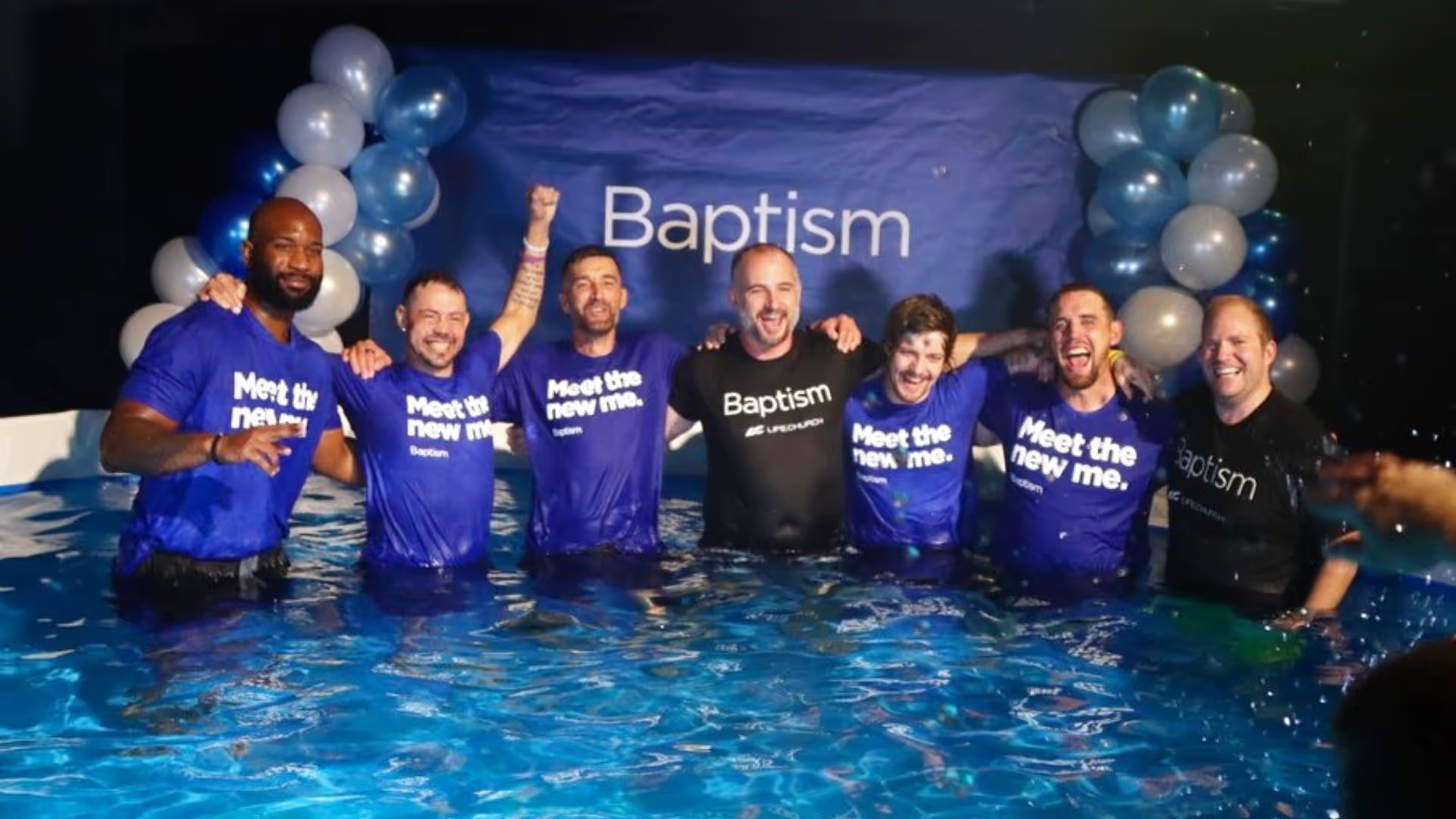
“I went from not wanting to live, praying for God to take my life because I couldn’t take it myself, to seeing life in HD because God answered my prayer to take my cravings away.”
During his time at his final rehabilitation center, Rob felt God stirring something new in him. Despite having no formal training and very little confidence in his biblical knowledge, he felt called to step forward and lead a Bible study. He didn’t feel capable, but he also knew he couldn’t ignore the calling.
So Rob began walking through the cabins, simply asking the other men if they wanted to read Scripture together. He was surprised by how many people joined him. Each morning, men gathered to talk about the Bible and how they related to it. What was meant to last an hour often stretched into three or four.
That Bible study became a place of connection and healing. Men who felt like they had lost everything and everyone found a brotherhood in Christ.
For Rob, it was the first time he realized God could use his story — not in spite of his past, but because of it.
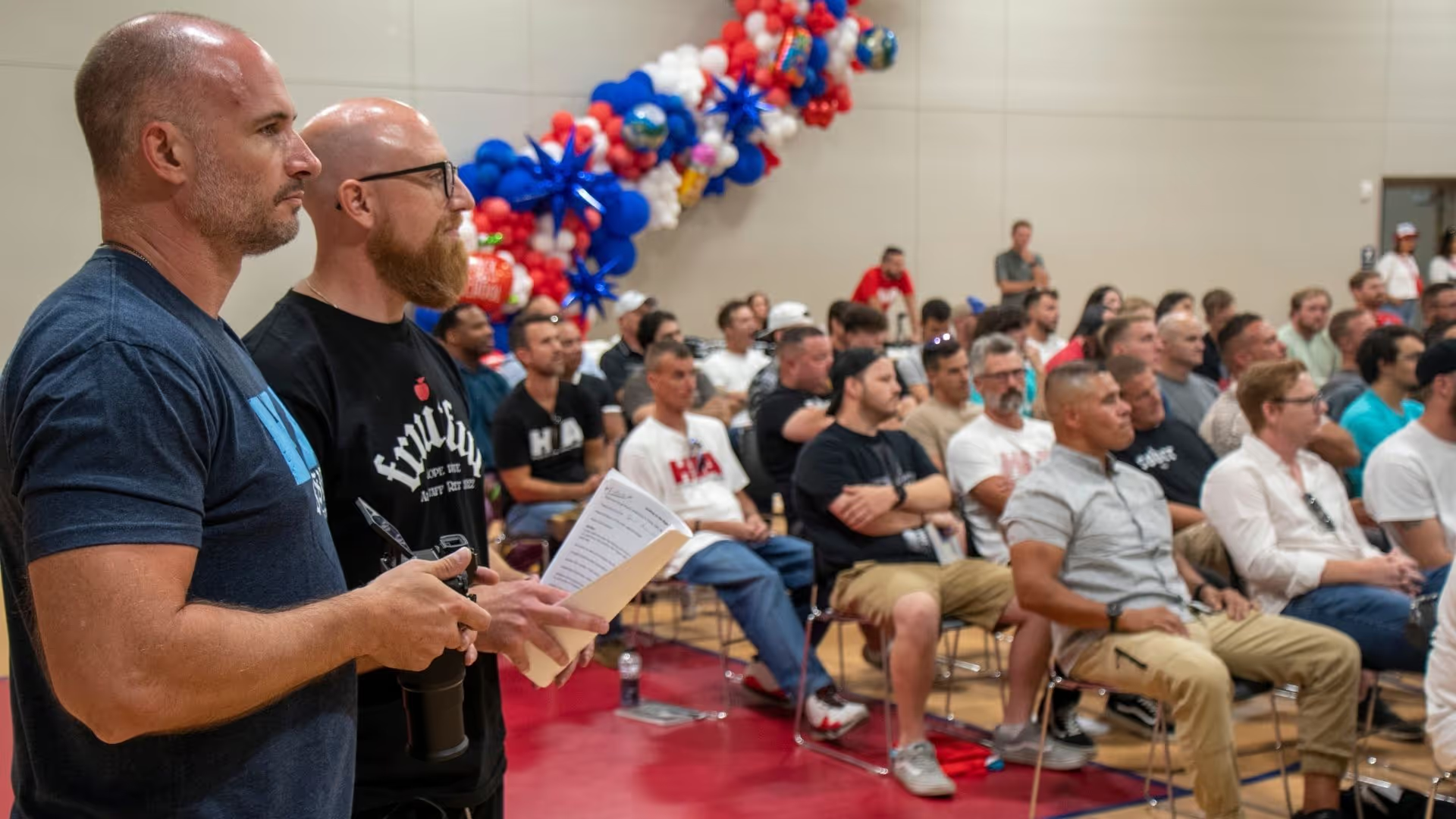
As Rob’s time in treatment began to come to an end, he knew something was different. For the first time, he wasn’t just thinking about staying sober — he was thinking about how he would live sober. He knew he needed structure, accountability, and community rooted in faith if he was going to continue the life God had started rebuilding.
During a Night of Hope event, Rob was introduced to the heart of Hope is Alive, and instantly knew it was the next step for him. Up until his graduation date, Rob stayed in contact with the Hope is Alive team. He gave them updates, and in turn, Hope is Alive made preparations for him to enter a home right out of treatment. When graduation finally came, Rob went straight from treatment to a Hope is Alive home because he couldn’t wait to get there.
“I’ve been in other sober living homes and ‘programs,’ and they are nothing like Hope is Alive,” shared Rob. “Instead of fighting for sobriety in a rundown, grungy place, Hope is Alive put me in a nice house with great people who were all bettering their relationships with Christ.”
From the start, the brotherhood of Rob’s home welcomed him with open arms. If he needed anything, they were there to help him. Whether it was getting a good meal, having someone to talk to or pray with, or just knowing there was support, Hope is Alive changed Rob’s perspective on addiction recovery.
Hope is Alive does recovery differently. Instead of focusing solely on alcohol, Hope is Alive helped Rob uncover the patterns that had been shaping his life long before alcohol became a coping mechanism.
“At Hope is Alive, they don’t just ask you what you’re using,” Rob explained. “They ask why you were using in the first place.”
Through the program, Rob began identifying his process addictions — unhealthy attachments to control, performance, sex, and relationships. When things felt uncomfortable, uncertain, or painful, he looked for something — anything — to numb, distract, or escape. If it wasn’t alcohol, it was performance. If it wasn’t performance, it was unhealthy relationships based on sexual desire. If it wasn’t relationships, it was isolation.
As Rob continued working through these patterns, it became clear that none of them started in adulthood. Rather, like many other addicts and alcoholics, they started in childhood.
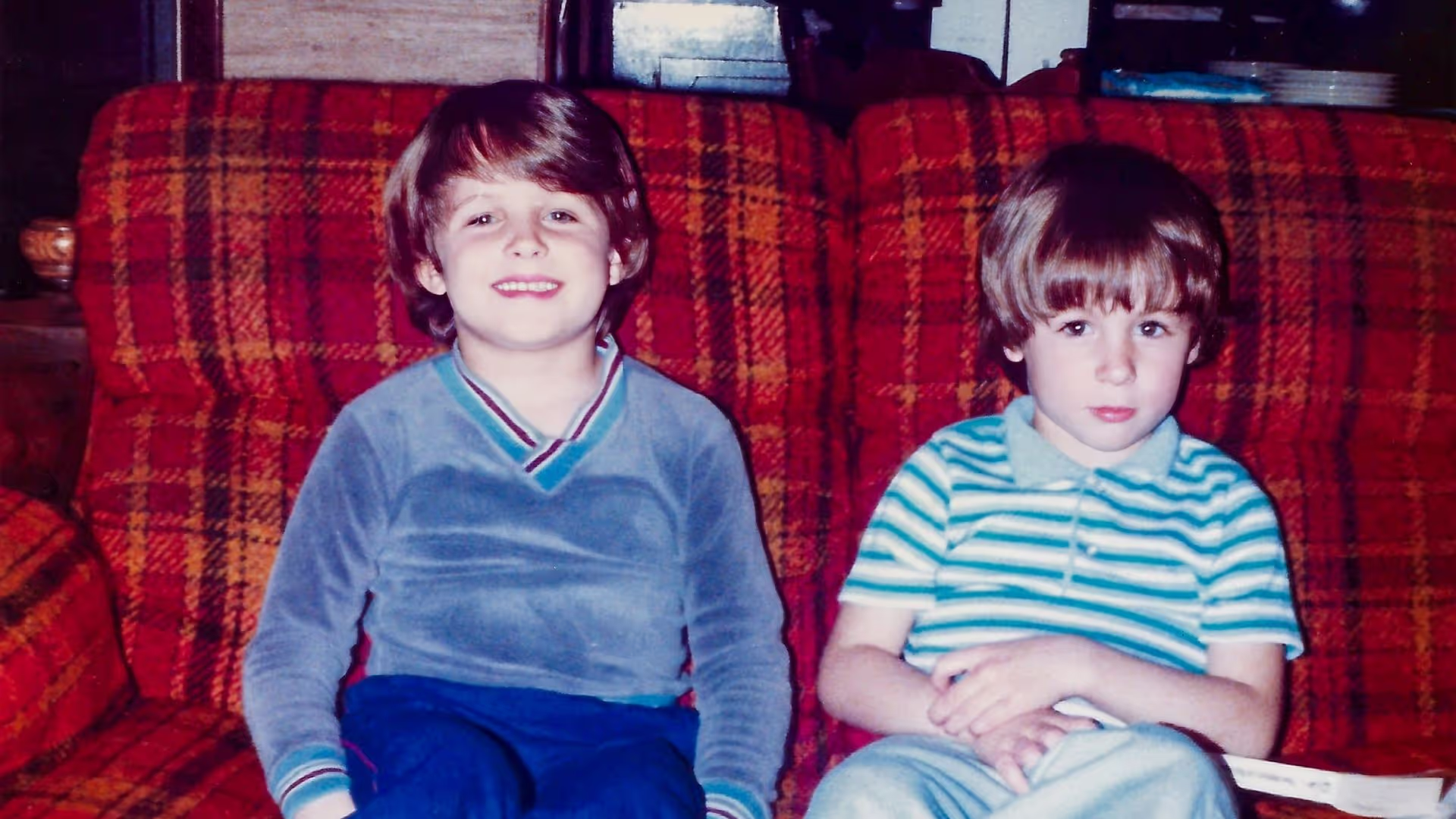
Long before alcohol entered the picture, Rob learned that emotions — especially for men — were something to control, not express. He grew up in an environment where anger was the only emotion that felt acceptable, and even that came with consequences. Sadness, fear, confusion, or pain weren’t talked about. They were pushed down.
“My dad had a bad temper. Anger was the only emotion that was openly expressed in my childhood,” Rob explained. “That shaped how I saw God. I thought He was like my dad, just waiting for me to mess up.”
Rob describes growing up with a “God in a box” — a faith built on rules, fear, and performance rather than relationship. God felt distant and angry. Jesus felt kind and loving. The Holy Spirit felt abstract and impersonal. Because of this view of God, the church, and Christians, Rob considered himself an atheist for 25 years.
With little faith and no one to turn to at home, Rob instead turned to control.
That need for control was reinforced by deep abandonment wounds. When Rob was young, his parents divorced, leaving him with questions and insecurities he didn’t know how to process. Later, at just 12 years old, Rob experienced sexual abuse at the hands of his older stepbrother
While he did everything he could to bury the experience, the damage was done. As a result, Rob overcompensated. He detached from emotions and leaned into sexual relationships without intimacy or vulnerability. Love became transactional. Relationships were built on appearance and desire, not connection. That pattern was reinforced at home, where value was placed on how people looked rather than who they were.
“My alcoholic lifestyle was so selfish that I didn't believe in marriage. The way I interpreted relationships with women also kept me from wanting children or a family of my own.”
For everything else that Rob didn’t know how to name, alcohol became the easy coping mechanism.
While he was able to experiment with other substances and walk away, alcohol was different.
“I did drugs and put them down,” Rob explained. “But alcohol impacted me differently. I couldn’t put it down. From the moment I had my first sip when I was 12 years old, alcohol had me. Every time I got a buzz, I didn’t stop until I either got sick or blacked out.”
This is described in the Big Book of Alcoholics Anonymous as the obsession of the mind — the inability to leave alcohol alone once it takes hold. And for Rob, that obsession ruled his life for more than 25 years.
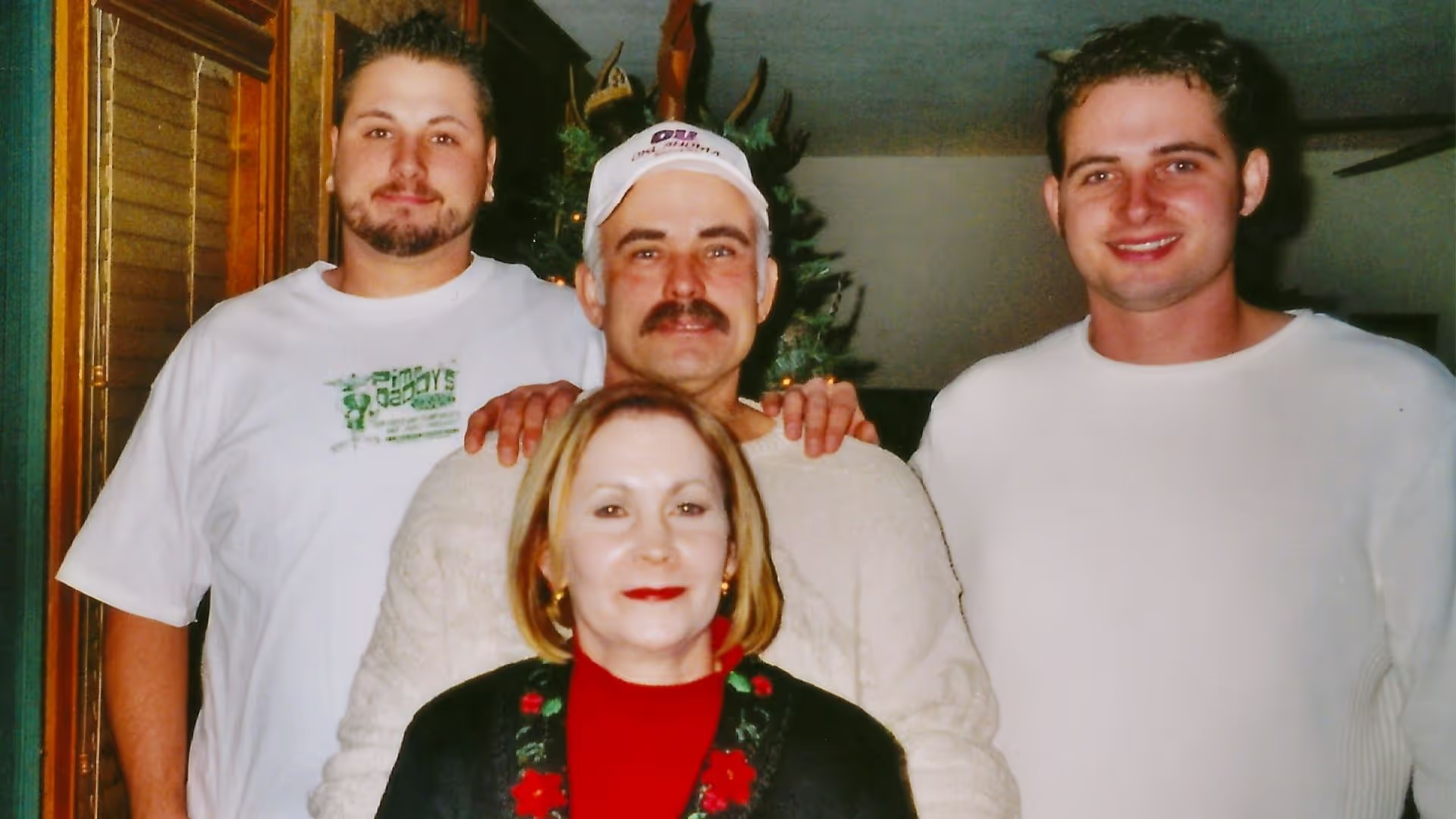
His mom recognized it early on. She was the one constantly researching treatment centers, making calls, and trying to get him help. She knew addiction wasn’t something he could simply outgrow.
His dad, on the other hand, struggled to understand it.
“He would ask me, ‘Why can’t you just stop?’” Rob said. “I didn’t fault him for it, but the reality was that I had no control over my drinking.”
That misunderstanding only added to Rob’s shame — reinforcing the belief that if he just tried harder, performed better, or controlled himself more, everything would change. But, because of Hope is Alive, Rob no longer has this mentality.
“I’m still gonna stumble and fall, but now I know how to deal with it better.”
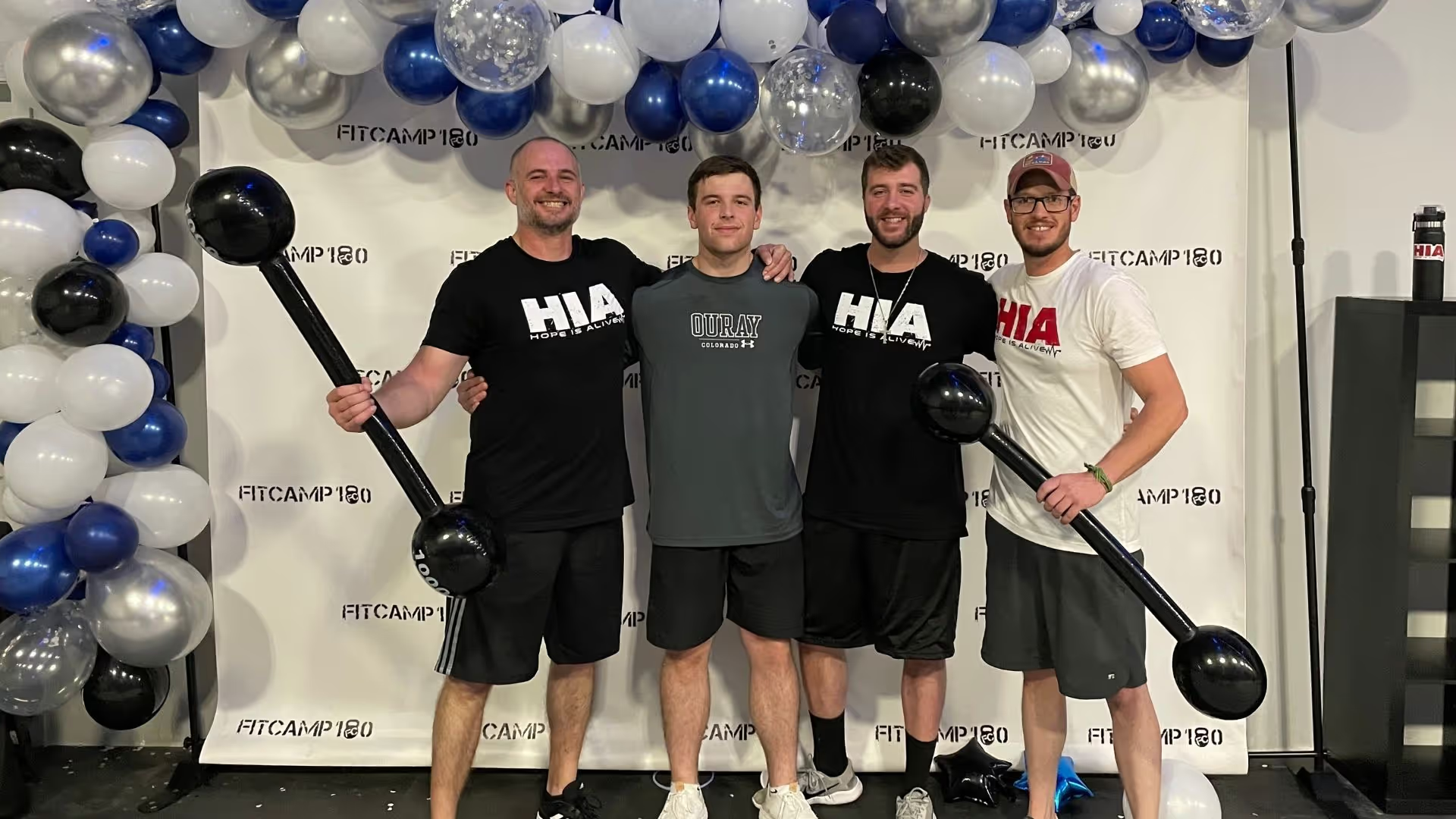
February 8, 2021, marked the end of Rob’s 25-year battle with alcoholism.
Since then, God has blessed Rob with a life he never imagined. He restored the creative gifts Rob had always loved. He surrounded him with a healthy community. And He gave Rob the opportunity to walk alongside others who are still trapped in the same cycle he once believed he could manage.
“I started working for Hope is Alive three months into the program, almost four years ago. I haven’t looked back since.”
Today, Rob understands that recovery isn’t about never struggling again — it’s about knowing how to respond when struggle comes.
Hope is Alive didn’t promise him a perfect life or an easy path. What it gave him instead were tools to cope better and a community that truly gets it. The obsession that once ruled his mind no longer defines his life — God does.