Support the vision at Hope Is Alive? Give a donation.


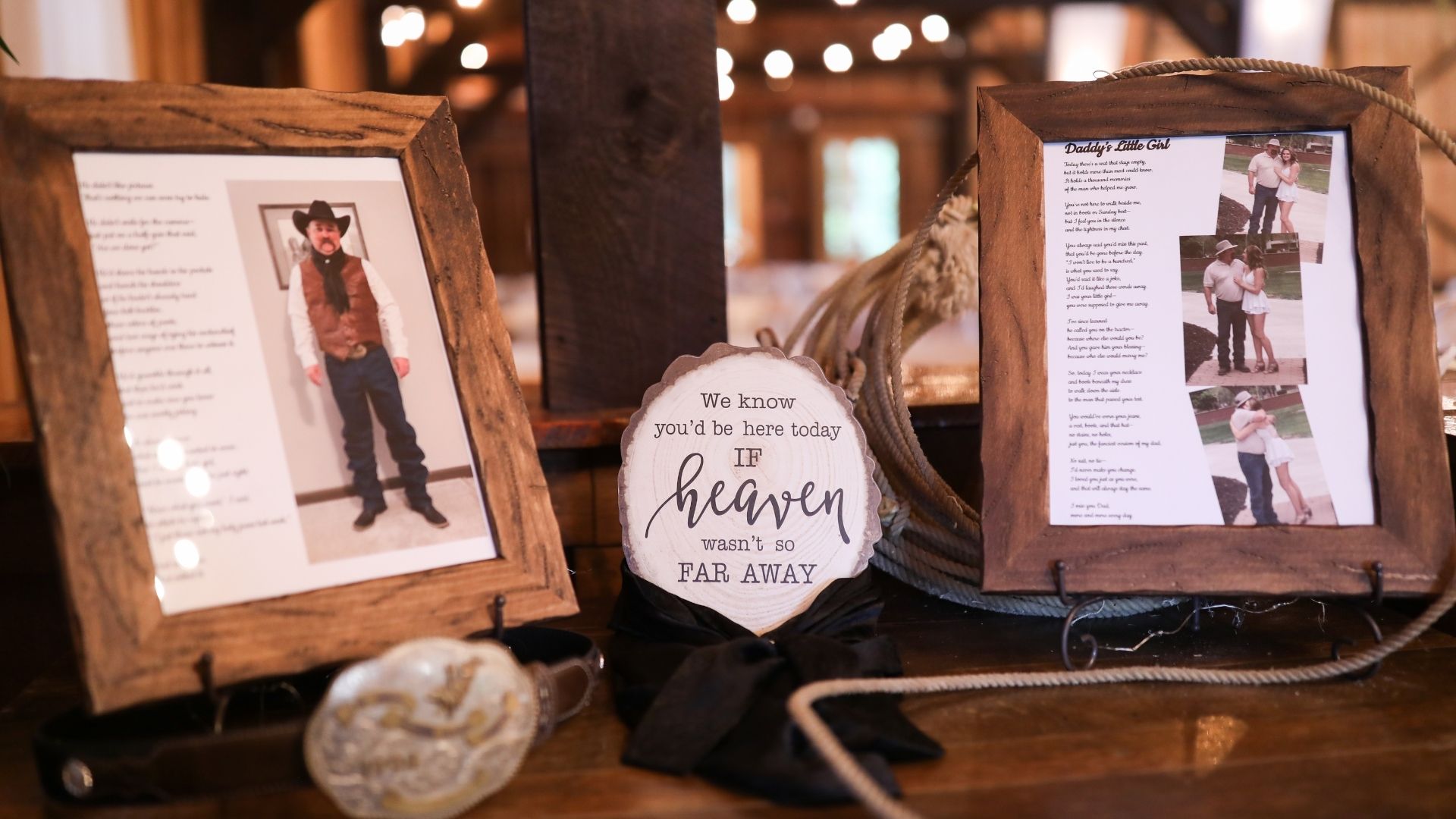
No one expects to start the new year planning a funeral instead of a father-daughter dance. No one prepares for the fact that the person who’s been there for almost every major moment of your life might not be there for the moment you always imagined.
People often asked Shae Matt how she managed to stay so close to her dad, even though he struggled with alcoholism. She understood why people wondered. There were moments she wanted to believe he was less of a father herself.
“I had so much bitterness and no one else to blame,” Shae shared. “But no matter how complicated life became, I never doubted that he was still a good man.”
Addiction was part of his story, but it was never the whole of who he was.
“Sober or drunk,” Shae said, “my dad was my best friend, my biggest cheerleader, and one of my favorite people. He was unapologetically himself, and he always pushed me to be the same way.”
He didn’t need an audience to be funny or enjoy life. He found joy in the smallest moments and had a laugh that filled whatever space he was in.
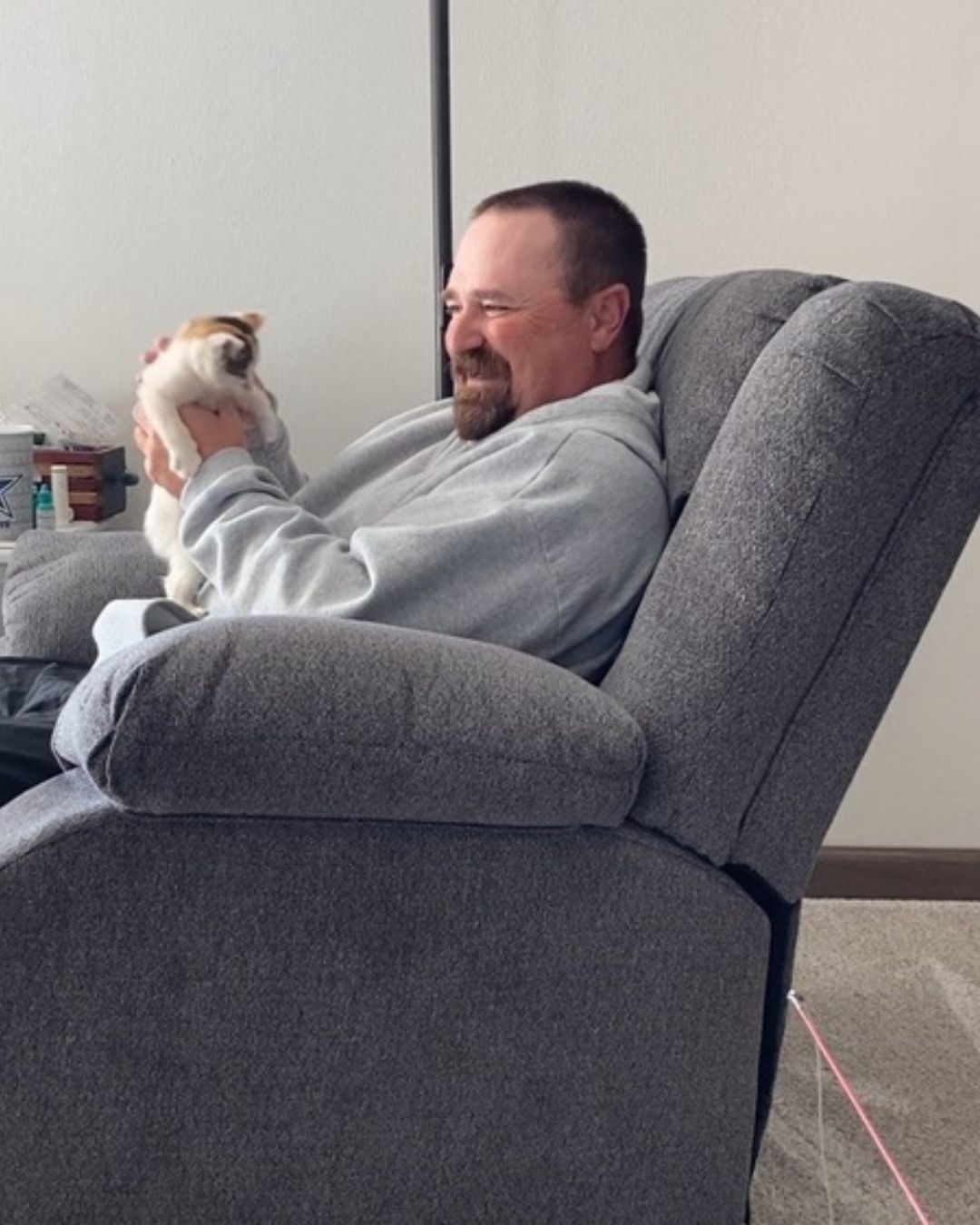
“I have this video of my dad with my cat… It’s ridiculous. It’s hilarious. It’s my dad in a nutshell.”
In the video, her dad is teasing her cat. He scoops the cat up like a toddler, holds him nose-to-nose, and stares him down as if they’re about to duel. When the cat pins his ears back, her dad calls him an “angry rabbit” and lifts him into the air like Simba, launching into an exaggerated martial arts routine complete with ridiculous sound effects.
“I’ve watched that video so many times, I can recite every word and every exaggerated sound effect.”
Every time she watches it, she laughs. Then she cries. Then she watches it again.
Because that video captures her favorite version of him — the version seemingly untouched by addiction.
For Shae, the good memories are always tangled with the painful ones.
“I was old enough to see the cracks,” Shae shared, “but too young to understand how deep they ran. I didn’t truly understand why he was drinking, but I always knew it wasn’t just because he wanted to. He’d tell my brother and I over and over again that alcohol would ruin our lives, and not to go down the same path he had. We could just never understand why he couldn't put the bottle down himself.”
While her dad had periods of sobriety throughout her childhood, whether it be days, weeks, or months at a time, it never lasted. Every time he’d get sober, they’d sit and wait for the inevitable fallout, never knowing exactly when or how it would happen.
At the time, Shae didn’t understand what addiction truly was. She only knew what it felt like to love someone who was slowly being pulled away by something she couldn’t control. As a child, she heard the warnings and believed them — she believed that addiction was something you could choose to avoid if you were strong enough, careful enough, and disciplined enough.
She didn’t yet understand that addiction isn’t a lack of love or effort. It isn’t simply a bad habit or a failure of willpower. It’s an illness; one that convinces good people to act in ways they never intended.
“My perspective on addiction didn’t start to shift until after he passed, and that’s something I’ll regret for the rest of my life,” Shae admitted. “It wasn’t that my dad didn’t love me enough. It wasn’t that he didn’t want to stop. It was that addiction didn’t care about any of that.”
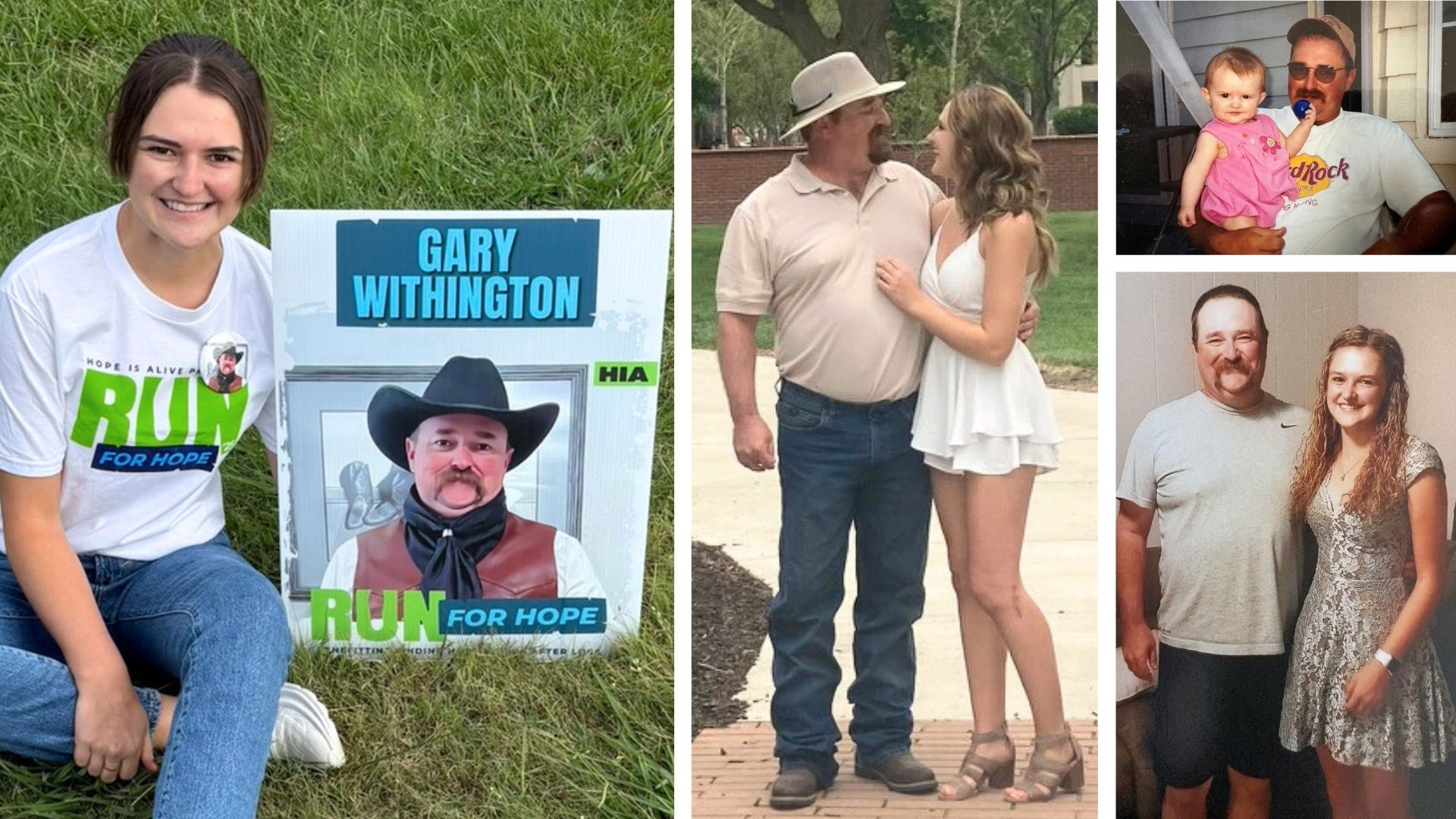
After her dad passed in his sleep, his alcohol limits off the charts, she started to question everything she thought she knew about him… and addiction.
Her dad’s addiction didn’t begin with anything she could attempt to control. Rather, it was rooted in his childhood, where love was inconsistent, approval was scarce, and alcohol was modeled as a solution to any and every problem. He grew up believing he was never quite enough, and alcohol became the thing that temporarily quieted that voice.
“That realization wrecked me. I never thought that he might have felt the same way as me when he was a kid,” she explained. “I spent so much of my life thinking if I could just be enough — good enough, successful enough, strong enough — I could fix it. I could save him. I thought that if anyone could pull him from his addiction, it was me — his little girl.”
Unfortunately, that’s not how addiction works.
“I have to keep telling myself he isn’t out checking cows. He isn’t harvesting wheat somewhere. He isn’t watching the Dallas Cowboys play football. He isn’t playing a round of golf. He is just gone.”
Shae didn’t get to say goodbye. She didn’t get to tell him she loved him one more time. She didn’t get to tell him how proud she was of him for finally reaching out for help.
“Most people don’t know that he really was trying to get better. Toward the end, he started admitting what he’d spent years avoiding: that he was an alcoholic, and that something had to change.”
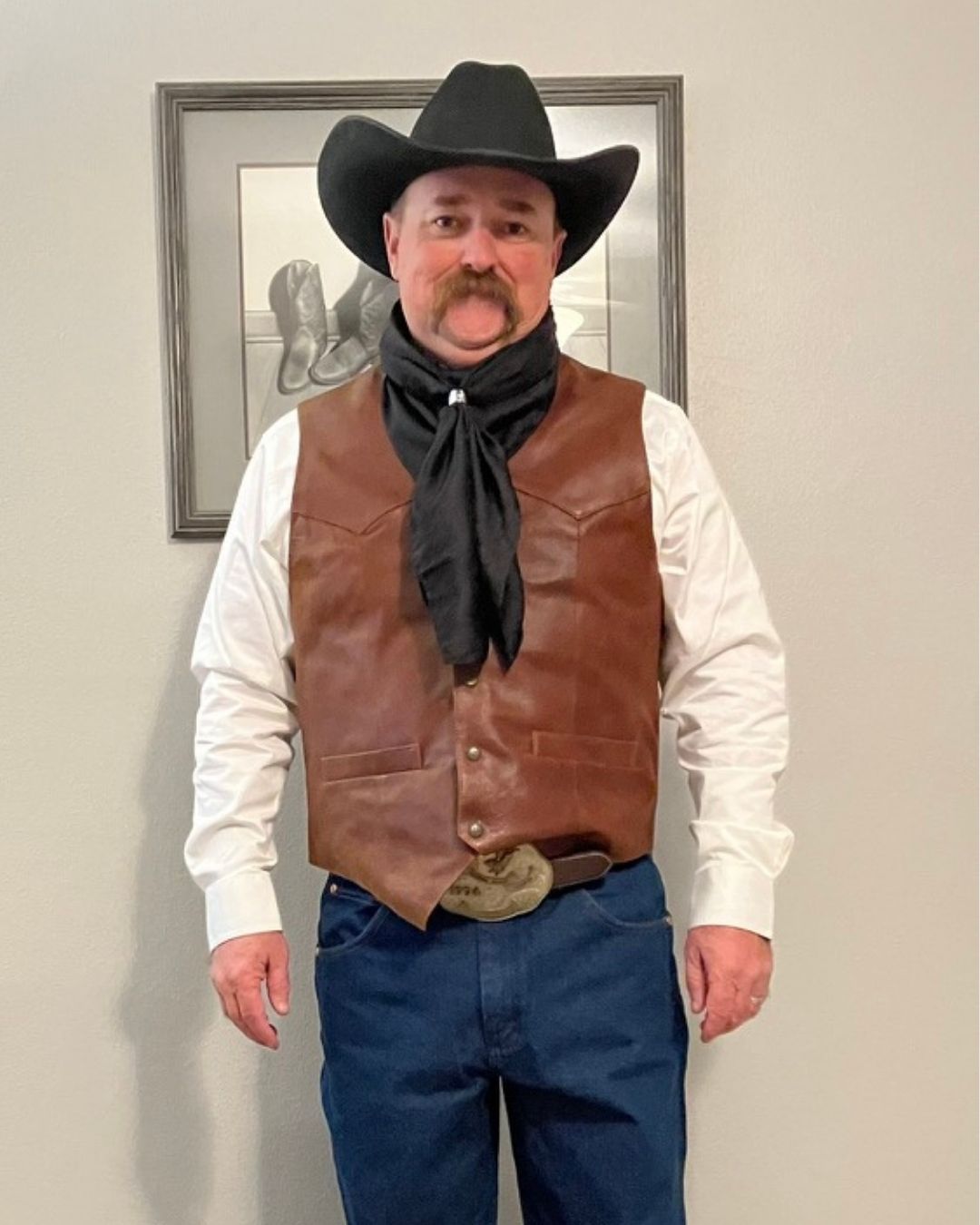
For so long, Shae had imagined what that moment would be like. She wondered what recovery would look like, and who he would be afterward. She wondered what her wedding, a short six months away, would be like with a sober, vibrant father.
But recovery doesn’t begin the moment someone decides they want help. It takes time. And unfortunately, her dad didn’t have enough time left.
“For a while, I was angry,” she admitted. “It felt cruel. He had finally reached out for help, and then everything was suddenly taken away. I cried out to God time and time again, asking ‘Why?’ It wasn’t until much later that I came to realize that God did answer my prayers even though the outcome wasn’t the one I had hoped for. I prayed that God would show my dad mercy and give him peace, and that’s exactly what He did.”
While it took months for Shae to come to terms with her dad’s death, she has found the light at the end of the tunnel.
“For me, there’s peace in knowing that my dad is no longer fighting, no longer hurting. There’s peace in trusting that he is in heaven watching over me. He always used to tell me I could use my writing to change the world if only I would put my mind to it. If it hadn’t been for his addiction and his passing, I wouldn’t have found my way to HIA, where I get to make his dream for me a reality.”
Working at Hope is Alive has changed everything for Shae. For the first time in her life, she is surrounded by people who don’t need addiction explained to them — people who understand the complexity, the heartbreak, the hope, and the humanity behind it all.
“I see my dad in so many of the men here,” she said. “Not just in their struggles, but in their kindness, their humor, and their desire to be better than the version of themselves addiction tried to convince them they were.”
At Hope is Alive, she sees daily reminders that recovery is possible — that men who once believed they were beyond saving can rebuild their lives.
“There isn’t a day that goes by that I don’t wonder what could have happened if my dad had found his way to HIA instead of his grave,” she said. “But that ‘what if’ fuels me. It reminds me why this work matters: Someone else’s story can end differently."
There are countless more sons and daughters saying the same prayers Shae did. But their stories don’t have to end the way hers did. Help us rewrite the ending of someone else’s story by donating today.
.jpg)