Support the vision at Hope Is Alive? Give a donation.


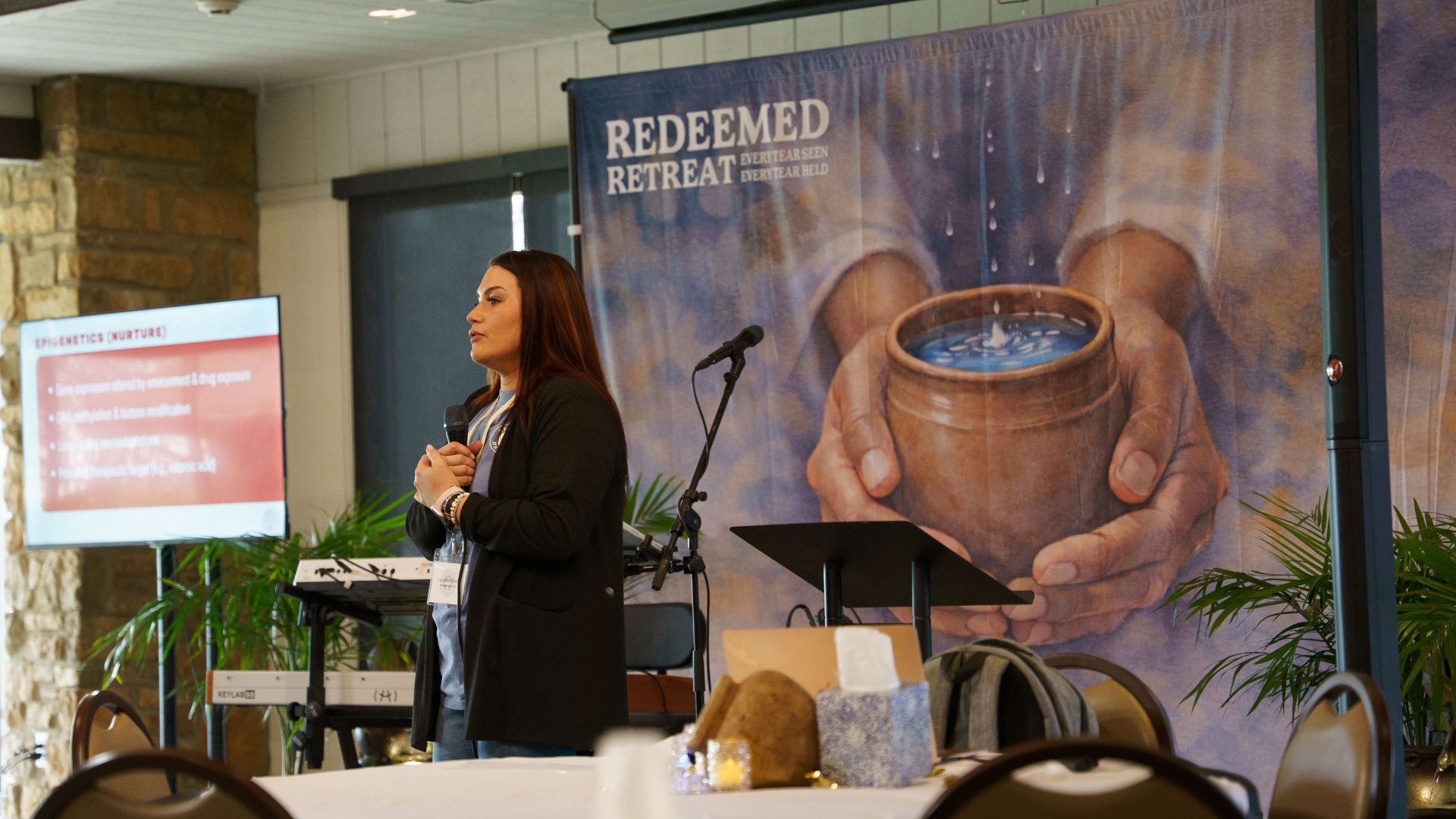
By Courtney Davis | School Support Coordinator
Courtney Davis is a prevention and recovery educator, speaker, and certified life coach. She holds a B.S. in Psychology with an emphasis in substance abuse and has advanced training in trauma-informed care, behavioral health, and the neuroscience of addiction.
Addiction is often viewed as simply a lack of willpower, a moral failure, or the result of too many bad choices.
Today, however, modern neuroscience paints a very different picture. Research shows that addiction actually changes the brain, affecting the way a person thinks, feels, and makes decisions. And Scripture supports it!
Long before science began studying the brain, the Bible described the same inner struggle between destructive behaviors and renewed thinking. Proverbs 14:12 states, “There is a way that seems right to a man, but its end is the way to death.”
This reveals that, contrary to popular belief, science and faith can work hand in hand and, together, offer a deeper understanding of both addiction and the path toward healing.
The human brain is one of the most complex structures in existence. It contains approximately eighty-six billion neurons that communicate through electrical and chemical signals. These neurons form vast networks that influence our thoughts, emotions, motivations, and behaviors.
One of the most important networks is the limbic system, commonly known as the emotional brain.
When we experience something pleasurable or rewarding, the brain releases a neurotransmitter called dopamine. It sends a signal to the brain that says, “This experience matters. Remember it. Do it again.”
Problems arise when substances or addictive behaviors artificially stimulate this reward system at levels far beyond what natural experiences produce. Over time, the brain prioritizes that experience over other needs. As a result, many individuals struggling with addiction describe feeling “emotionally numb” when they are not using substances.
The brain’s neurocircuit has officially been hijacked.
Habits are patterns that operate through a three-part cycle consisting of a cue, a routine, and a reward.
A cue may be stress, loneliness, fatigue, conflict, or a particular environment. The routine becomes the behavior that follows, such as substance use. The reward is the temporary relief, distraction, or emotional escape that follows the behavior.
The Bible speaks about humanity’s tendency to seek relief from broken sources in Jeremiah 2:13, where God says, “My people have committed two evils: they have forsaken me, the fountain of living waters, and have dug their own cisterns, broken cisterns that cannot hold water.”
Addictive behaviors promise relief but ultimately fail to satisfy the deeper needs of the human soul. For those who have experienced trauma such as abuse, neglect, chronic stress, or unstable environments, substances often become a source of self-medication that looks something like this:
A trigger (such as an argument) creates emotional discomfort or distress, leading to a routine behavior (alcohol or drug use) meant to escape or numb the pain, followed by a temporary reward of false relief (a buzz or high).
Each time this cycle repeats, neural pathways become stronger through a process called neuroplasticity, making it harder to stop.
This is, in part, a result of the weakening of the prefrontal cortex — the region of the brain responsible for decision-making.
In a healthy individual, this area helps them pause and evaluate consequences before making a decision. For addicts, however, the impairment of this area causes them to act almost fully on impulse with no regard for the consequences.
Think of Proverbs 25:28, which says, “A person without self-control is like a city with broken-down walls.” Just as city walls protected communities from outside threats in ancient times, when the brain’s systems for self-regulation weaken, a person becomes more vulnerable to destructive impulses.
“Do not conform to the pattern of this world, but be transformed by the renewing of your mind.” Romans 12:2
Modern neuroscience supports the idea that renewing the mind is not merely a metaphor. It is a real biological process in which repeated healthy behaviors restore normal brain operation.
The brain is not permanently fixed in addiction!
But breaking free requires hope, community, faith, and determination. Research consistently shows that when individuals believe change is possible, they are far more likely to persist in the behaviors necessary for growth and restoration.
Faith provides the foundation that sustains the recovery process. Hope allows individuals to see beyond their current circumstances and recognize that their story is not finished. A community that truly gets it provides the encouragement, accountability, and emotional safety needed for positive cycles. This is depicted in Ecclesiastes 4:9–10, which reminds us that two are better than one because if one person falls, another can help them up.
The intersection of neuroscience and faith is often overlooked. But it is that intersection that serves as the foundation of Hope is Alive’s recovery program.
Science helps us understand how addiction rewires behavioral and emotional responses, while Scripture addresses the need for identity, purpose, hope, and redemption.
Freedom that restores lives and reunites families can be found in Christ. Just ask any of the 304 residents who have graduated from Hope is Alive’s recovery program.
.jpg)
.jpg)