Support the vision at Hope Is Alive? Give a donation.


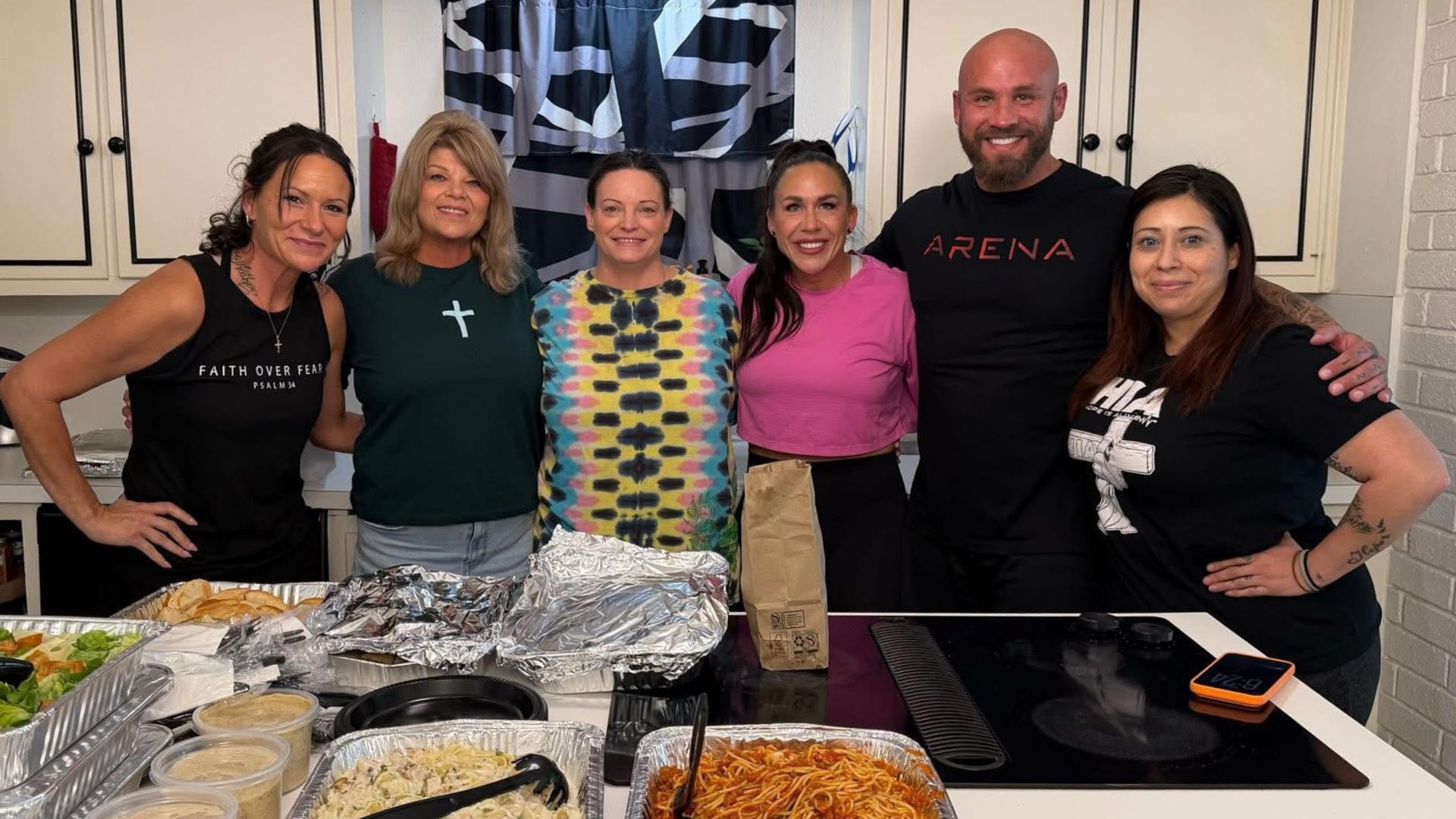
“My wife, Theresa, has this saying… She says, ‘I’m addicted to the addicts,’” Hope is Alive Advisory Board Member Dr. Brian Hughes shared. “And I absolutely love it.”
The paradox of that statement makes more sense when you spend time with the residents in Hope is Alive’s sober living homes, because what Theresa is describing isn’t addiction in the way most people understand it.
It’s something you only really understand once you’ve been immersed in Hope is Alive’s culture, where people are known not just for where they’ve been, but for who they’re becoming. Society often views addicts through the lens of their worst days, whereas Hope is Alive chooses to see the person God created them to be and the life they’re capable of stepping into.
“There’s just so much love and so much energy from the residents all the way up to Lance and Ally,” explained Brian. “It’s a really special culture that we’re honored to be a part of.”
And to think that they almost weren’t.
When Brian first heard about the opportunity to join Hope is Alive’s Advisory Board, he didn’t think he’d have the time or energy to make it a priority. His life was trending in a different direction.
“I was just busy,” he said. “We had already kind of made the decision as a family to pull back a little bit. Three kids, businesses, everything else going on… So I told God that if this is something I’m supposed to do, He would have to let me know.”
Little did he know that God would provide an answer right away.
As Brian pulled out of the parking lot near 2nd Street and I-35, a mere matter of minutes after a conversation about getting more involved with Hope is Alive, he drove out in front of another car. He wasn’t paying attention until the other driver honked.
When Brian turned to look, he didn’t just see the car. Right above it, the sun had broken through the clouds and was shining directly onto the cross. The sky had been overcast all day, but in that moment, God gave Brian a clear answer.
“I just got emotional,” he said. “I was like… okay. I hear You.”
It wasn’t something he needed to sit with or try to make sense of later. It was the kind of answer he knew he couldn’t ignore.
Going into Hope is Alive, Brian thought he had a pretty clear understanding of what that yes would look like. With his own story of recovery and everything he had walked through to rebuild his life, it made sense that he would step in to serve and support others navigating a similar path.
“I thought I was going to be able to serve these guys so well. I was going to provide so much value to the men in the homes and what they’re going through based on my experience. I also have a men’s coaching system that I lead men through, so I just thought… they’re going to love me.”
He laughed as he said it, recognizing now how different the reality turned out to be.
“It was actually the complete opposite way that God was working through my role. While I did provide value, it was more so what those guys, and what Hope is Alive’s environment and energy, were bringing into my life.”
The more time Brian spent around Hope is Alive’s residents, the more he wanted to. And before long, Theresa got involved as well, speaking in women’s homes. From there, their kids got involved, too.
Now, they are all in.
“I have a connection to this mission because of my own story with alcohol and recovery. We literally had to rebuild everything, from our health and our finances to our relationship together and our relationship with God,” Brian explained.
Even though Brian had walked the hard road of recovery and maintained his sobriety, he didn’t realize just how much he had yet to learn.
When he got sober, he strong-armed alcohol. He made the decision to get sober and then relied on discipline to stay that way. He had changed his behavior, but there were still things underneath the surface that hadn’t been addressed.
After learning more about the recovery journey of those in Hope is Alive’s sober living homes, he realized that if he didn’t address the “why” behind his drinking, he would always be one bad day away from picking the bottle back up.
“I didn’t want to be a story of a guy that was sober for nine years and then all of a sudden relapsed,” Brian shared.
With three kids to think of, Brian knew the best thing he could do was dive even further into Hope is Alive. What he didn’t expect was just how much that decision would shape not only his own healing but also his role as a father and husband.
Because of how Brian and his wife interact with the residents, it became natural for their kids to also help load supplies, spend time at the homes, and build relationships with residents. Sometimes Brian’s son even plays video games with the guys. And in that environment, his kids began to see something they wouldn’t have otherwise.
“We have a saying in my house: Addiction is not prejudiced. It will go after anybody,” Brian said. “It’s great for my kids to be able to see that it’s not always what you think it is.”
The residents they regularly interact with are people from all different walks of life. People who, on the outside, don’t fit the stereotype most associate with addiction.
They’re doctors.
They’re attorneys.
They’re business owners.
They’re cashiers.
They’re salesmen.
They’re receptionists.
They’re ordinary people you see walking down the street.
That altered perception of addiction is something they need, especially since they’ve been on the other side of it. During Brian’s years of alcoholism, his kids witnessed his outbursts — the rage, the broken things in the house, the yelling, the screaming, the pain. They lived through some of the worst parts of addiction.
Now, seeing the dynamic of sobriety and how it’s changed their family, they’re able to understand something they couldn’t have before.
“All of the residents we have met have welcomed us with open arms. They have accepted me, my wife, my kids, and all of our baggage — and they didn’t blink.”
In sobriety, Hope is Alive’s residents have found freedom, and you can see it. There’s a light to them that draws you in, and it changes the way you see them and yourself. It reminds you that people are more than the worst moments of their lives, and that what God is doing in someone’s story doesn’t always look the way you expect it to.